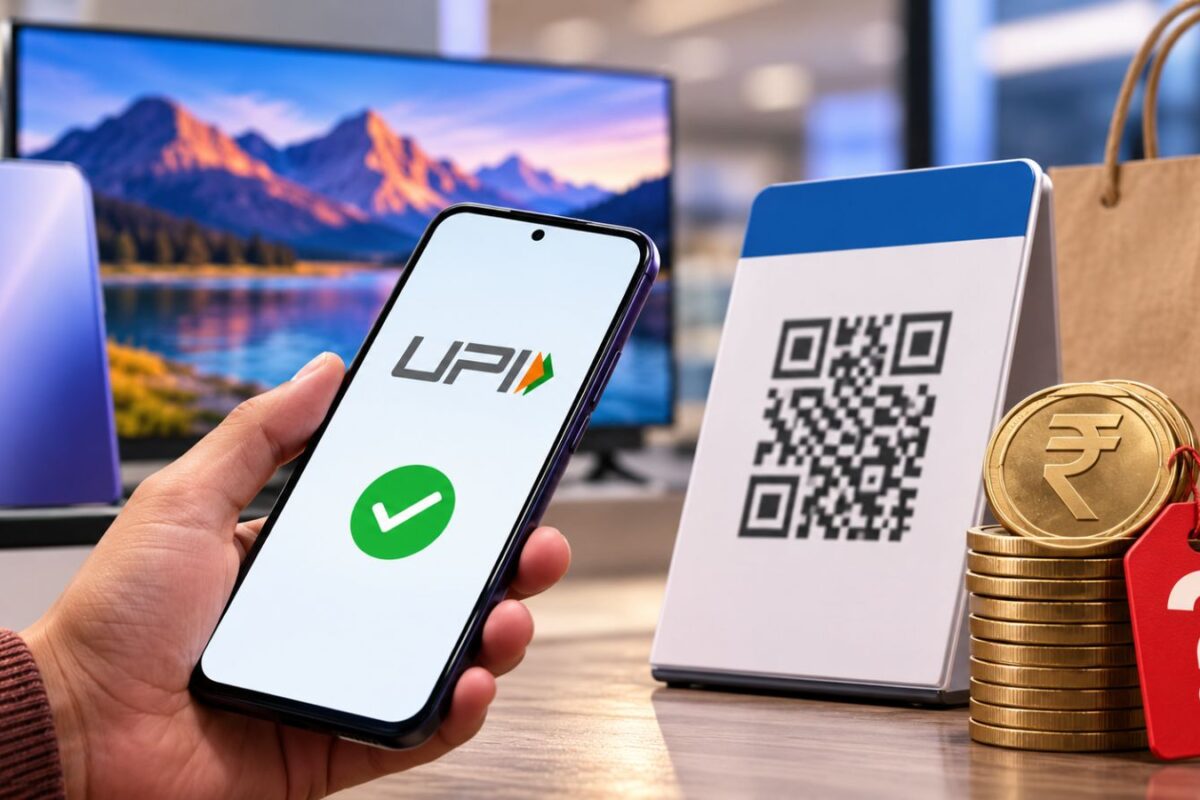







What if you could tell your AI assistant, “Buy my groceries when they fall below Rs 2,000,” and never have to open your UPI app again? That is the idea behind agentic payments, and India could be one of
the biggest markets for them. A new framework could allow AI agents to make certain UPI payments on behalf of users without requiring approval for every individual transaction, according to a Reuters report citing people familiar with the matter. The proposed system is expected to focus initially on small, routine payments, with spending limits and other safeguards built into the process.
UPI processed 24.51 billion transactions worth Rs 29.82 lakh crore in August 2026, according to data cited by Reuters. At the Global Fintech Fest in Mumbai this week, Agentic AI has also emerged as a major focus for India’s fintech industry.
But what does this actually mean for an ordinary UPI user?
It does not mean giving ChatGPT, Gemini or another AI unrestricted access to your bank account. The idea is closer to giving an AI agent a limited set of payment permissions and allowing it to act within those rules.
What UPI Payments Could AI Agents Automate?
The first wave of agentic UPI payments is likely to involve transactions that are relatively predictable, low-value and repetitive.
Based on the framework being developed by NPCI and existing agentic-payment systems already being tested in India, some of the most obvious use cases include:
| Payment Type | How AI Could Automate It |
|---|---|
| Groceries | Buy regularly needed items within a pre-set budget. |
| Online shopping | Find a product and purchase it when the price reaches a specified level. |
| Mobile recharge | Automatically recharge a number when the plan expires. |
| Utility bills | Pay electricity, broadband or other recurring bills within authorised limits. |
| Subscriptions | Renew approved services when payments become due. |
| Food orders | Place routine orders based on instructions such as budget, restaurant or delivery time. |
| Travel bookings | Potentially book tickets when conditions such as price or timing are met. |
| Deal-based purchases | Buy an item automatically when a specified discount or price threshold is reached. |
Reuters reported that groceries and other low-value, frequent purchases are expected to be among the earliest use cases. The longer-term ambition could be considerably broader, with AI agents potentially making purchases based on discounts or other conditions specified by the user.
Imagine Telling Your AI: “Buy This If It Falls Below Rs 5,000”
Suppose you want to buy a pair of headphones but do not want to pay Rs 7,000 for them. Instead of repeatedly checking Amazon or another shopping platform, you could potentially tell an AI agent: “Find this model and buy it if the price drops below Rs 5,000. Do not spend more than Rs 5,000.”
The AI could monitor the product, wait for the price to reach your specified threshold and then initiate the purchase using the payment authority you previously granted.
You would not necessarily have to approve the UPI payment at that moment because the transaction would already fall within the rules you established. This kind of ‘conditional purchasing’ is one of the more interesting possibilities highlighted in the reporting around NPCI’s proposed agentic-payment framework.
How Would An AI Agent Actually Make A UPI Payment?
The important thing to understand is that the AI agent would not simply receive your UPI PIN. Instead, the proposed model is expected to work around delegated authority:
- You give the AI an instruction. For example, “Buy groceries up to Rs 2,000 every week.”
- You authorise the agent. You establish how much it can spend and under what conditions.
- The AI searches and makes a decision. It finds the products or service that match your instructions.
- The transaction is checked against your permissions. The amount, merchant and other rules are checked.
- The payment is executed through UPI. If the transaction falls within the permitted rules, the agent can complete it without asking for another approval.
- The transaction is recorded. The system can maintain an audit trail showing what happened and why.
Reuters reports that NPCI’s planned framework is expected to include rule-based instructions, spending limits, identity checks and audit trails. A liability framework is also reportedly being considered.
UPI Reserve Pay
One technology that could make this model possible is UPI Reserve Pay. Under Reserve Pay, a customer can authorise a maximum amount to be reserved in their bank account. A merchant can then make multiple debits against that approved amount rather than requiring a fresh authorisation for every payment.
Pine Labs’ current documentation says UPI Reserve Pay allows a merchant to make multiple partial debits against an approved reserve, with the total debits unable to exceed the amount originally authorised. Its current maximum mandate limit is Rs 10,000.
This is particularly interesting for AI agents because the user can effectively establish a payment pool in advance.
For example, imagine authorising Rs 5,000 for an AI shopping agent. The agent could potentially make several eligible purchases, with each payment reducing the remaining authorised balance. The AI would therefore not need unrestricted access to the user’s bank account.
Pine Labs Is Already Showing What Agentic UPI Could Look Like
Pine Labs launched its Pine Labs Payment Protocol (P3P) in June 2026 and says it enables AI agents to initiate and complete payments without requiring a human at the point of transaction. The company’s system supports UPI Reserve Pay and other payment methods.
Under P3P, users establish payment authorisation upfront. The AI agent can then operate within the approved scope rather than asking the customer to manually authenticate every transaction. Pine Labs describes this as a consent-driven model in which users control how much agents can spend.
Its documentation also says payment authorisations can be tied to specific resources, amounts and expiry conditions, while completed transactions generate verifiable receipts for auditing and dispute resolution.
The proposed UPI framework is expected to focus initially on smaller transactions. That means an AI agent would not simply be given permission to spend Rs 1 lakh whenever it thinks a purchase is worthwhile.
High-value or unusual transactions could require additional authentication or explicit approval, depending on the final rules.
For example, an agent might be allowed to spend up to Rs 2,000 on groceries, pay a monthly broadband bill or buy an item below a specified price. But a much larger purchase could fall outside its delegated authority and require the user to step in.
The final NPCI rules will determine exactly where those boundaries are. Reuters reported that spending limits and the existing Reserve Pay limits could be revisited for agentic use.
Allowing an AI to pay is considerably more complicated than allowing an AI to recommend something. If an AI recommends the wrong pair of shoes, the consequence may simply be an inconvenient purchase. If an AI can move money, the consequences are much bigger.
That is why agentic payments need several layers of control. The system needs to establish which agent is acting, who authorised it, what it is allowed to do, how much it can spend and what happened during the transaction.
These safeguards become even more important if AI agents eventually start negotiating prices, choosing between merchants or making purchases automatically based on changing market conditions.