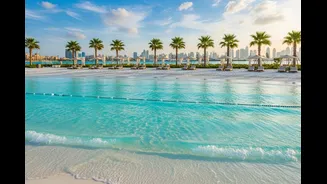

Hyderabad is set to get its very first large-scale artificial beach on the outskirts of the city in Kotwal Guda or Kothwalguda area).
The Telangana government has approved the project, and construction
is expected to begin this month.
What is an artificial beach? What will the amenities be? News18 explains
Project details
The project will come up at Kotwal Guda (near Outer Ring Road), Hyderabad outskirts.
It will spread over 35 acres.
It is estimated to cost around Rs 225 crore under a public-private partnership model.
The features
The development will use a man-made lake with sandy shores and wave technology to mimic a seaside experience.
It will have:
Sandy beach-like shores around the lake
Floating villas and luxury hotels
Adventure sports (like bungee jumping, sailing, skating)
Wave pools and water activity zones
Food courts, entertainment areas, play zones
Cycling tracks & landscaped parks.
Tourism attraction
The artificial beach will be designed as a major tourism attraction within the city limits. It aims to boost local tourism, leisure spending, and Hyderabad’s national/international image.
Is it really India’s first?
This project is widely described as India’s first major urban artificial beach destination in news reports.
While smaller man-made beach areas (e.g., within parks) exist, this is the first large-scale, dedicated beach-style recreational destination planned in a landlocked Indian city.
How is an artificial beach built?
Engineers choose a suitable area such as a lakeside, riverbank, quarry, or open land with flat or gently sloping terrain. They study soil strength, water availability, drainage, and environmental impact before design approval.
A man-made lagoon or lake is excavated or an existing water body is reshaped. For ocean-like clarity, advanced filtration and circulation systems are installed.
To simulate real beach waves, wave-generating machines are installed (hydraulic or pneumatic systems). Pumps ensure continuous water movement to avoid stagnation
Special washed, rounded silica sand is imported to form gentle slopes.
To prevent erosion, geotextile fabrics are put under sand with retaining walls or rock barriers. Vegetation is added for natural stability.