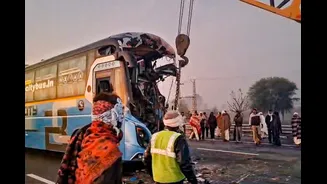








From Rajasthan to Andhra Pradesh and Karnataka, the year 2025 has seen at least three major bus fire mishaps that have not just killed several people but also exposed glaring gaps in the enforcement of
passenger safety norms.
These mishaps, reported since October 2025, unfolded during peak festive travel — when private sleeper buses dominate long-distance routes. Two major bus fire incidents were reported in October around Diwali – a time that saw huge movement of people between cities.
On October 14, a sleeper bus, on its way from Jaisalmer to Jodhpur, caught fire, killing 26 people. Days later, on October 24, another private sleeper bus traveling from Hyderabad to Bengaluru caught fire in Kurnool after colliding with a motorcycle, killing about 20 people.
On December 25, yet another festive season, seven people were killed after a speeding truck crashed into a luxury sleeper bus in Karnataka’s Chitradurga. The collision led to massive fire that engulfed the vehicle traveling from Bengaluru to Gokarna.
These fire incidents from 2025 raise a big question – how safe are these private sleeper buses and who is responsible for ensuring their safety?
The sleeper buses turned deadly due to flammable interiors and blocked or narrow exits. Missing or faulty emergency windows, lack of fire safety gear, little time to escape and inadequately trained staff worsened the impact.
Interestingly, just weeks before these incidents came to light, – from September 1, 2025 – India had updated its bus code to make them safer. However, despite the modified bus code by the Ministry of Road Transport and Highways, questions over the existing fleet remain.
Speaking to News18, Union Minister Nitin Gadkari in October had said that the issue of buses being illegally modified – a practice common across India – can be solved to a large extent with the amendments.
He had said that the Kurnool bus fire in Andhra Pradesh was using a fake logo and was illegally modified as a sleeper bus.
“The amended bus code has various provisions. The buses manufactured as per the code will not catch fire. And all buses in India will have to comply with the bus code,” he said, adding that with standardised productions, all buses will have fire safety measures in place.
ALSO READ: Burning Question Answered? Amended Bus Code Puts Fire Safety At Centre, Says Nitin Gadkari | Exclusive
It is important to note that the amendments, introduced under the Central Motor Vehicles Rules, are legally binding. Violations will attract penal action under the Motor Vehicles Act. As per a Ministry official, in the last couple of months, changes have been made in the bus codes – particularly AIS 052; AIS 153; and AIS 119.
Automotive Industry Standard 153 deals with additional requirements for bus construction; Automotive Industry Standard 052 is a code of practice for bus body design and approval; and Automotive Industry Standard 119 is about flammability, fire resistance and smoke density requirements for bus components.
While the norms are for newly manufactured buses, the existing ones should also follow the safety measures and all modifications should be done within the framework. However, these incidents highlight weak regulations, lax enforcement, and corruption.
The enforcement of norms related to transport departments comes under the respective state government and the Union government only makes rules and regulatory framework.
Among the other common issues that lead to high casualties is the lack of awareness about the emergency exits – or their presence in reality.
In October, News18 also did a ground reality check for buses near the Mori Gate area in the national capital to check the safety measures in place in sleeper buses. The fire extinguishers were found packed and kept in hidden locations in the buses. And the interiors of the buses were not fully fire-resistant, and some had damaged or inaccessible exit gates. In one of the buses, when the conductor was asked to open the emergency exit, he said it had to be opened from the outside.
When the Delhi Transport Department was contacted for these lapses, it said it has limited powers to act against private sleeper buses from other states, claiming it can only verify documents and safety compliance.
A senior official from the Department told CNN-News18 that they do not permit buses operating without valid permits and safety measures in place and it is the only restriction they can impose.
The Road Ahead
These private sleeper buses dominate long-distance travel on national highways, particularly during festive-rush and long weekends when train tickets are limited and flight tickets are out of budget.
The year 2025 has shown that without strict enforcement, updated rules alone cannot prevent deadly fires. Unless authorities act decisively against illegal modifications and unsafe buses, festive travel will continue to put passenger lives at risk.
It is time that the authorities across India take action against illegally modified buses under strict enforcement drives with a clear focus on only one thing – passenger safety.
ALSO READ: Delhi Transport Dept Can’t Control Out-of-State Pvt Sleeper Buses: News18 Ground Report Amid Fires