








If you are entering the job market in 2026, chances are your feed is full of mixed signals. On one hand, there are headlines about layoffs, AI replacing jobs, and companies cutting costs. On the other
hand, placement cells, job portals, and recruiters continue to say that hiring hasn’t stopped—especially for freshers.
Both narratives are true, but only partially. A report by TeamLease EdTech shows that around 70% of surveyed employers are open to hiring freshers. What has changed is not the willingness to hire, but the expectation from first-time job seekers.
If you’re graduating this year or stepping into the job market as a fresher in 2026, here’s what you need to know before you start applying.
What Entry-Level Jobs Look Like In 2026
A common misconception among freshers is that entry-level roles require very little skill. In reality, many fresher roles today sit at the intersection of execution and technology.
Companies are hiring freshers for roles that support automation, data-driven decision-making, digital communication, and operational efficiency. Whether it’s assisting with process automation, managing digital content, analysing basic data, or supporting tech teams, the expectation is not mastery, but familiarity.
Employers don’t expect freshers to know everything. They do expect them to understand the language of the role, the tools involved, and the kind of problems they might face.
A fresher who can say, “I don’t know this yet, but I know how to learn it,” is far more valuable than someone who relies solely on academic credentials.
Why The Job Market Is Tougher For Freshers
Companies today are not looking to “train from scratch” anymore. They want candidates who arrive with a basic understanding of how work actually happens.
For freshers, this shift can feel intimidating. But once understood, it also becomes an opportunity. The job market hasn’t shut its doors to new graduates. What it has done is narrow the entry point.
In 2026, employers are hiring fewer people per role, but expecting more readiness from each hire.
Earlier, companies were willing to spend months training freshers before expecting results. Today, shorter business cycles, tighter budgets, and faster technology adoption mean employers prefer candidates who can start contributing sooner.
This is why many freshers feel stuck despite applying to dozens of jobs. It’s not always about lack of intelligence or effort—it’s often about a mismatch between what candidates offer and what employers expect on Day One.
Smaller and mid-sized organisations, particularly startups and fast-growing businesses, are driving most of the fresher hiring today. These companies don’t have the luxury of long training periods. They look for adaptability, learning ability, and basic practical skills over perfect academic scores.
Top Sectors Which Are Hiring Freshers
One of the biggest mistakes as freshers you can make is treating all industries as equal when applying for jobs. In reality, fresher hiring is concentrated in sectors that are expanding, experimenting, and constantly adjusting to consumer and technology trends.
According to the report, in 2026, sectors such as e-commerce, technology-led startups, retail, and modern manufacturing continue to offer the most entry-level opportunities. The top 15 job roles in demand for freshers across cities and industries are as follows:
- IoT Engineer
- Information Security Analyst
- Customer Experience Executive
- Jr NLP Developer
- Business Intelligence Analyst
- Cloud Engineer
- Process Automation Analyst
- Sustainability Analyst
- Jr Software Developer
- Jr Actuarial Analyst
- Prompt Engineer
- Healthcare Services Coordinator
- Content Marketing Executive
- Medical Coding Associate
- Supply Chain Coordinator
These industries need fresh talent for roles that support automation, data analysis, digital marketing, customer experience, logistics, and operations.
What’s important to understand is that many of these roles are not “traditional” fresher jobs. They don’t come with rigid job descriptions or narrow responsibilities. Instead, they demand flexibility—handling tools, coordinating across teams, and solving everyday problems that don’t always come with a textbook answer.
Location also plays a role. Large job hubs still attract the highest volume of fresher roles, largely because that’s where companies, vendors, and talent ecosystems are concentrated.
Remote work exists, but for many entry-level roles, employers still prefer freshers to work closely with teams, especially during the early stages of their careers.
Do Your Degrees And Certifications Help You Find A Job?
For years, students were told that getting the right degree was enough. In 2026, that belief no longer holds.
Degrees still matter—they signal discipline, subject exposure, and baseline competence. But employers increasingly see them as a starting point, not proof of employability.
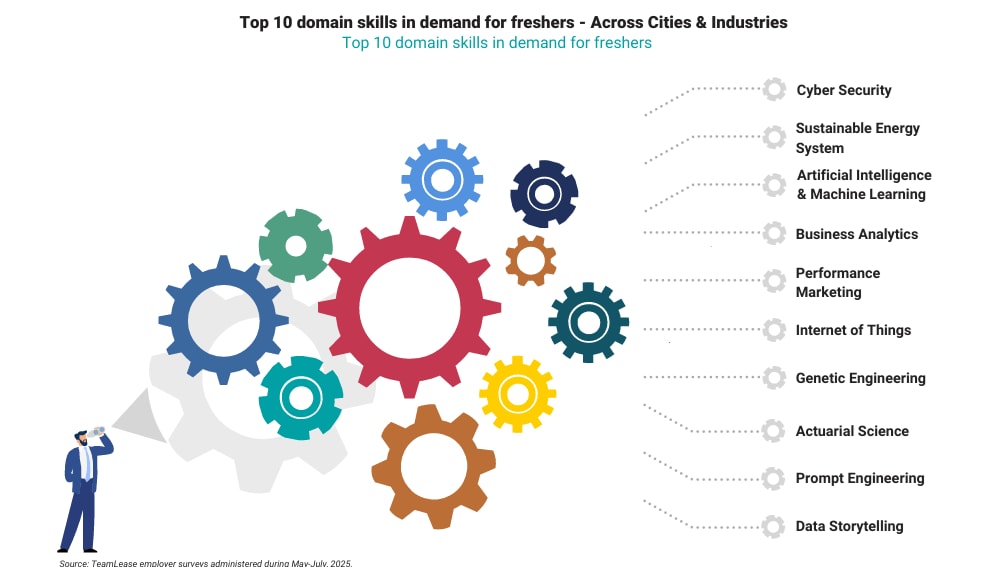
Short-term certifications have become a common part of fresher’s resumes. But their value depends entirely on how they are chosen and used.
Employers don’t see certifications as replacements for degrees. Instead, they view them as signals. A well-chosen course shows that a candidate understands industry expectations and has taken initiative to bridge skill gaps.
Courses that work best are those aligned with specific roles and industries, especially when they include hands-on learning or projects. Random certifications done without context rarely make a difference. What matters is whether the fresher can explain what they learned and how it applies to the job.
When recruiters look at fresher resumes today, they are asking practical questions: Can this person use the tools required for the role? Do they understand how the industry works? Can they communicate clearly and learn quickly?
Internships Are Important To Land A Job
One important shift that many freshers still overlook is the rise of degree apprenticeships and work-integrated roles. Internship opportunities combine learning with real-world experience and are increasingly attractive to employers.
Internships or apprenticeships offer a practical way to gain industry exposure while earning and learning simultaneously, which in turn helps you to land traditional entry-level jobs.
Today, when an employer scans your resume, apprenticeships stand out as a strategic hiring route for companies looking to nurture long-term talent.
Soft Skills Matter More Than Ever
The report shows a clear trend that employers are placing more importance on soft skills. And this doesn’t mean vague personality traits; it refers to real skills needed in the workplace.
As AI and automation take over repetitive tasks, human skills have become more visible. Employers value freshers who can listen actively, communicate clearly, handle feedback, manage uncertainty, and work well with others. These qualities directly affect productivity, team culture, and customer experience.
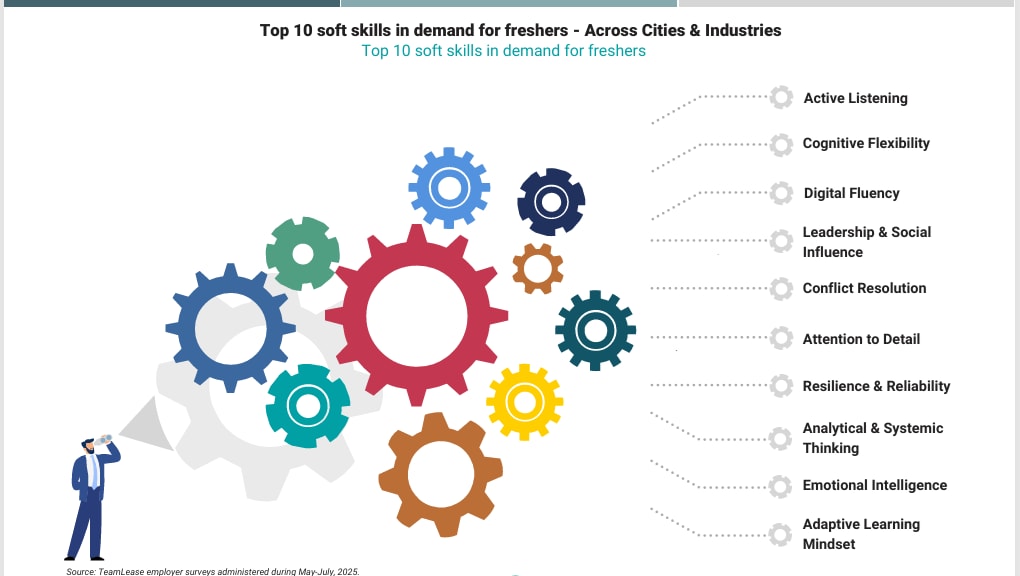
In many cases, employers are willing to train technical skills if a fresher demonstrates the right mindset. But they are far less willing to compromise on attitude, adaptability, and reliability.
In simple terms, how you work now matters as much as what you know.
What You Should Focus On While Applying For Jobs
The biggest mistake freshers make is focusing only on applications. In today’s market, preparation matters more than volume.
Freshers who succeed are those who invest time in building practical skills, understanding their chosen industry, improving communication, and gaining any form of real-world exposure. Even small projects, internships, or freelance assignments can significantly improve employability.
In 2026, jobs don’t go to the most qualified candidate on paper. They go to the candidate who best fits the role at that moment.