






Why is Banda repeatedly emerging as one of the hottest places on Earth? Scientists say the answer lies far beyond a temporary heatwave. From disappearing forests and drying rivers to rampant sand mining
and rising global temperatures, Uttar Pradesh’s Bundelkhand district is slowly turning into a giant heat trap, which the experts described as a “vicious circle of heat”.
On Tuesday, Banda recorded a blistering 48.2 degrees Celsius, making it the hottest city in India and among the hottest in the world. Just two days earlier, the district had touched 47.6 degrees Celsius — one of the highest daytime temperatures recorded globally this season. The alarming rise has once again triggered fears that Banda could soon break its all-time record of 49.2 degrees Celsius, recorded on June 10, 2019.
‘MAN-MADE HEAT ISLAND’
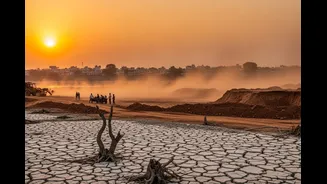
But scientists and environmental experts say this is no longer merely an extreme weather event. Banda, they warn, is gradually transforming into a “man-made heat island”, where ecological destruction, shrinking green cover, drying rivers, rampant sand mining and climate change are combining to trap heat in a vicious cycle.
The India Meteorological Department (IMD) has issued a red alert for severe heatwave conditions in Banda and several districts of southern Uttar Pradesh. Senior scientist at IMD’s Lucknow centre, Mohammad Danish, said the situation in Bundelkhand is far more severe because the region remained largely unaffected by western disturbances that temporarily cooled other parts of north India earlier this month.
“The impact is more intense in southern Uttar Pradesh because the western disturbances that brought temporary relief to many areas had very little effect on Bundelkhand,” Danish said.
“As a result, districts like Banda entered the current heatwavephase with already elevated temperatures. The rocky terrain absorbs heat rapidly during the day and releases it very slowly at night, making the conditions worse,” he added.
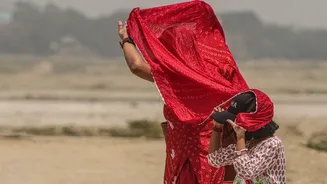
According to the meteorological department, dry and harsh westerly winds originating from the Thar Desert are further intensifying the heat. Strong surface winds of 20-40 kmph are sweeping through the region, while unusually warm nights are preventing any meaningful cooling after sunset.
DAILY LIFE DISRUPTED
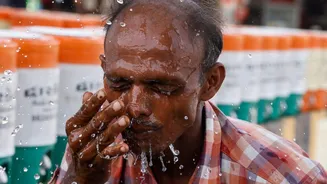
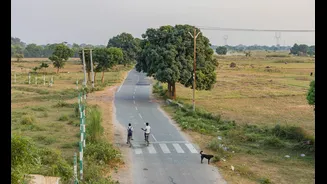
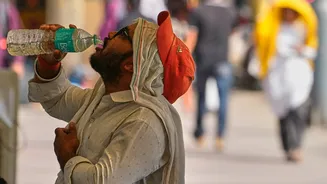
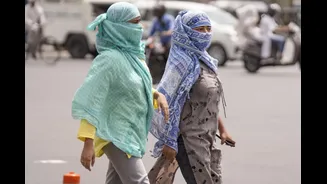
The relentless heatis now severely disrupting daily life in Banda. Roads wear a deserted look during afternoons, while farmers and labourers are being forced to alter their working hours to escape the punishing temperatures.
“I now work inside the office from morning till evening,” said a local resident. “Going out into the field during daytime has become nearly impossible.”
Environmental researchers say Banda’s geography has always made summers harsh. The district lies in the semi-arid Bundelkhand belt, marked by rocky terrain, sparse vegetation and low water retention capacity. However, human activity over the last two decades has significantly worsened the crisis.
Prof Dinesh Saha, head of the meteorology department at Banda Agriculture University, said the district’s fragile ecological balance has been deeply damaged.
“The region’s rocky terrain absorbs limited water even under normal conditions. Mining activities have accelerated the drying of rivers and reduced groundwater recharge. Deforestation has weakened moisture retention, while dust from stone-crusher units settles over soil and vegetation,” he said.
“All these factors compound each other. The situation is serious.”
SAND MINING
Experts say one of the biggest contributors to Banda’s rising temperatures is large-scale sand mining in the Ken river basin. Environmental assessments estimate that nearly 2,000 to 3,000 trucks of sand and morang are extracted daily from the region.
Padma Shri awardee and water conservation expert Uma Shankar Pandey, who has extensively studied the Ken river, said excessive mining has stripped away the river’s natural cooling system.
“Excessive extraction has removed the natural river sand that helped retain water and recharge groundwater. In its place, exposed rocky surfaces increase runoff and reduce water retention,” he explained.
The impact is now visible across villages, where groundwater levels are steadily falling. Wells dry up earlier every summer, forcing residents to dig deeper borewells in search of water.
Geologists also point to Banda’s extremely poor green cover. According to experts, only around 3% of the district currently has green cover — among the lowest figures in Uttar Pradesh.
A recent study conducted jointly by researchers from Banda Agriculture University, Lucknow University, Banaras Hindu University and Mahatma Jyotiba Phule Rohilkhand University found that Banda’s forest cover declined from nearly 120 square kilometres in 2005 to around 95 square kilometres now — a reduction of over 15%. Dense forest cover witnessed an even sharper decline.
The study warned that if ecological degradation continues at the present pace, several parts of Banda could become barren within the next two decades. Researchers also blamed large-scale infrastructure expansion and unchecked environmental exploitation for accelerating the damage.
THE VICIOUS CIRCLE OF HEAT
Prof Dhruv Sen Singh from the geology department of Lucknow University said Banda is now trapped in what scientists describe as a “vicious circle of heat”.
“Banda has become a heat island because of loss of green cover, loss of moisture, increase in sandy surfaces, decline in water bodies and the hot westerly winds coming from the Thar Desert,” he said.
“The surface heats throughout the day and before it can cool down at night, another intensely hot morning begins. This cycle leaves almost no respite.”
He added that humidity levels in the region have dropped drastically, further intensifying the heat.
“Humidity normally helps moderate temperatures, but in Banda it is almost negligible now. The Bundelkhand region comprises rocky terrain, which intensifies heat absorption. Low vegetation and shrinking rivers like the Ken and Baghain have further worsened the situation,” he said.
Scientists say Banda’s crisis reflects the larger threat posed by climate change across north India. Heatwaves are becoming more frequent, arriving earlier and lasting longer than before. But in Banda, climate change is colliding with local environmental degradation, making the district exceptionally vulnerable.
For now, weather officials warn that the heatwave is far from over. The IMD has forecast severe heatwave conditions across large parts of Uttar Pradesh over the next several days, with temperatures expected to remain between 44 and 48 degrees Celsius.
And in Banda, where barren land now radiates heat like a furnace, residents fear the worst may still be ahead.