





The story of the Bharatiya Janata Party (BJP) in Kerala has long been one of persistence without proportional reward. For decades, the state’s politics has been tightly held between two dominant fronts
– the Congress-led UDF and the CPI(M)-led LDF – leaving little room for a third force to emerge. But the 2026 Assembly election may well be seen as the moment when the BJP’s long struggle finally translated into tangible gains. Check Live updates on Kerala election result here.
For the first time in its history, the BJP has won three Assembly seats in Kerala, marking its best-ever performance in the state. This is a symbolic breakthrough in a state where the party had, until now, struggled to move beyond the margins.
To understand the scale of this achievement, one needs to look at the past. The BJP had managed to win just one seat ever before — Nemom in 2016, through veteran leader O Rajagopal. After that, the BJP slipped back to zero in 2021, reinforcing the perception that Kerala remained a difficult terrain. That narrative has now been disrupted.
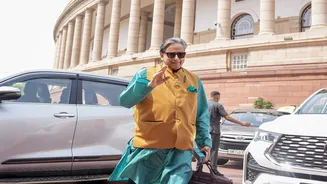
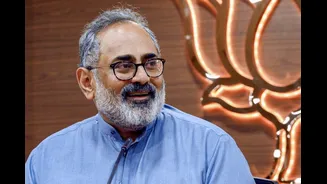
In the 2026 Kerala Assembly Election, the BJP has won Nemom (Rajeev Chandrasekhar), Kazhakkoottam (V Muraleedharan), and Chathannoor (BB Gopakumar), expanding both its geographical and political footprint. What makes this particularly significant is that these victories indicate a pattern of consolidation in select pockets.
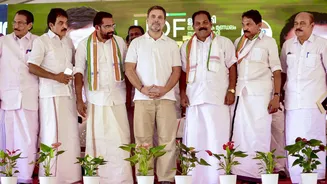
Ironically, this BJP milestone comes in an election where the Congress-led UDF is set to form the government, ending a decade of LDF rule. Yet, even in a contest dominated by the two traditional fronts, the BJP has managed to carve out a space for itself.
With around 11.5 per cent vote share, the party has not only converted votes into seats but also signalled that it is no longer electorally irrelevant in Kerala.
Political observers see this as part of a slow but deliberate strategy, focusing on constituencies where demographic and organisational factors offer an opening.
All three winning constituencies are often seen as areas where the BJP has invested sustained effort over the years. Interestingly, these are seats with relatively higher Hindu voter bases and urbanising profiles, which have gradually become more receptive to the party’s messaging.
Rather than spreading itself thin across the state, the BJP appears to have targeted winnable pockets, built cadre strength, and capitalised on local leadership.
Beyond the numbers, this result carries a deeper political meaning. Kerala has long been viewed as one of the last strongholds where the BJP struggled to gain legislative presence. Winning three seats changes that perception.
Three seats in a 140-member Assembly may not alter government formation, but it reshapes the conversation. The BJP is no longer an outsider looking in, it is now a player with a presence, however limited. The bigger question is whether this is a ceiling or a stepping stone.
If the party can build on these gains, expand beyond select constituencies, deepen its organisational network, and adapt to Kerala’s unique political culture, 2026 may be seen as the beginning of a longer journey. As Rajeev Chandrasekhar put it, “This is the start of a new beginning.”