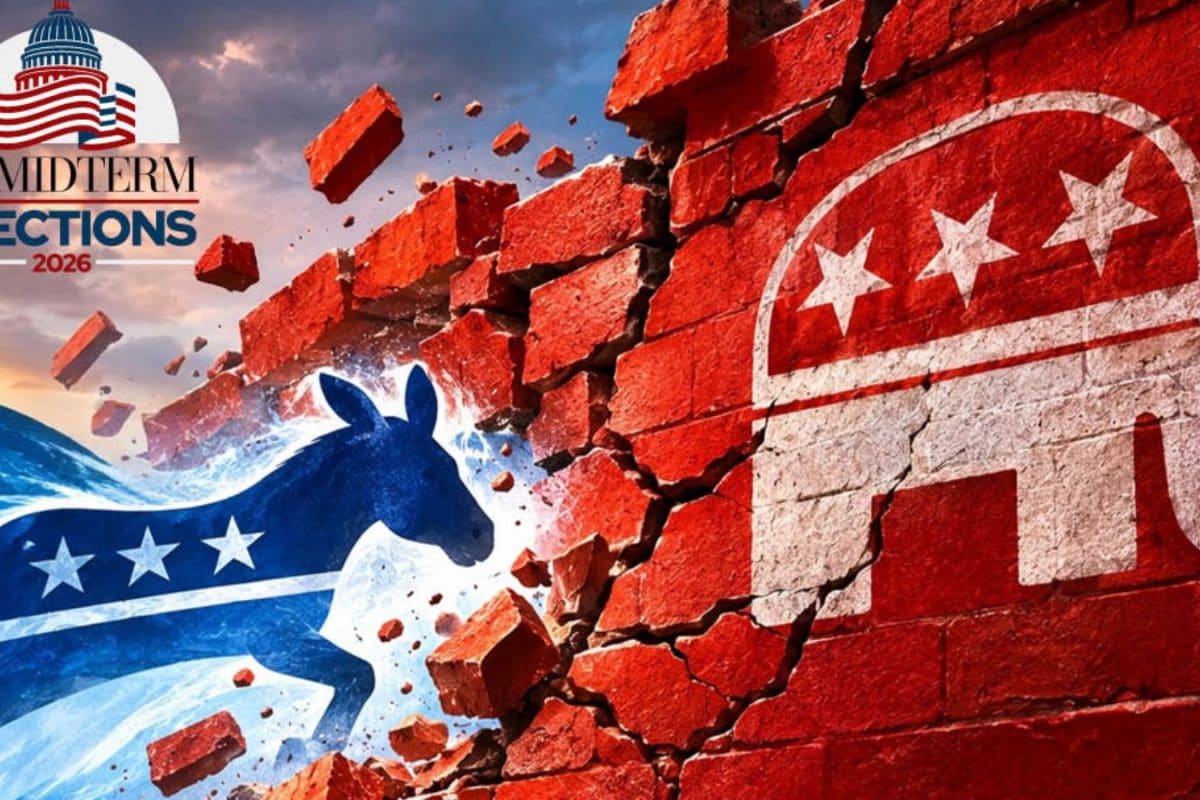








US Stock Market Rally: US stock markets staged a sharp rally on Wednesday after Democrats secured control of both chambers of Congress in the midterm elections, with investors betting that the shift in political
power could rein in President Donald Trump’s policy decisions and reduce uncertainty for businesses and financial markets.
The Dow Jones Industrial Average surged 1,569.40 points, or 3.03%, to close at 53,356.12. The index moved above the 53,000 mark for the first time since September 8 and recorded its biggest single-day gain since April 9, 2025, when Trump announced a pause on his reciprocal tariffs.
The S&P 500 advanced 1.58% to settle at 7,688.62, marking its strongest daily performance in three months. The Nasdaq Composite gained 1.44% to close at 25,736.51.
The rally came after an initial bout of selling, as investors assessed the implications of a Democratic-controlled Congress for Trump’s economic and foreign policy agenda. The election outcome is expected to give Democrats greater legislative and oversight powers, potentially making it harder for the administration to push through major tax, spending and regulatory changes.
Why Wall Street welcomed a Democratic victory
The market reaction may appear counterintuitive, given that Trump has traditionally been viewed as the more market-friendly candidate, with his emphasis on tax cuts, deregulation and business-friendly policies.
However, investors appear to be looking beyond the political divide and focusing on the possibility of greater policy stability. A Congress controlled by Democrats could act as a check on some of Trump’s more unpredictable decisions, particularly those concerning tariffs, government spending and international conflicts.
Trump’s tariff policies and the US-Iran conflict have been important sources of uncertainty for investors. The conflict has contributed to elevated energy prices and inflation concerns, while uncertainty over trade policy has weighed on corporate investment and business sentiment.
A divided political environment could make sweeping policy changes more difficult and reduce the likelihood of sudden shifts that unsettle financial markets.
Oil prices plunge more than 8%
The equity rally gathered further momentum as crude oil prices slumped more than 8%, providing additional relief to investors concerned about inflation and energy costs.
US crude futures fell sharply after Vice President JD Vance attributed the Republican Party’s election setbacks to the Iran war. Brent crude futures also declined more than 8% to fall below $100 per barrel.
The fall in oil prices was particularly positive for the broader economic outlook, as lower energy costs could ease inflationary pressures and reduce the burden on businesses and consumers.
Shares of companies linked to domestic economic activity led the gains. Walmart advanced around 3%, while Bank of America rose approximately 4%, as investors also looked beyond technology stocks for opportunities.
What the Democratic-controlled Congress means for markets
The election outcome could have implications across several sectors, particularly technology, artificial intelligence, energy and defence.
Democrats are expected to push for tighter oversight of artificial intelligence, large technology companies and digital assets. Such measures could complicate the investment plans of companies committing billions of dollars to AI infrastructure.
Trade policy will also remain a key concern. Investors will watch whether the new Congress can influence Trump’s tariff agenda and limit the scope of further trade-related disruptions.
Defence spending and the future of the Iran conflict are other areas likely to attract attention. While a Democratic-controlled Congress could increase scrutiny of the administration’s foreign policy decisions, the extent to which it can influence the White House remains uncertain.