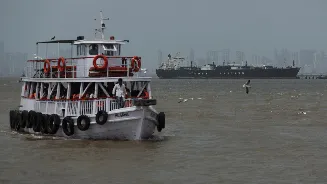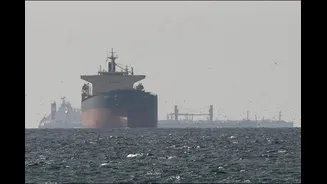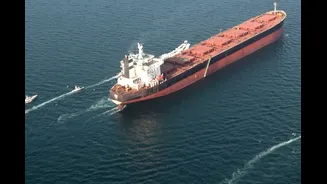






Another India-flagged vessel, Green Asha, has safely crossed the Strait of Hormuz, even as tensions in the region remain high. The development comes at a time of continued disruption and security concerns
along one of the world’s most crucial oil routes. This marks the ninth Indian tanker to pass through the strait since the conflict began.
Disruptions in a key global route
Iran has tightened control over the Strait of Hormuz following US-Israeli strikes on February 28, affecting global fuel supplies and shaking energy markets. Maritime data shows that 60 per cent of commodity-carrying ships using the route have either originated from Iran or were headed there.
Despite the blockade, India has seen a relatively high number of vessels using the route. At least eight Indian ships had already crossed the strait before Green Asha’s transit.
Indian tankers continue operations
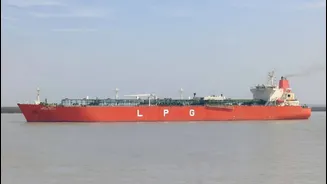
Several Indian vessels have successfully navigated the route. Two LPG carriers, BW TYR and BW ELM, moved through the conflict zone carrying around 94,000 tonnes of cargo.
Four Indian-flagged LPG tankers – Pine Gas and Jag Vasant – delivered 92,612 tonnes of LPG between March 26 and 28. Earlier, MT Shivalik and MT Nanda Devi carried about 92,712 tonnes of LPG to Mundra Port in Gujarat and Kandla Port on March 16 and 17.
Oil tanker Jag Laadki transported 80,886 tonnes of crude oil from the UAE to Mundra on March 18, while Jag Prakash safely crossed the strait carrying gasoline from Oman to Africa.
Other vessels that have transited safely include Shivalik, Nanda Devi, Jag Laadki, Pine Gas, Jag Vasant, BW Tyr, BW Elm, and Green Sanvi. The Green Sanvi crossed the strait on Friday night with about 46,650 metric tonnes of LPG.
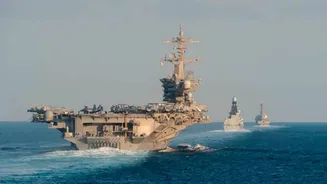
Indian Navy warships remained on standby to assist merchant vessels.
Iran’s position on Hormuz
India has been in talks with Iranian authorities to ensure safe passage for its vessels amid the maritime blockade linked to the ongoing Middle East conflict.
Iran earlier told the International Maritime Organisation that “non-hostile vessels” would be allowed to pass through the strait if they cooperate with Iranian authorities. However, ships linked to the US, Israel, or others involved in the conflict would not qualify for such passage.
Iran has also hinted at expanding pressure beyond Hormuz. A senior Iranian lawmaker suggested that Tehran could target the Bab el-Mandeb Strait, another critical global shipping route.
Iranian Parliament Speaker Mohammad Bagher Ghalibaf raised questions about how much of the world’s oil, LNG, wheat, rice, and fertilizer passes through that route, highlighting concerns over global supply chains.
The ongoing conflict has now entered its sixth week.