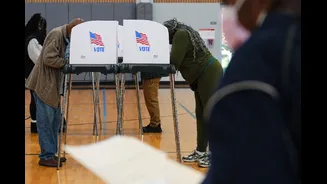






A sweeping “blue wave” has handed Democrats control of both the U.S. Senate and House of Representatives in the 2026 midterm elections, dealing a severe blow to President Donald Trump’s legislative agenda
for the remainder of his second term. In a late-night media blitz following the decisive defeats, President Trump deflected personal blame but acknowledged that the eight-month-old war in Iran heavily impacted the Republican Party’s performance.
WHAT TRUMP BLAMED: THE WAR, GAS PRICES, AND HIS ABSENCE FROM THE BALLOT
In interviews with The Wall Street Journal and The New York Times, Trump offered a multi-layered defense for the Republican rout:
The War in Iran: Trump admitted that “Iran was a piece of it”, noting that the conflict—launched alongside Israelin February to dismantle Tehran’s nuclear program—had dragged down his approval ratings. However, he firmly stated he had no regrets: “I did the right thing. I would have done it again.”
Surging Fuel Costs: Rather than the military campaign itself, Trump pinpointed skyrocketing energy prices as the main political liability. With Brent crude topping $100 a barrel and domestic diesel crossing $6 a gallon, Trump remarked, “People agree with what I’m doing on Iran, but they really probably weren’t willing to do the short-term consequence of paying more for gasoline.”
“I Wasn’t on the Ticket”: Trump repeatedly insisted the results were not a referendum on his presidency. He argued that because his name was not explicitly on the ballot, the GOP failed to mobilize enough core MAGA voters to turn out.
In a phone interview with The Wall Street Journal, President Trump stated that the war in Iran was partially to blame for widespread Republican losses in the 2026 midterm elections. When asked whether the conflict contributed to the party’s poor performance, Trump responded, “Iran was a piece of it.”
Trump explicitly maintained that he does not have second thoughts about launching the war earlier in the year. He stated, “I don’t think about it. I did the right thing. I would have done it again.” Trump clarified that he believed the resulting spike in oil prices—which caused gasoline and diesel costs to surge for U.S. voters—was the primary political liability, rather than the war itself. Trump firmly rejected the idea that the election results were a repudiation of his administration. He argued that the primary factor was his absence from the ballot, stating, “It was a point in time, and I wasn’t on the ballot. The biggest issue is that I wasn’t on the ballot.”
Instead of blaming the economy or administration corruption, Trump pointed out that some of the Republican candidates “could have been better,” noting that many had flaws that voters found unacceptable.
Despite reported finger-pointing within the administration over the length of the conflict, Trump stated he had no plans for personnel shakeups and expressed strong support for Defense Secretary Pete Hegseth.
In a separate election night interview with Fox News, Trump reiterated this stance, placing the blame more squarely on gas prices by stating, “People agree with what I’m doing on Iran, but they really probably weren’t willing to do the short-term consequence of paying more for gasoline.”
WHAT WENT WRONG: THE REALITY OF THE REPUBLICAN DEFEAT
Exit polls, election data, and statements from unified analysts paint a different picture, signaling a widespread voter rebuke of the administration’s active policies:
Voter Backlash Over Everyday Inflation: While Trump claimed on Election Daythat “inflation is solved,” annual inflation hovering around 3.7% combined with severe domestic fuel costs frustrated voters. Exit tracking indicated a staggering 91% of voters blamed Trump’s war for high pump prices.
Rejection of Handpicked Candidates: High-profile Trump-endorsed nominees collapsed in traditionally deep-red territories. Striking losses included Republican Senator Darline Graham of South Carolina (who ran following the death of her brother, Lindsey Graham) and Texas Attorney General Ken Paxton, who lost his Senate bid to Democrat James Talarico.
Erosion of the Core Base: The GOP suffered a catastrophic slide among vital demographic groups that typically anchor the party. According to polling trends reported during the count, Trump’s approval dropped significantly among rural white voters and non-college-educated white men.
A Pervasive Blue Wave: Democrats successfully flipped critical Senate seats and House districts across conservative strongholds, including North Carolina, Ohio, Iowa, Texas, South Carolina, and Kansas. In total, seven Senate seats and more than 30 House seats shifted columns.
MOVING FORWARD: THE NEW WASHINGTON REALITY
Despite his subdued tone on election night, Trump confirmed he is “absolutely willing” to accept the election results. He expressed a vague desire to compromise with congressional Democrats, but issued a sharp warning that he holds ultimate legislative leverage: “Otherwise I’d just veto everything, and they’re not gonna want that.”
With Democrats controlling both chambers, the administration faces the stark prospect of gridlock, intense congressional oversight, and a severely restricted legislative path for the final two years of Trump’s term.
With agency inputs