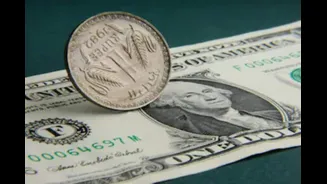








The Indian rupee fell to an all-time low of 91 per dollar in December amid its rapid decline as a foreign purchasing power. The economic implications of the steep decline are evident already. Foreign institutional
investors (FIIs) have been forced to actively withdraw funds from the Indian equity markets, while Indian investors’ domestic portfolios are facing stress due to the existing volatility.
Among individuals, outbound travellers are facing the heat of the rupee’s sustained decline, with immediate travel plans costing 10-15 per cent higher than the norm. Even those who made their bookings in advance may have to closely monitor their discretionary spending because of the INR depreciation.
Rupee’s Decline Hurt Students And Parents
The currency slide impacts overseas education and Indian parents heavily, especially those without any investments in dollar-denominated avenues as a means to cover for the economic fluctuations. Already in flux in the US due to geopolitical and visa policy changes, the overseas education space is now a challenge in the rest of the world as well for Indian students and parents.
“The uncertainty has prompted many students to defer decisions, particularly to the US, which remains the largest education market globally with over 4,000 universities,” Eela Dubey, Co-founder, Edufund, an education financing platform, told ET Wealth.
Education counselling firm Collegify’s Co-founder Rohan Ganeriwala reinforced how the current depreciation has left Indian students and their budget-conscious parents in a major uncertain phase. “The rupee has moved from around Rs 87 per dollar in September to about Rs 91 now, and while currency cycles are not unusual, the short-term volatility may require families to reassess their planning. Many students have already taken education loans, and with a combination of rising tuition, forex charges, and currency fluctuations, overall costs can deviate from original estimates,” Ganeriwala said.
“For students on scholarships, universities are generally open to reviewing requests for additional support on a case-by-case basis. At the same time, students are increasingly looking at on-campus employment and other opportunities to manage expenses.”
Also affected amidst the currency crises are outbound travellers. Those looking to book their flight tickets and hotels now are set to face a 10-15 per cent increase in costs. “The weaker rupee directly impacts airfares, visas, overseas hotel rates and on-ground spends. As a result, we are seeing travellers either shortening their trips, or opting for closer-haul destinations, or bundled packages to manage budgets,” says Karan Agarwal, Director, Cox & Kings.
Invest Outside India
Decline in the rupee’s foreign purchasing power has also aggravated the risks for investors and pushed them towards global diversification. A falling rupee boosts returns from assets based overseas and can be a great source of stability. However, market experts advise against currency movements and foreign upsides becoming a primary basis of investment decisions.
“A weaker rupee can benefit investors when overseas profits are eventually repatriated to India, but it is not an unqualified positive,” says Kunal Valia, Founder and Compliance Officer, StatLane.
Valia stressed that India is a net importer and that massive currency depreciation increases the import costs. It also widens trade and current account deficits, while hurting the broader economy.