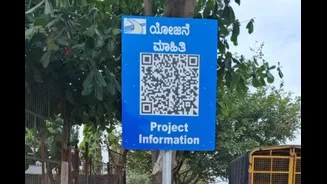








The National Highways Authority of India (NHAI) has begun installing QR code-based information boards along major national highway corridors in Bengaluru, pitching the move as a step towards greater transparency
and improved ease of travel. However, the initiative has drawn criticism from several users, who say that the boards do not provide project-related details that were earlier promised.
In a post on X, NHAI said the QR code boards are being installed “to enhance transparency and improve ease of travel for National Highway users”. According to the authority, the boards are currently available on the Bengaluru-Nelamangala stretch of NH-48 and the Bengaluru-Kolar–Mulbagal stretch of NH-75.
The authority said that by scanning the QR code, commuters can “instantly access essential details about the National Highway stretch, nearby toll plazas and wayside amenities”.
It added that the QR codes also offer “quick access to important emergency contacts, including highway patrol teams, engineers, police stations, hospitals, and the National Highway helpline.”
NHAI said the initiative reflects its efforts to use technology for “a safer, more informed, and seamless travel experience”.
To enhance transparency and improve ease of travel for National Highway users, NHAI is installing QR code-based information boards on key National Highway corridors in #Bengaluru. These QR boards are currently available on Bengaluru–Nelamangala section of NH-48 and… pic.twitter.com/jzgAfGQwnj
— NHAI (@NHAI_Official) December 15, 2025
However, a community note attached to the post questioned whether the move delivers the transparency promised earlier by Union Minister for Road Transport and Highways Nitin Gadkari. The note said that the portal accessed through the QR code does not display “any useful information required for transparency,” adding that Gadkari had promised details such as the name of the MLA, contractor and project cost.
Several users echoed this concern in their replies.
One user questioned the practicality of the system, writing, “To scan this QR code, someone needs to stop his vehicle and create traffic congestion. How do you ensure that there are no posters pasted on the QR code?”
To scan this QR code, someone needs to stop his vehicle and create traffic congestion.
How do you ensure that there are no posters pasted on the QR code? pic.twitter.com/BVtvDZ1VE6
— DriveSmart
Another criticised the absence of accountability-related information, stating, “This isn’t transparency, it’s distraction. If contractor name, project cost, maintenance agency and grievance accountability are missing, the app serves no public purpose. Citizens don’t die because they couldn’t find a hotel. They die because no one is held responsible for bad roads.”
This isn’t transparency, it’s distraction. If contractor name, project cost, maintenance agency and grievance accountability are missing, the app serves no public purpose.
Citizens don’t die because they couldn’t find a hotel. They die because no one is held responsible for bad…
— Sameer Gwasikoti (@sameergwasikoti) December 15, 2025
Some users also raised concerns over the cost and usefulness of the initiative. “They must have spent crores of rupees on these useless features, no one is going to stop and scan,” one user wrote, adding that transparency could be improved by sharing contractor details, construction costs, maintenance funds, timelines, and clear contact details for complaints.
They must have spent crores of rupees on these useless features; no one is going to stop and scan. People read signage and boards to plan rest areas and exits. Transparency can be increased by sharing contractor details, construction costs, allocated maintenance funds, and…
— pawan kumar singh (@jeet271) December 15, 2025
Another comment summed up the broader criticism by asking, “What transparency is this? Where is the total cost? Where is the contractor’s name? Who is responsible for maintenance? This looks like nothing but a gimmick.”
What transparency is this?
Where is the total cost?
Where is the contractor’s name?
Who is responsible for maintenance?This looks like nothing but a gimmick.
— Shankar Singh (@shankarVrikshit) December 15, 2025
Overall, though NHAI calls the QR code boards a technology-driven initiative, users say the system does not address transparency and accountability gaps in highway projects.