






Before parking your savings in a fixed deposit (FD), it is worth taking a close look at the interest rates on offer across banks. While longer-tenure FDs often come with higher returns than short-term
deposits, this is not a hard-and-fast rule. Rate differences across banks can be meaningful, and even a gap of 50 basis points can substantially alter your final maturity value.
To put this in perspective, an investment of Rs 10 lakh in a 3-year FD with an interest rate that is 0.50 percentage points higher can fetch roughly Rs 15,000 more over the tenure. That makes comparison essential, especially in a stable-rate environment where incremental gains matter.
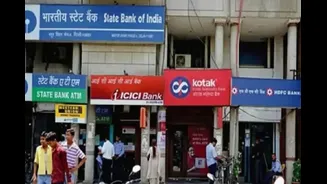
Among private sector lenders, HDFC Bank and ICICI Bank are currently offering identical rates on 3-year fixed deposits. Both banks pay 6.45% per annum to regular depositors, while senior citizens are eligible for 6.95%. These rates are broadly in line with the private banking average.
Kotak Mahindra Bank is marginally lower for regular depositors at 6.4% for the same tenure, with senior citizens earning 6.9%. The difference may appear small, but on large deposits, it can still impact returns.
Among private banks, Federal Bank stands out. As per rates effective from January 1, 2026, the bank is offering 6.75% to regular customers and a comparatively attractive 7.25% to senior citizens on 3-year FDs, making it one of the highest-paying options in this bucket.
Turning to public sector banks, State Bank of India, the country’s largest lender, currently offers 6.3% to regular depositors and 6.8% to senior citizens for a 3-year tenure. While SBI’s rates are slightly lower than those of leading private banks, many depositors continue to value its scale and perceived safety.
Union Bank of India is offering 6% to regular customers and 6.5% to senior citizens on 3-year fixed deposits, according to rates applicable as of December 5, 2025. This places it at the lower end of the spectrum among major banks.
Meanwhile, Canara Bank is positioned in the middle of the PSU pack, with interest rates of 6.25% for regular depositors and 6.75% for senior citizens on 3-year FDs, based on rates effective from January 5, 2026.
The takeaway for investors is straightforward: while safety and service matter, interest rate differentials across banks can materially affect outcomes over a three-year period. Comparing rates before locking in an FD can help ensure your savings work just a little harder for you.