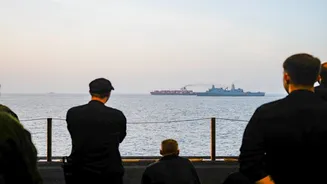









A day after the United States confirmed it had intercepted an Iranian cargo vessel, fresh details have emerged about the impact of the naval blockade in the Strait of Hormuz. According to The New York
Times, the US Navy has turned back 27 ships attempting to enter or leave Iranian ports since the blockade began about a week ago.
The action marks a significant escalation in maritime control in the region, with American forces closely monitoring vessel movements.
Touska vessel seized
A US military official said a team of Marines is currently searching and scanning containers aboard the Touska, the Iranian-flagged cargo ship seized in the Gulf of Oman on Sunday. The vessel was disabled after it reportedly tried to evade the blockade.
Officials said it was the first known case of a ship attempting to bypass the restrictions since the blockade came into effect. The Touska’s captain had ignored repeated radio warnings from US forces to stop.
How the interception unfolded
The guided-missile destroyer USS Spruance, part of a larger deployment enforcing the blockade, ordered the crew to evacuate the engine room. It then fired rounds from its Mk-45 deck gun into the ship’s propulsion system as the vessel moved towards Bandar Abbas in Iran.
The Mk-45 gun, mounted on the ship’s bow, can fire 16 to 20 rounds per minute. Each projectile weighs about 70 pounds and carries the explosive force of roughly 10 pounds of TNT.
What happens next
American officials said a decision on the vessel’s future will be taken after the search is completed. One option under consideration is towing the damaged ship to Oman. Another possibility is allowing it to continue to an Iranian port, if it remains operational.
A second US military official said the ship’s crew is expected to return to Iran soon.
Impact of US Hormuz blockade
Officials indicated that the blockade is already affecting shipping behaviour. Kevin Donegan, a retired US vice admiral, said the message has spread quickly and many ships are now avoiding the area.
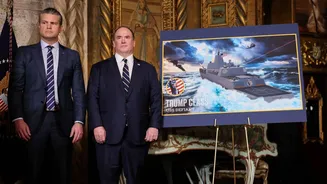
US authorities confirmed that several vessels are under close watch. “We have eyes on every single one of them,” said Brad Cooper, head of Central Command.
At the same time, Dan Caine, chairman of the Joint Chiefs of Staff, said US forces would pursue any Iranian-flagged vessel or ships providing support to Iran, including in regions beyond the Gulf.
Iran issues strong warning
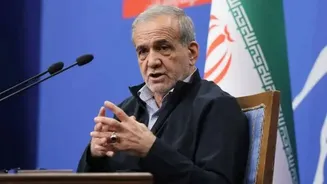
Iran has reacted sharply to the seizure of the Touska. Its foreign ministry called the interception a “criminal and illegal” act and accused the United States of targeting a commercial vessel near Iranian waters.
Tehran has demanded the immediate release of the ship and its crew, warning of “grave consequences” if the issue is not resolved.
An Iranian military spokesperson also warned that necessary action would be taken in response, though officials said Tehran had so far held back to ensure the safety of the crew and their families.
Media reports in Iran claimed retaliatory drone strikes against US Navy ships, but the Pentagon said no such attack had taken place.