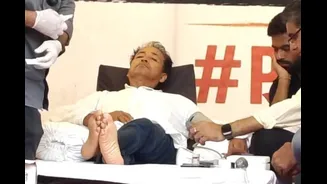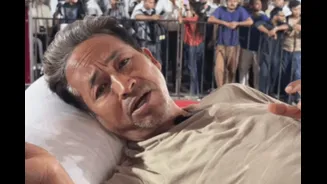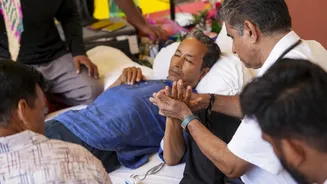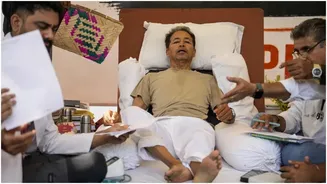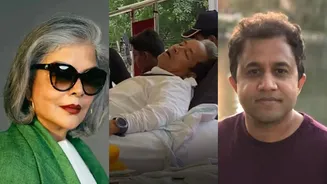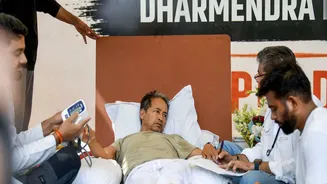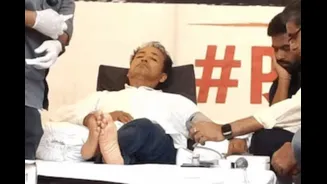





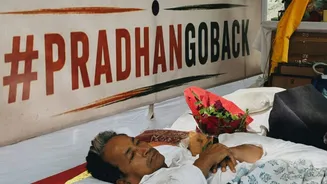



As climate activist and educationist Sonam Wangchuk’s indefinite hunger strike entered its 19th day on Thursday, the Delhi High Court directed the Centre and the Delhi government to ensure that his health
is monitored daily and that medical assistance is provided whenever necessary. The court observed that the “life of every citizen is precious” while hearing a plea seeking medical intervention as concerns over Wangchuk’s deteriorating health mounted.
The development has once again brought into focus a question that has surfaced during several high-profile protests in India: Is a hunger strike legal? Can a person choose to fast indefinitely? And at what point can the State step in?
Here’s what the law says.
Is A Hunger Strike Illegal?
No. There is no law in India that prohibits a person from going on a hunger strike.
The Constitution guarantees citizens the right to freedom of speech and expression and the right to assemble peacefully without arms under Article 19(1)(a) and Article 19(1)(b). Peaceful protests, including sit-ins and symbolic fasts, are therefore generally protected constitutional activities.
However, these rights are not absolute. The State can impose reasonable restrictions in the interests of public order, security, morality or other grounds specified under Article 19.
Is Fasting Until Death Different?
Legally, yes. While beginning a hunger strike is not a criminal offence, authorities become involved when the protest begins posing a serious threat to the protester’s life.
The government has a constitutional obligation under Article 21, which guarantees the right to life, to protect life. Courts have repeatedly held that the State cannot remain a passive spectator if someone’s life is in imminent danger.
This is why authorities often monitor the health of hunger strikers, shift them to hospitals or administer treatment if their condition becomes critical.
Can The Government Force-Feed A Hunger Striker?
There is no specific law that expressly authorises force-feeding every hunger striker.
In practice, authorities usually first rely on medical advice, counselling and persuasion. If a court directs medical intervention, or if doctors believe the person’s life is in immediate danger, hospitalisation and treatment may follow.
Courts generally attempt to strike a balance between an individual’s autonomy and the State’s duty to preserve life.
In Wangchuk’s case, the Delhi High Court has not ordered force-feeding. Instead, it directed authorities to conduct daily health checks and provide medical assistance whenever required. The Centre informed the court that government doctors were already monitoring his condition.
Can Police Stop A Hunger Strike?
They can under certain circumstances.
Police may impose restrictions if the protest violates prohibitory orders, creates a law-and-order problem, obstructs public spaces or lacks the necessary permissions.
Authorities have, in the past, detained hunger strikers or shifted them from protest sites, citing concerns over public order or health.
Such action, however, is usually justified on grounds unrelated to the act of fasting itself.
What Have Courts Said?
Indian courts have generally recognised peaceful protest as a democratic right while simultaneously emphasising that the State has a responsibility to protect life.
On Thursday, while hearing Wangchuk’s case, the Delhi High Court observed that “life is precious” and directed the Centre and Delhi government to regularly monitor his health. The Bench also said appropriate medical intervention should be provided whenever necessary.
Has India Seen Major Hunger Strikes Before?
Yes. Hunger strikes have a long history in India’s political movements.
Mahatma Gandhi used fasting as a form of non-violent resistance during the freedom struggle. In independent India, several prominent figures, including Anna Hazare, Irom Sharmila, and various political leaders and activists, have resorted to indefinite fasts to press their demands.
While governments have often allowed such protests initially, authorities have also intervened through arrests, hospitalisation or medical supervision when health conditions worsened.
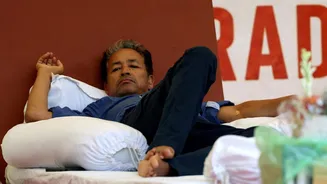
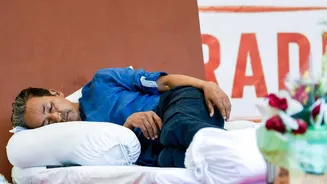
Wangchuk is currently on an indefinite hunger strike at Delhi’s Jantar Mantar, demanding the resignation of Union Education Minister Dharmendra Pradhan over the NEET paper leak and seeking broader education reforms. His doctor has said he has lost over 9 kg, raising concerns about possible organ damage if the fast continues.
Wangchuk, however, is resolute and says breaking the fast without any response from the government would send the wrong message. In a video message shared on X as his hunger strike entered Day 19, Wangchuk said that ending the protest now would signal that governments need not be held accountable.
I’m Not in good shape but not so bad either…
Rather than asking me to break my fast please join me on 20th July… Peaceful March to the Parliament.#cockroachjanataparty #jantarmantar #cjpprotest #chalosansad pic.twitter.com/QZ6VyxVMAR— Sonam Wangchuk (@Wangchuk66) July 15, 2026
Wangchuk urged supporters instead to strengthen the Cockroach Janta Party’s proposed “Chalo Sansad” march on July 20, coinciding with the start of Parliament’s Monsoon Session. He appealed to students from schools, colleges and universities to participate, describing it as “a real lesson in political science and democracy.”
He appealed to people to register for the march through the campaign’s website or missed call initiative.
“Come in thousands on July 20. Together, we will hand over this issue to the Parliament. Then I will believe that it has gone into the right hands,” Wangchuk said.