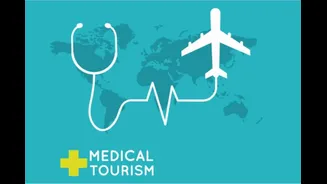






For years, India’s medical tourism story has been framed as a model of global healthcare success—world-class doctors, competitive pricing, and a steady inflow of international patients, particularly from
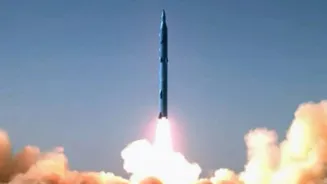
West Asia. But as the Iran–Israel conflict escalates, that narrative is beginning to unravel, revealing just how vulnerable this sector is to geopolitical shocks.
The early signs are already visible and they are hard to ignore. As per India Today, hospitals across India are witnessing a sharp drop in international patient arrivals, with the Middle East, one of India’s largest source markets, driving much of this decline. This is not a marginal fluctuation. It is a disruption at scale.
More starkly, The Economic Times reports that some hospital chains have seen overseas patient inflows fall by as much as 50% to 75%, alongside a 15–20% hit to revenues. These are not numbers that can be dismissed as temporary blips. They point to a systemic vulnerability.
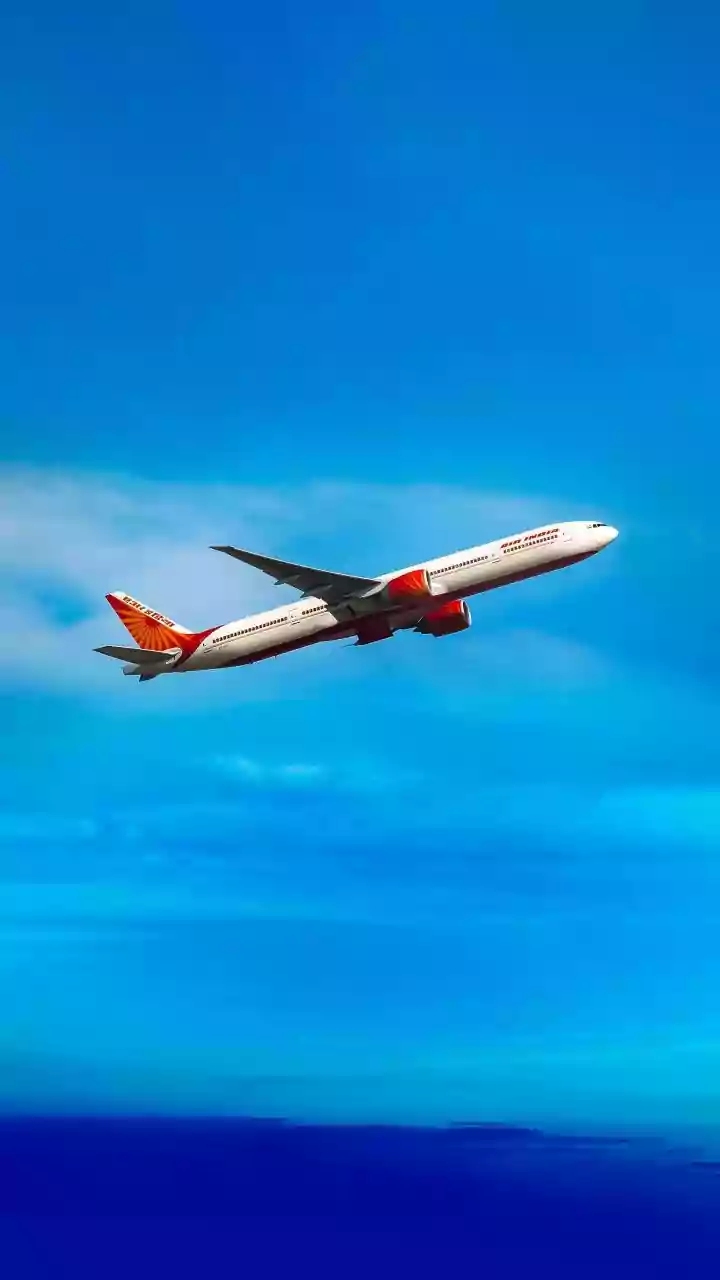
At first glance, the reasons appear logistical: disrupted airspace, flight cancellations, and rising travel costs. As reported by The Times of India, even routine travel across the Gulf has been affected, with governments stepping in to assist stranded passengers amid widespread aviation disruption.
But to reduce this crisis to travel inconvenience would be to miss the larger point.
Medical tourism is not just about affordability or clinical excellence, it is about trust, predictability, and ease of movement. When a patient chooses to travel across borders for treatment, they are making a high-stakes decision that depends as much on geopolitical stability as it does on medical expertise. War disrupts that calculus instantly.
Elective procedures are postponed. Non-urgent treatments are deferred. Families reconsider travel plans. As India Today notes, uncertainty alone is enough to derail medical travel, even before logistical barriers fully set in.
What makes this particularly significant for India is its deep dependence on West Asian markets. Patients from countries such as Iran, Iraq, Oman, and the UAE have long formed the backbone of India’s medical tourism inflow, seeking treatment in cardiology, oncology, orthopaedics, and more.
Now, that pipeline is effectively constricted. Industry reports cited by platforms like The CSR Journal indicate that hospitals are already seeing a steep decline in patients from the region, underscoring how quickly demand can collapse when geopolitical tensions rise. The impact is not confined to hospital balance sheets, it extends to an entire ecosystem of facilitators, translators, and support services built around international care.
There is a deeper lesson here, one that goes beyond the immediate crisis. India’s medical tourism sector has been built on a powerful but fragile assumption: that global mobility will remain uninterrupted. The current conflict challenges that assumption head-on. It reveals that healthcare, despite its essential nature, is not insulated from geopolitics. On the contrary, it is deeply entangled in it.
The irony is that India’s core strengths remain unchanged. Its doctors are still among the best, its costs remain competitive, and its infrastructure continues to attract patients globally. Yet, none of these advantages can compensate for closed airspace or heightened geopolitical risk.
In the short term, the outlook remains uncertain. If the conflict persists, the slowdown in patient inflows is likely to deepen. But there may also be a longer-term recalibration. As healthcare systems in conflict-affected regions come under strain, India could once again emerge as a preferred destination, once stability returns.
For now, however, the sector is confronting a reality it has long overlooked: that its growth is only as resilient as the global conditions that sustain it.
The Iran–Israel conflict has done more than disrupt flights and delay treatments. It has exposed a structural fault line in India’s medical tourism model, one that will require more than a return to normalcy to fix.
Because when war redraws borders in the sky, even the business of healing cannot remain untouched.