





The ambitious Mumbai-Ahmedabad High-Speed Rail Corridor (MAHSR) is moving forward with strong technical and financial backing from Japan. And as construction gathers pace on the ground, another journey
is unfolding thousands of kilometres away in Japan, where Indian railway officers are training to become the country’s first-ever Shinkansen pilots.
The high-speed corridor is being built using Japanese Shinkansen technology, known worldwide for speed, precision and safety. According to reports, a batch of 15 mid-career railway professionalshas been selected from across Indian Railways and metro systems for this prestigious programme.
The training is reportedly being conducted in collaboration with Japanese institutions such as the Japan International Cooperation Agency (JICA) and JR East.
Indian Officials Getting Trained In Japan For Mumbai-Ahmedabad High-Speed Rail Corridor
A recent video from the training programme has caught widespread attention online. It shows an Indian loco pilot practising Japan’s famous ‘point-and-call’ safety technique. In this method, drivers physically point at instruments and signals while verbally confirming their status.
This practice helps in minimising human error and also improves situational awareness. It forces the operator to stay alert and mentally present at all times.
Watch The Clip Here
Indian loco pilots are being trained in Japan for the upcoming Mumbai-Ahmedabad High-Speed Rail Corridor
What Are People Saying Online
The video has sparked several reactions online, with one social media user commenting, “Great move. Training Indian loco pilots in Japan for the Mumbai–Ahmedabad High-Speed Rail Corridor means we’re not just importing technology, we’re importing experience and safety culture too. If you’re building bullet trains, you might as well learn from the people who perfected them.”
Another wrote, “Japan didn’t just perfect Bullet Trains They perfected zero error culture. We’re not just importing speed, we’re importing accountability. That’s the real win. Machine banalo — par Japan jaisi discipline loge tab India truly badlega (You can build the machines but India will truly change only when we adopt discipline like Japan).”
“When will we train the passengers to behave like Japanese?” someone else said sarcastically.
What Mumbai-Ahmedabad High-Speed Rail Corridor Promises
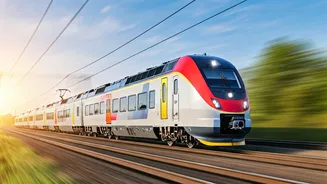
The Mumbai-Ahmedabad High-Speed Rail Corridor, which stretches for 508 km, is designed for a maximum operating speed of 320 km/h (around 200 mph). It will support high-frequency operations and connect Maharashtra, Gujarat and Dadra & Nagar Haveli through 12 strategically planned stations.
While the backbone of the project is Japanese Shinkansen technology, the system is being customised to suit Indian climatic conditions and operational requirements. The entire design places strong emphasis on the highest safety standards and strict maintenance protocols developed with support from Japanese railway experts.
Stations Across Three Regions
The 12 stations planned along the corridor are: Mumbai (BKC), Thane, Virar, Boisar, Vapi, Billimora, Surat, Bharuch, Vadodara, Anand, Ahmedabad and Sabarmati.
Significant construction progress has already been made. In Gujarat, foundation work has been completed at eight stations: Vapi, Billimora, Surat, Bharuch, Anand, Vadodara, Ahmedabad and Sabarmati.
In Maharashtra, foundation works are currently progressing at Thane, Virar and Boisar. Meanwhile, at the underground BKC station in Mumbai, excavation is nearing completion, and base slab casting has begun.