
The term “double-engine sarkar” has been bandied about freely for the past few years. However, Uttar Pradesh is the one state that is delivering on the promise of the double-engine governance model, and the details
are in the facts, not rhetoric.
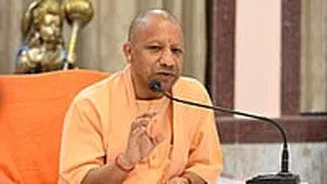
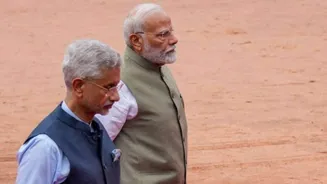
With Prime Minister Narendra Modi at the Centre and Chief Minister Yogi Adityanath in Uttar Pradesh, UP — India’s most populated state — is on the path of transformation. This synergy between development-oriented policies and a proactive, investor-friendly approach has created an unprecedented investment climate that is quickly reshaping India’s most populous state into a global economic powerhouse.
The statistical evidence in this case is compelling. Uttar Pradesh received FDI inflows of Rs 2,762 crore during FY 2023-24, which accelerated to Rs 3,700 crore in FY 2024-25. Even more remarkable is the performance in the current fiscal year, with Rs 5,963 crore already received during April-September 2025 alone.
It is pertinent to mention here that the cumulative FDI inflow over the last twenty-five years for Uttar Pradesh stands at Rs 22,279 crore from 2000-2025. If a substantial chunk of that total inflow has come in 2025, it can only be read as an outcome of deliberate, strategic planning and execution under the double-engine governance framework.
A careful look reveals that multiple factors at the execution level are leading to this pattern. Take, for example, the introduction of the Uttar Pradesh FDI Policy 2023, which shows how state-level policies complement national initiatives to create a comprehensive investment ecosystem. Specifically designed to position the state as a preferred destination for foreign investment, it is through this policy that the Yogi Adityanath government has established a transparent, investor-friendly and facilitative business environment.
The policy’s sector-specific approach, substantial incentives like land subsidies ranging from 20-25 per cent, capital subsidies of 25-35 per cent depending on regional zones, complete stamp duty exemptions, and 100 per cent electricity duty exemptions for five years, shows Chief Minister Yogi Adityanath’s commitment to reducing bureaucratic red tape for international investors. These measures work in perfect harmony with the central government’s various Make in India initiatives.
The establishment of dedicated international country desks for Singapore, Japan, Russia, Germany, France, Taiwan, the UAE and South Korea represents a sophisticated approach to global investor outreach that leverages diplomatic relationships cultivated at the central level while implementing customised facilitation at the state level. The recent investment missions to Singapore and Japan, which explored partnerships in green energy, Global Capability Centres and manufacturing sectors, demonstrate how diplomatic and economic channels are being leveraged to attract quality investments.
The Adityanath government’s approach to addressing structural challenges such as land availability further illustrates the effectiveness of coordinated governance. While districts like Ghaziabad face land constraints, the state government has proactively aggregated a 100,000-acre industrial land bank for setting up new industries. This large-scale land aggregation effort, coupled with the upcoming Nivesh Mitra 3.0 portal that promises to reduce document requirements by 50 per cent and shorten approval timelines by 30 per cent, shows how governance reforms are being implemented systematically to improve ease of doing business.
Perhaps most significantly, the double-engine governance model is successfully driving geographical diversification of FDI beyond traditional investment hotspots. While Noida-Greater Noida continues to attract substantial foreign investment, Chief Minister Adityanath’s strategic use of region-specific incentives, such as higher capital subsidies of up to 35 per cent in Purvanchal and stamp duty exemptions in Tier-2 cities, is attracting meaningful foreign investment to emerging industrial centres like Kanpur, Varanasi, Prayagraj and Gorakhpur. This balanced regional development strategy ensures that the benefits of FDI are distributed more evenly across the state, reducing regional disparities and creating employment opportunities in historically underserved areas.
The presence of prominent Global Capability Centres from major international players like MetLife, InMobi and Barclays already operating in the state, despite the Uttar Pradesh GCC Policy being recently introduced in 2024, indicates that investor confidence has been building steadily under the current governance framework.
Adityanath’s medium-term goal of becoming a $1 trillion economy by around 2030 and scaling to $6 trillion by 2047 requires sustained 15-16 per cent annual growth that can only be achieved through continued FDI inflows and industrial expansion. The exponential FDI growth in 2025 may well be the clearest indicator yet that Uttar Pradesh is on the right path after decades of failure.
Advaita Kala is an author and screenwriter. Views expressed in the above piece are personal and solely those of the author. They do not necessarily reflect News18’s views.