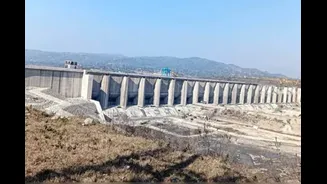









Pakistan’s water problems are expected to intensify as India is set to stop the flow of the access water from the Ravi River. Already struggling with the suspension of the Indus Waters Treaty, Pakistan now
faces another challenge as the delayed Shahpur Kandi dam on the Jammu and Kashmir–Punjab border heads for completion by March 31.
Over the years, excess water from the Ravi has often flowed into Pakistan due to insufficient storage facilities in India. However, starting in April, this situation is set to change, further reducing the water flow to Pakistan.
The fast-tracked revival of the Shahpur Kandi dam project holds great geopolitical significance as it comes in the aftermath of the Pahalgam terror attack, which New Delhi squarely blames on Pakistan-backed terrorism. However, Islamabad continues to deny its involvement.
In a decisive action against Pakistan following the Pahalgam terror attack on April 22 last year, Prime Minister Narendra Modi announced a slew of punitive measures against Islamabad, including the suspension of the Indus Waters Treaty of 1960.
Pakistan’s Water Crisis To Deepen
The completion of the Shahpur Kandi dam project signals India’s intent to fully utilise its legitimate share of eastern river waters and end the routine flow of surplus Ravi water into Pakistan, worsening its water crisis.
Clarifying the government’s stand, Jammu and Kashmir Water Resources Minister Javed Ahmed Rana said that with the completion of Shahpur Kandi dam on the UT’s border with Punjab, the excess water from the Ravi river will stop flowing to Pakistan.
“Yes, excess water (from Ravi river) to Pakistan will be stopped. It has to be stopped,” the minister said, adding that the project is critical for drought-hit Kathua and Samba districts.
Since the Pahalgam terror attack in April 2025, India made steady progress on four ongoing hydel power projects in Jammu and Kashmir over the Chenab river, and they are likely to be commissioned in 2027-28.
India To Cut Pakistan’s Access To Ravi Waters
The Shahpur Kandi barrage was revised after four decades following the intervention of the PM. On December 6, 2018, the Union cabinet approved its implementation, granting central assistance of Rs 485.38 crore for the irrigation component.
Once completed, the project will create irrigation for hectares of land in Punjab and Jammu and Kashmir’s Kathua and Samba districts.
After years of delay, Pakistan — which has long benefited from India’s unfinished projects while pursuing hostility — India’s message to Islamabad is loud and clear that New Delhi will not let its water flow away.