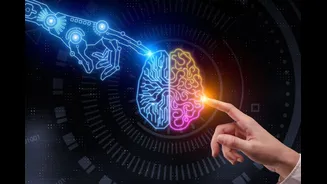







As artificial intelligence integrates into the fabric of daily life, a profound psychological shift is occurring beneath the surface of our digital interactions. Researchers, such as Nataliya Kosmyna of the MIT
Media Lab who spoke with the BBC, have begun sounding the alarm on “cognitive offloading”—the process by which we outsource thinking, memory, and problem-solving to external algorithms. While the convenience of AI is undeniable, a growing body of neuroscientific evidence suggests that this reliance may be fundamentally altering our linguistic diversity and eroding our core mental faculties.
The immediate concern is not just the loss of specific skills but the potential “atrophy” of the brain’s plasticity. By allowing machines to synthesise information and draft our communications, we risk becoming passive observers of our own intellect, leading to a future where human cognition is defined more by its dependence on technology than by its native capabilities.
Does AI reliance lead to linguistic ‘homogenisation’?
One of the most visible impacts of cognitive offloading is the subtle narrowing of human expression. When individuals rely on large language models to draft emails, essays, or messages, they often adopt the “average” tone and vocabulary of the AI. Kosmyna and her colleagues argue that because AI models are trained on existing datasets to predict the most probable next word, they tend to favour safe, generic, and standardised language. Over time, this creates a feedback loop where unique regional idioms, nuanced metaphors, and complex sentence structures are discarded in favour of algorithmic efficiency.
This linguistic homogenisation does more than just make writing boring; it affects how we think. Language is the primary tool for conceptualisation. If our vocabulary shrinks and our syntax simplifies to match the output of a machine, our ability to formulate complex, original thoughts may suffer a corresponding decline. The “corrosive effect” here is the gradual loss of the cognitive friction required to find the perfect word, a process that is essential for deep linguistic development.
How does ‘cognitive offloading’ affect our memory and focus?
The phenomenon of “digital amnesia”—where we forget information because we know a device can store it for us—is well-documented, but AI takes this a step further. Unlike a simple search engine, generative AI performs the analytical work of connecting dots and summarising data. When we bypass the effort of critical thinking, we fail to engage the hippocampus and prefrontal cortex in the ways necessary to build long-term neural pathways.
Research suggests that when the brain “offloads” a task, it stops dedicating metabolic resources to the neural circuits involved in that task. If we no longer practice mental arithmetic, spatial navigation, or the synthesis of conflicting viewpoints because an AI provides the “correct” answer instantly, those cognitive muscles begin to weaken. This creates a “use it or lose it” scenario where our baseline ability to perform basic cognitive tasks without digital assistance significantly diminishes.
Can we maintain ‘cognitive agency’ in an AI-driven world?
Maintaining mental sharpness in the age of automation requires a conscious effort to preserve “cognitive agency”. Experts suggest that AI should be treated as a “bicycle for the mind” rather than a replacement for it. This means using technology to enhance one’s output while ensuring the underlying logic and creative spark remain human-led. To counter the corrosive effects of offloading, individuals are encouraged to engage in “analogue” cognitive exercises—such as reading long-form physical books, writing by hand, and intentionally solving problems without digital prompts.
The goal is not to reject AI, but to understand its cost. As Nataliya Kosmyna’s work suggests, the real danger is not that machines will think like us, but that we will begin to think—and speak—like machines. By staying mindful of the trade-offs involved in every automated interaction, we can ensure that our reliance on artificial intelligence does not come at the expense of our most human qualities: creativity, critical thought, and the rich complexity of our language.