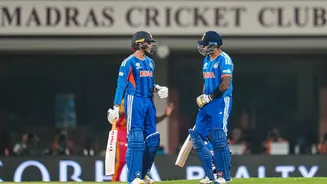




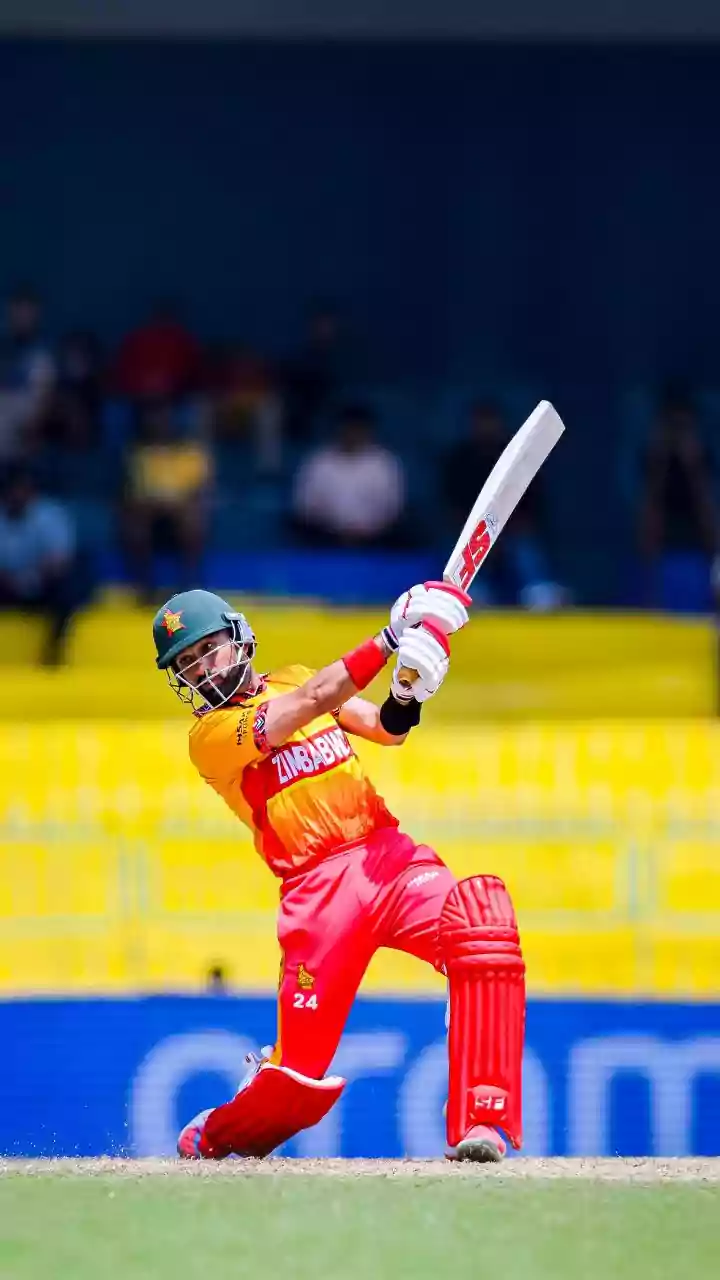



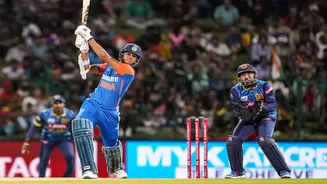
India needed to put up a response to the humbling defeat against South Africa on Sunday (February 26). They did it in historic fashion against Zimbabwe, smashing a sensational 256/4 at the M Chidambaram
Stadium in Chepauk, Chennai.
The innings was the first time in the history of the T20 World Cup that a team had six batters to score more than 20 runs at a 150-plus strike rate. It’s an extremely rare accomplishment, which can’t happen without precise role clarity and unless the batting unit is aligned with a high intent.
The tone was set by Sanju Samson, who came in for Rinku Singh to add a bit of might to India’s top-order. He raced to 24 off 14 before getting out to register a strike-rate of 160.
Abhishek Sharma returned to form, and Ishan Kishan grew into his new role at number three with scores of 55 and 38 at strike-rates of 183.33 and 158.33, respectively. Both got out in quick succession, but India maintained the foot on the gas, with skipper Suryakumar Yadav smashing a 13-ball 33.
Hardik Pandya (50 at 217.39) and Tilak Varma (44 at 275) provided a brilliant late flourish.
Dot ball record
Additionally, as per Cricbuzz, India just conceded 26 dot balls in the innings, which was the joint fewest in a completed innings in a T20 World Cup. The only other time it happened was when South Africa had 26 dots against England at the Wankhede during the 2016 edition.
India need to win
India need to defend a 257-run target to win the match. Zimbabwe will need a miraculous performance against the defending champions to get anywhere close to it.
A win here would keep the Men in Blue alive in the race for the semi-finals. Sunday’s clash between India and the West Indies would become a virtual quarter-final, with the winner proceeding to be second in the group and meeting the top-ranked side of Group 2 (either England or New Zealand).