







Once confined to French pharmacies, micellar water has become a global skincare staple, lining bathroom shelves and makeup kits alike. Loved for its no-rinse convenience and gentle promise, it’s often
positioned as the ultimate multitasker – cleanser, makeup remover, and skin soother rolled into one. But as skincare trends accelerate and marketing claims grow louder, the question remains: does micellar water truly deserve its cult status, or is it simply clever branding?
Dermatologists largely agree on one thing. Micellar water is grounded in science. Its effectiveness, however, depends on how and when it’s used.
What Exactly Is Micellar Water?
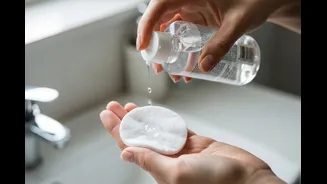
“Micellar water is a gentle cleansing solution made of micelles, tiny oil molecules suspended in soft water, that attract dirt, makeup, and excess oil without disrupting the skin barrier,” explains Dr. Priyanka Sharma, Director & Chief Dermatologist at V6 Clinics, Gurugram.
These micelles act like magnets, lifting impurities without the friction or foaming action typical of traditional cleansers. This mechanism is what makes micellar water particularly appealing for sensitive or compromised skin.
Echoing this, Dr. Navjot Arora, Consultant Dermatologist at Dermaheal Skin and Clinic, Dwarka, adds, “Micellar water lifts dirt, excess oil, makeup, and pollution from the skin without disrupting the natural skin barrier, making it suitable for dry, acne-prone, or rosacea-prone skin types.”
Why Dermatologists Still Recommend It
Micellar water’s biggest strength lies in its gentleness. “From a dermatologist’s lens, this is what makes it especially effective for sensitive, acne-prone, or post-procedure skin,” says Dr. Sharma.
Dr. Tejaswi Cherukuri, Consultant Dermatologist at Apollo Speciality Hospitals, OMR, Chennai, agrees. She notes, “It is a gentle and non-irritating cleanser that can be used for refreshing purposes or even as the first step in a double-cleansing routine.”
Its versatility also earns points. Dr. Cherukuri highlights its usefulness during travel, after workouts, or in situations where water isn’t easily available – making it a practical, skin-respecting option rather than a harsh quick fix.
Where Micellar Water Falls Short
Despite its benefits, micellar water isn’t a universal solution. “It works beautifully as a mild cleanser or first cleanse, but it doesn’t always replace a thorough wash for heavy makeup, sunscreen, or pollution exposure,” cautions Dr. Sharma.
Dr. Cherukuri reinforces this limitation, stating that while micellar water is effective for light makeup and sunscreens, it does not work well for waterproof or heavy makeup. This is where double cleansing, using micellar water followed by a gentle face wash, becomes essential.
Dr. Arora also points out that micellar water works best as a morning cleanse or mid-day refresh, especially for those who cleanse multiple times a day and want to avoid over-stripping the skin.
How To Choose The Right Formula
Not all micellar waters are created equal. According to Dr. Sharma, the hype often comes from overpromising instant results, when in reality, skincare is about consistency and formulation quality. Dermatologists recommend choosing formulas free from harsh alcohols, unnecessary fragrance, and irritants – especially for sensitive skin types.
Used correctly, micellar water can even help prevent over-cleansing, a common cause of barrier damage in urban skincare routines.
So, Hype Or Hero?
Micellar water may not be a miracle product, but it isn’t a gimmick either. Rooted in dermatological science and refined through thoughtful formulation, it earns its place as a supportive, everyday cleanser rather than a standalone solution. When used strategically, as a first cleanse, gentle refresher, or travel essential, it delivers exactly what it promises: clean skin, minus the drama.