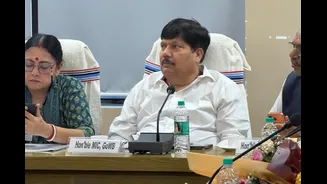








Bangladesh Parliament Speaker Hafiz Uddin Ahmed has launched a sharp attack on India during his ongoing visit to Pakistan, accusing New Delhi of exploiting Bangladesh and treating it like a colony for
15 years. He also threatened that Dhaka could approach the International Court of Justice (ICJ) if India refused to extradite former prime minister Sheikh Hasina.
Speaking to journalists in Islamabad, Ahmed alleged that India had not helped the Bengali people during the 1971 Liberation War but had instead acted to weaken Pakistan. His remarks are likely to draw attention given the historically sensitive nature of India’s role in Bangladesh’s independence and the recent efforts by Dhaka and Islamabad to strengthen bilateral ties.
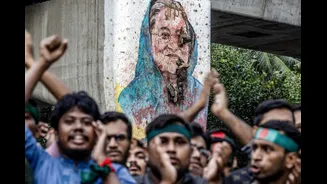
According to reports from Pakistan, Ahmed also said that Bangladeshis had rejected dictatorship and continued to demand genuine democracy. He alleged that the country had been denied democracy even in 1971, while accusing the Awami League of having turned into a “terrorist organisation”.
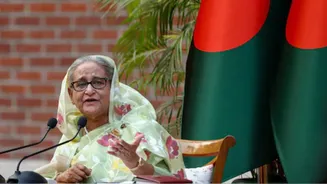
On Hasina, who has been staying in India since fleeing Bangladesh in August 2024, the Speaker said she would face imprisonment if she returned to the country. He also claimed that she was unlikely to return for another 10 years.
Ahmed further said the Bangladesh government was considering a ban on the Awami League, Hasina’s party, amid allegations of its involvement in political violence.
Sheikh Hasina, Awami League In Speaker’s Crosshairs
Ahmed said Hasina would be sent to prison if she returned to Bangladesh, adding that she was unlikely to come back for at least another 10 years. He accused the former prime minister of taking refuge in India and warned that Bangladesh could approach the ICJ if New Delhi refused to hand her over.
Bangladesh has been seeking Hasina’s extradition after she fled to India following the collapse of her government in August 2024. The issue has remained a major point of friction between New Delhi and Dhaka. India’s position is that the extradition request is being examined by the competent authorities under applicable laws and procedures.
Ahmed also alleged that the Awami League had become a terrorist organisation and said the government was considering a ban on the party. However, the party’s political activities had already been prohibited under measures introduced during the interim administration, and it was barred from contesting the February 2026 elections.
Calls For Kashmir Resolution, Stronger Pakistan Ties
The Bangladesh Speaker also called for the Kashmir dispute to be resolved in accordance with United Nations resolutions, a position traditionally advocated by Pakistan. He praised Islamabad for supporting Bangladesh’s candidate for the Executive Committee of the Inter-Parliamentary Union (IPU) and expressed confidence that relations between the two countries would strengthen.
Ahmed is in Pakistan on a six-day official visit at the invitation of National Assembly Speaker Sardar Ayaz Sadiq. The visit, which began on November 23, is the first-ever official visit to Pakistan by a Speaker of Bangladesh’s Parliament.
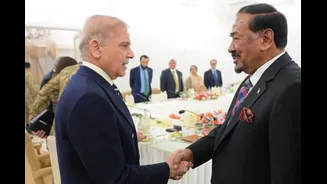
The two sides have discussed parliamentary cooperation, exchanges of delegations and stronger institutional ties. Ahmed has also met Pakistan’s President Asif Ali Zardari and Prime Minister Shehbaz Sharif.