





![[WATCH] Jos Buttler breaks Guinness World Record for highest-ever cricket catch](https://g-mob.glance-cdn.com/public/fc/image/W-iejVaARGN0.webp)
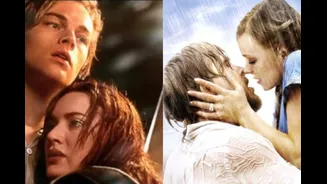
From Bollywood blockbusters and K-dramas to Instagram reels and dating apps’ success tales, falling in love is often portrayed as both magical and frequent. Popular culture suggests that love strikes repeatedly,
dramatically, and sometimes endlessly. But new research from the Kinsey Institute in the US has revealed that the average adult may experience what scientists call “passionate love” only about twice in a lifetime.
The finding does not mean people only have two relationships or marry twice. Instead, it refers to a specific psychological and emotional state.
Let’s understand how humans define love, remember it, and measure it across a lifetime.
What The Study Actually Found
The research surveyed more than 10,000 adults aged between 18 and 99 in the US, asking participants how many times they had experienced “passionate love”. The responses were revealing. Around 14% of participants said they had never experienced it. Roughly 28% reported falling passionately in love once, about 30% said twice, and another 28% said more than twice.
The term “passionate love” in psychology is not the same as affection, companionship or long-term attachment. It refers to an intense emotional and physical attraction often marked by excitement, obsession, strong desire and heightened emotional sensitivity — the phase many people describe as being “head over heels.” This is the kind of love that fuels film scripts and song lyrics, but it is only one part of the broader emotional spectrum of human relationships.
In India, where arranged marriages coexist with online dating and shifting cultural norms, the findings offer an interesting lens. Many people may not label their relationships using academic terms, yet they still distinguish between deep affection and the euphoric rush of early romance.
Why Are The Findings Surprising?
Earlier research on relationships focused on the quality of love or different types of attachment, such as secure, anxious, avoidant, and so on. Few large-scale studies attempted to quantify how often people experience intense romantic infatuation across their lifetime. That is why the Kinsey Institute’s findings stand out.
Psychologists have long argued that love is multi-dimensional. Theories such as the “colour wheel of love” suggest that romantic attraction is only one shade among many, alongside friendship-based love, pragmatic love, and playful affection. Yet public imagination tends to treat romantic love as the ultimate emotional experience, reinforced by movies, literature and advertising.
The surprise lies in the contrast between expectation and data. Many people assume they fall in love multiple times simply because they have had multiple relationships. The study suggests that while relationships may be numerous, the intensity associated with passionate love may be rarer than assumed.
Does Age Or Life Stage Influence Love?
One of the study’s intriguing observations is that reports of passionate love varied only slightly across demographics. Older adults reported marginally more experiences than younger participants, and men slightly more than women, but the differences were modest. This suggests that the experience of intense romantic attraction is broadly universal rather than confined to a particular generation or gender.
“In adolescence, love is often impulsive and driven by infatuation or external influences. In middle adulthood, relationships are shaped by maturity, shared responsibilities, and viewing the partner as a life companion in decision-making. In later life, love centres more on companionship, emotional security, and mutual care, where sharing and support become the foundation of the bond,” said Dr Sanjay Kumawat, Consultant, Psychiatrist and Sexologist, Fortis Hospital Mulund, Mumbai.
However, how people remember love may change with age. Psychologists note that nostalgia, memory biases, and cultural storytelling play a powerful role in shaping personal narratives. A relationship remembered decades later may be coloured by hindsight, regret or gratitude, altering how intense it once felt. Younger adults, meanwhile, may still be in the process of forming those memories.
Life stages also influence context. Teen love, early adulthood relationships and mid-life partnerships often carry different emotional weights, shaped by maturity, career pressures and personal identity. Yet the study indicates that the number of times people report intense infatuation does not dramatically increase or decrease with age.
What Does Love Mean To The Brain?
Neuroscientific research shows that passionate love activates reward pathways in the brain similar to those triggered by addictive substances. Dopamine, oxytocin, and adrenaline surge during early romance, creating feelings of exhilaration and attachment.
“Romantic bonding is strongly influenced by neurochemistry. Dopamine creates feelings of excitement and emotional ‘highs’, endorphins promote relaxation and comfort, oxytocin fosters emotional closeness and trust, and vasopressin supports long-term attachment and commitment. Together, these neurohormones can make love feel intense and, at times, almost addictive,” explains Dr Kumawat.
Over time, however, many relationships transition from passionate love to companionate love — a steadier form marked by trust, shared values, and emotional security. This shift is not a loss of love but a transformation. The problem arises when people interpret the fading of early intensity as failure rather than evolution.
Experts often stress that different forms of love deserve different vocabulary. Passionate love is exhilarating but not always sustainable in its initial intensity.
“If it is true that intense passionate love occurs only a few times for many individuals, then it challenges both the ‘one true love’ myth and the idea that constant high passion defines a successful relationship. Decades of longitudinal marital research, including work by John Gottman, demonstrate that durable relationships are sustained not by perpetual intensity but by emotional responsiveness, shared meaning, and constructive conflict repair,” said Dr Jyoti Kapoor, senior consultant psychiatrist and psychotherapist, Manasthali Wellness.
How The Modern Dating Culture Perceives ‘Love’
Modern dating culture has added new dimensions to how people perceive romance. Social media amplifies curated relationship milestones, while dating apps offer seemingly endless choice. For younger generations, exposure to global media has expanded romantic expectations beyond traditional norms.
In India and other societies where arranged marriages remain common, the conversation becomes even more layered. Many couples may not begin with passionate infatuation but develop deep affection over time. Conversely, urban youth increasingly experience dating cultures similar to Western societies, blending traditional expectations with modern autonomy.
Dr Kumawat says, “Modern dating culture places disproportionate emphasis on appearance, lifestyle, dress sense, and socioeconomic status. Over time, this can drain emotional depth from relationships, making connections feel shallow or driven by peer pressure and social validation rather than genuine bonding. Continuous comparison and envy often weaken existing bonds, increasing fault-finding and making relationships more fragile.”
Cultural narratives play a decisive role in shaping perception. Bollywood, for instance, has long celebrated grand romantic gestures and eternal love, often presenting intensity as permanence.
“Mainstream cinema, including iconic films like ‘Dilwale Dulhania Le Jayenge’ and ‘Kuch Kuch Hota Hai’, often portrays love as destiny-driven, all-consuming, and triumphant against all odds. These narratives are emotionally powerful and culturally resonant, but they rarely show the psychological labour required for long-term partnership… When such portrayals become internalized as relational templates, individuals may equate intensity with compatibility and drama with depth. This can create unrealistic expectations that love should always feel passionate, certain, and exceptional,” points out Dr Kapoor.
Are People Under Pressure To Find Passionate Love?
“Yes,” said Dr Kumawat. “Many individuals today are constantly chasing novelty, excitement, and emotional highs in relationships. This is often driven by the “YOLO” (You Only Live Once) mindset, which encourages seeking maximum pleasure and experiences, sometimes at the cost of emotional depth or stability.”
Meanwhile, Dr Kapoor highlights the “perception of limitless choice” that comes with the modern dating culture. “This abundance framework can subtly pressure individuals to keep searching for a more intense or optimal connection. This may increase ambivalence and reduce commitment satisfaction,” she said.
The expectation to continually experience peak romantic intensity can create dissatisfaction and comparison, particularly in highly mediated social environments, she added.
What Are The Broader Implications Of The Study?
The “twice in a lifetime” idea is not to limit romantic expectations but to contextualise them. Understanding that passionate love may be less frequent than portrayed can reduce pressure and unrealistic comparisons. It also helps reframe long-term relationships as emotionally valid even when the initial euphoria fades.
“From a mental health perspective, rigid beliefs about singular destiny-based love can intensify grief and hopelessness after break-ups or bereavement, increasing vulnerability to depressive rumination. Conversely, understanding love as a combination of neurobiology, attachment processes, and social context promotes resilience. Humans retain the capacity to form meaningful bonds across the lifespan. Passion may be episodic, but attachment and intimacy are skills and capacities that can deepen over time,” Dr Kapoor said.
Ultimately, the study does not define how many times a person should fall in love. Instead, it highlights the diversity of emotional experiences and the difference between cinematic romance and lived reality. Love, in all its forms, remains deeply personal, shaped by culture, memory, and individual psychology.