





Nearly nine months after the US and Israel launched their war against Iran on February 28, the conflict appears to have reached a dangerous stalemate. Washington has stepped back from large-scale bombing
but is maintaining its naval blockade and economic pressure on Tehran. Iran, meanwhile, is refusing to negotiate on Washington’s terms and continues to use the Strait of Hormuz and calibrated attacks as leverage.
A deputy in Iran’s Revolutionary Guard Corps (IRGC), General Yadollah Javani, said on November 18 the US has reached an impasse in decision-making, while highlighting that Iran’s Armed Forces battlefield superiority along with people’s support has forced enemies to retreat.
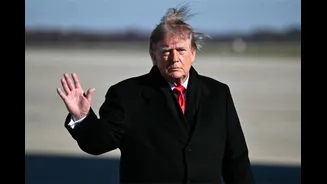
Meanwhile, Trump wrote on Truth Social last week, “We don’t need a deal with Iran.” Those days have long since passed. We’ve got their money, Hundreds of Billions of Dollars, and we’ve got their Strait!”
The key issue is that neither side believes it has lost, but neither can secure the outcome it wants. Trump wants Iran to make verifiable concessions on its nuclear programme, while Tehran wants the US to lift its naval blockade, ease sanctions, release frozen assets and end hostilities before substantive nuclear negotiations begin. Both sides are effectively waiting for the other to blink.
Has the war reached a dangerous state of “no war, no peace”? Could the conflict settle into a prolonged frozen war, with periodic attacks, economic pressure and a continuing threat to global energy supplies?
What Is A ‘Frozen Conflict’?
A frozen conflict is a prolonged standoff in which active fighting has largely stopped, but tensions remain and the underlying disputes are unresolved. Such situations often emerge from geopolitical rivalries, ethnic divisions or territorial disputes. Even without full-scale warfare, the fragile calm can be shattered by sporadic violence. Frozen conflicts can also hold back economic development and make diplomatic relations more difficult. Understanding how these conflicts take shape is important for policymakers working towards lasting peace and stability.
These conflicts continue to pose risks to regional and global stability. They can become flashpoints for renewed violence, disrupt economic activity and make international diplomacy more complicated.
The term “frozen war” gained currency in the 1990s and 2000s to describe conflicts that emerged in the former Soviet Union. These included Transnistria in Moldova, Abkhazia and South Ossetia in Georgia, and Nagorno-Karabakh.
On November 9, President Masoud Pezeshkian said Supreme Leader Mojtaba Khamenei had ordered officials to bring an end to the state of “neither war nor peace”. Pezeshkian said Iran was willing to negotiate but would not give in to coercion. Parliament Speaker Mohammad Bagher Ghalibaf, Iran’s chief negotiator, told Al Jazeera that “the ball is now in the American court” – Washington must either accept Iran’s terms for talks or continue the war.
Meanwhile, Trump’s mixed signals and JD Vance’s remarks criticising the war point to differences within the Republican Party over the conflict.
Diplomatically, the US and Iran have been locked in a frozen conflict since July, after the June memorandum for a truce in Pakistan fell apart within weeks. However, describing the situation as “frozen” may be misleading. The term “flatters” a conflict in which the US blockade remains in place and attacks around the Strait of Hormuz have continued for more than a day, Muhanad Seloom, senior non-resident fellow at the Middle East Council on Global Affairs, said, as quoted by Al Jazeera.
Why Can’t Trump And Iran Agree On A Deal?
In an interview with Fox News ahead of his meetings with Chinese President Xi Jinping and Russian President Vladimir Putin in China’s Shenzhen, Trump said, “Well, there is indication that Iran is looking at gases, looking at bio because we’ve shut them out with the nuclear.” He added, “Nuclear is much harder, and they’re looking at gas, and they’re looking at the bio. You know, the biological weapons, not nice, and other things.”
Trump also made it clear that Washington was looking for a long-term agreement, not a temporary understanding. “But I want a deal that can be lasting,” he said.
Explaining what he expected from the agreement, the US President also took aim at the possibility of a future administration reversing his policy on Iran.
In October, a Chicago Council on Global Affairs survey found that nearly 70% of Americans believed the war was not worth fighting. Polls have also consistently shown strong public opposition to sending US troops to Iran.
After the crushing defeat in the midterms, which saw Republicans lose control of the US Congress to the Democratic Party, Vance took to X to criticise those backing the war. He said anyone who believed it was worth “losing the Senate for the next 6 years” should make that argument openly.
According to reporting by The Associated Press, Trump has acknowledged that leaving Iran’s current government in power after the conflict would amount to a “defeat”.
Iran, meanwhile, wants the US blockade lifted and its conditions met before it agrees to reopen the Strait of Hormuz and halt its attacks there. Tehran has used similar tactics in the past. In 2019, it responded to Trump’s economic ‘maximum pressure’ campaign with a series of attacks. In May and June of that year, it struck tankers near Fujairah and in the Gulf of Oman, and shot down a US surveillance drone.
Then, on September 14, drones and missiles struck Saudi Aramco’s Abqaiq processing facility and the Khurais oil field. The Iran-backed Houthi militia in Yemen claimed responsibility, but the US and Saudi Arabia blamed Iran. The message from Tehran was clear: it would respond to extreme economic pressure by targeting energy infrastructure in the Gulf.
In 1988, after Operation Praying Mantis — a one-off US strike against Iranian naval resources ordered by President Ronald Reagan — and months of mounting losses, Iranian Supreme Leader Ayatollah Ruhollah Khomeini accepted a ceasefire with Iraq. He famously likened the decision to drinking poison.
Today, Iran believes it has the upper hand. The Iranian regime is likely to survive the conflict and may even prevent another major US attack – an outcome Tehran could portray as a victory. But the US blockade remains a major challenge it must confront.
Both sides appear keen to bring the conflict to an end. However, neither wants to be seen as backing down or accepting humiliation. Israel, meanwhile, remains an unpredictable factor that could complicate any resolution.
Could The US-Iran Status Quo Break Out Into A War?
Iranian forces have targeted military bases in Bahrain and Kuwait, while the US has struck military and radar installations in southern Iran. The exchanges follow a series of attacks on shipping in the Strait of Hormuz.
Neither Washington nor Tehran appears willing to return to an all-out war like the one seen in the opening weeks of the conflict. However, analysts warn that the current standoff remains highly unstable and could escalate into a full-blown war once again.
Following the strike on Bahrain, the Islamic Revolutionary Guard Corps (IRGC) warned Manama against its security partnership with the US. It also criticised Bahrain’s treatment of Shia Muslim leaders, several of whom were recently handed lengthy prison sentences.
Reports suggest Iran is seeking to gradually weaken US military assets across the region, particularly those it believes were used during the war.
The US military’s Central Command says its maritime blockade has prevented Iran from loading any crude oil onto its tankers since late August. It has also claimed that more than 1.7 billion barrels of crude have been shipped through the Strait of Hormuz by Iran’s Arab neighbours under US protection, despite Tehran’s demands that vessels use a route authorised by Iran.
Iran continues to sell oil stored outside the blockade limits to China, although volumes have fallen.
After a third US aircraft carrier strike group entered the Arabian Sea, Iran’s army chief, Amir Hatami, said the country’s armed forces were prepared for any fresh attacks by Washington.
There also appear to be differences within the Trump administration over how to deal with Iran. Hardliners, including Defense Secretary Pete Hesgeth, reportedly favour a more forceful approach towards Tehran.
“The greatest danger now is a dramatic escalation through a miscalculation, an accident, or a rash attempt by either side to capitalize on what it considers its advantage. Beneath the apparent calm, the standoff remains deeply unstable. Trump’s Iran-war plans are in limbo because limbo is better than the other options. But that limbo can’t last forever,” The Atlantic wrote on November 17.