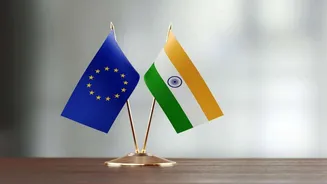








India and the European Union (EU) are likely to sign their long-pending Free Trade Agreement (FTA) on December 16 during Prime Minister Narendra Modi’s proposed visit to Europe, marking a significant milestone
in efforts to deepen trade and economic ties between the two sides, an official told PTI.
The proposed signing is expected to take place nearly 10 months after India and the 27-member European Union bloc concluded negotiations on the landmark trade agreement in January 2026.
Prime Minister Modi is expected to undertake a four-nation tour in December, combining visits to Europe and the US for key strategic bilateral and multilateral engagements.
Commerce Secretary Rajesh Agrawal had earlier indicated that India was hopeful of signing the agreement in December, expressing confidence over the progress made so far.
“India-EU FTA progress is very nice, and we hope to sign it in December 2026,” Agrawal said on the sidelines of the ISA Steel Conclave in New Delhi earlier this week.
Speaking separately at a FICCI panel, the Commerce Secretary said India was aiming to operationalise the agreement in the first quarter of 2027.
“We are trying for the first quarter itself. So it depends on a lot of things moving in time, but we will be there,” he said.
India-EU FTA: What Happens After Signing?
India and the European Union concluded negotiations on January 27, 2026, following the relaunch of discussions in 2022. The agreement was jointly announced by Prime Minister Modi and European Commission President Ursula von der Leyen at the 16th India-EU Summit.
Following the conclusion of negotiations, the European Commission submitted proposals to the Council of the European Union in September seeking authorisation for the signing and formal conclusion of the agreement.
However, signing the pact will not immediately bring it into force. The agreement will require the European Parliament’s consent and a final decision by the Council of the European Union. India will also have to complete its domestic ratification process before the FTA becomes operational.
India-EU FTA: What Will Indian Exporters Gain?
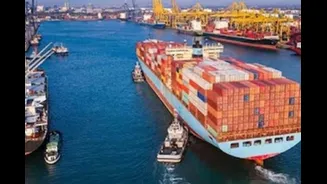
The proposed agreement is expected to provide unprecedented market access to Indian exporters, with more than 99% of Indian exports by trade value expected to receive preferential access to the European Union market.
According to the commerce ministry, labour-intensive sectors such as textiles, apparel, leather, footwear, marine products, gems and jewellery, handicrafts, engineering goods and automobiles are expected to be among the biggest beneficiaries.
The agreement is also expected to eliminate tariffs on nearly $33 billion worth of Indian exports across labour-intensive sectors once it comes into force. This could open up significant opportunities for micro, small and medium enterprises (MSMEs), women, artisans, youth and professionals.
India has also secured favourable market access for agricultural and processed food products while protecting sensitive sectors, including dairy, cereals, poultry and certain other agricultural products.
Beyond merchandise trade, the agreement covers services, digital trade, customs and trade facilitation, intellectual property rights and the movement of professionals.
It also establishes a framework to facilitate the mobility of skilled Indian professionals to European countries, with commitments covering intra-corporate transferees, contractual service suppliers and independent professionals across several sectors.
India-EU Bilateral Trade
The FTA is expected to provide a major boost to trade and investment flows between India and the European Union, one of India’s key trading partners.
According to the European Commission, bilateral trade in goods between the two sides stood at 118 billion euros in 2025.
The agreement is expected to expand export opportunities for Indian businesses, strengthen supply-chain integration and deepen economic engagement with the 27-nation bloc, supporting India’s broader ambition of becoming a developed economy by 2047.
Meanwhile, Agrawal said negotiations on the proposed India-US interim trade agreement were also nearing completion. “It is nearing conclusion, and we will be there soon,” he told ANI.