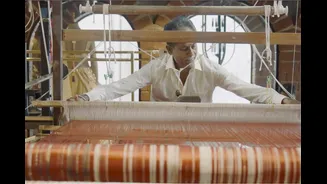

When you’re shopping for a saree especially one labelled handloom, it’s natural to wonder whether it truly comes from a weaver’s loom or a machine-powered setup. While both handloom and powerloom sarees
have their place in the market, the charm, soul and individuality of a handloom piece are unmistakable. Understanding the difference helps you make an informed choice, and Mysore Saree Udyog and Suta are here to guide you in recognising these nuances with confidence.
One of the most visible differences lies in the “beautiful imperfections.” Handloom sarees, being manually woven, carry tiny variations slight shifts in thread tension or subtle irregularities in the pattern. Powerloom sarees, however, are perfectly uniform. Machines ensure identical weaving throughout, giving them a flawless but impersonal finish.
“To us, handloom is not defined by perfection but by imperfections, the slight shifts and the soft traces of the weaver’s effort. These human signatures remind you that your saree was not produced but created, thread by thread, with intention and emotion,” say Sujata and Taniya Biswas, Founders, Suta.
The selvedge, the saree’s side edge, offers another useful clue. Handloom selvedges often show minor unevenness or small thread joints, natural signs of handcrafted weaving. Powerloom sarees, in contrast, have straight, extremely neat selvedges because the finish is mechanically controlled.
The fabric feel is equally telling. Handloom fabrics are soft, breathable and textured, while powerloom fabrics tend to feel smoother or slightly stiff, especially when blended with synthetics. Flipping the saree over reveals even more. The reverse of a handloom saree usually displays floating threads, the honest footprint of handwork. Powerloom sarees typically have a cleaner, more uniform backside due to mechanised precision.
“A handloom saree carries far more than a pattern or a palette; it carries the rhythm of a weaver’s hands, the gentle irregularities that reveal real craftsmanship, and a character no machine can imitate. At MSU, we believe these nuances aren’t flaws but the very identity of true handloom,” says Anil Sancheti, Partner, Mysore Saree Udyog.
Motifs and pallus also offer clues. Handloom motifs are textured and appear slightly raised, each one showing subtle variation. Powerloom motifs are flatter, sharper and consistently repeated.
“For us, authenticity begins in the smallest details: the selvedge, the fall of the fabric, the subtle weight of the pallu. When shoppers learn to notice these clues, they don’t just choose a saree, they connect with a tradition that has powered India’s textile story for generations,” adds Sancheti.
There’s also the gentle stretch test: handloom sarees have natural elasticity and bounce because they are woven by hand with controlled tension. Powerloom sarees may feel rigid or overly stretchy due to mechanical tension and varied yarn compositions. Authenticity certifications help too. Handloom Mark and Silk Mark, often found on pure silk pieces, offer reliable confirmation when in doubt.
“We believe authenticity should never feel like a mystery. When a saree comes with honest storytelling and clear information, the customer can wear it with full confidence knowing exactly what they’re investing in and whose hands brought it to life,” opine Sujata and Taniya.
Understanding these subtle markers takes the uncertainty out of saree shopping and deepens your appreciation for the craftsmanship involved. Whether you choose handloom or powerloom, knowing the difference helps you pick a saree that aligns with your style, values and budget ensuring that every drape tells a story worth wearing.