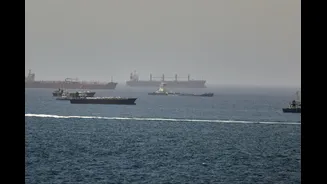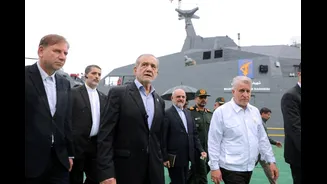





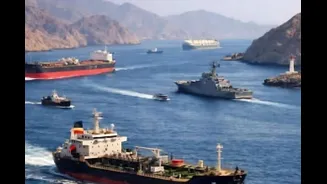


Vessels transiting through the Strait of Hormuz have been warned to only use routes authorised by Iran, the Islamic Revolutionary Guard Corps Navy said, according to a report by the Press TV, an Iranian
news agency. The IRGC Navy also said that any transit taking place outside the routes authorised by it might invite enforcement action.
The statement by the IRGC Navy, which had taken heavy hits during the recently ceased war with US and Israel, came early on Thursday. In it, the force described any alternative routes to those approved by the Islamic Republic as “unacceptable and completely dangerous”.
🔴 IRGC Navy:
🔺 Certain authorities have announced a new shipping route through the Strait of Hormuz without prior notification to or coordination with the Islamic Republic of Iran. The proposed route is unacceptable and poses serious safety risks. pic.twitter.com/HYwun7Kj5Z
— Press TV 🔻 (@PressTV) June 25, 2026
“Traffic of vessels outside these routes is prohibited, and we warn against any traffic outside the communicated routes,” the statement by Iran’s Navy said.
What’s Behind This Statement
In its statement, the IRGC points to shipping routes provided by ‘certain authorities’ and warns vessels not to take it.
Recently, the International Maritime Organisation, United Nation’s shipping agency, had launched a programme to guide ships through the strait, according to a Reuters report. Under the program, vessels wanting to transit through the Strait of Hormuz could take two routes – a ‘northern route’ going through the Iranian waterways and a ‘southern route’ through the waters ‘coordinated by the Sultanate of Oman and the United States’.
Now, Iran, which weathered through the war waged against it by the strongest military power in the world, has warned ships that no route except those approved by it are safe to transit. This development highlights the current uncertainty surrounding the control over this critical chokepoint through which nearly a fifth of all global oil trade flows.
“The only authorised transit routes through the Strait of Hormuz are those designated by the Islamic Republic of Iran. Vessel traffic outside these routes is prohibited and highly dangerous. All ships are strongly advised to avoid any navigation outside the designated corridors,” said the statement by the IRGC.
Who Controls Hormuz?
With this statement by its battered Navy, Iran has again asserted control over this crucial waterway. It must be noted that before this war between US-Israel and Iran, the waterway was not controlled by any single nation.
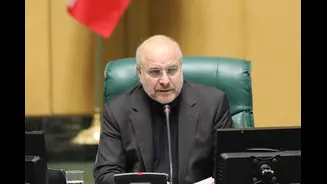
After this war, however, Iran is in no mood to leave any doubt in anyone’s mind as to who is in control here. “Everyone should know that the administration of the Strait of Hormuz will never go back to the way it was before the war,” Mohammed Bagher Qalibaf, Speaker of Iran’s Parliament and the head of its negotiating team with the US, had said earlier.
Even as he assured the world that Iran will stick to international laws, the control of the strait will now be in its hands, he asserted.
“Of course, international regulations will be observed, but Iran will administer the Strait of Hormuz,” he said.
What Is US’s Position
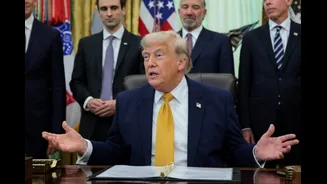
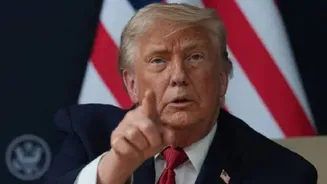
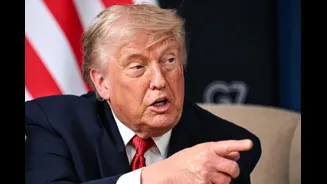
The United States President Donald Trump had said on Wednesday that if the deal with Iran leads to ‘any kind of fees on shipping or maritime activities’ in the Strait of Hormuz, it would be unacceptable to him. When asked, he went on to say that he would prune the final deal if it involved any shipping fees being collected by Iran.
Iran had earlier announced plans to introduce a shipping fee for the vessels transiting through the Strait of Hormuz in two months’ time, The Guardian reported.
During the war, Iran had closed the Strait of Hormuz, demonstrating its ability to upend the world order that the US and its allies depend on for their prosperity. The consequent spike in the prices of oil had started pinching common people across the globe, building pressure on Trump to bring the war to an end as soon as possible.
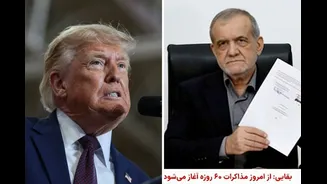
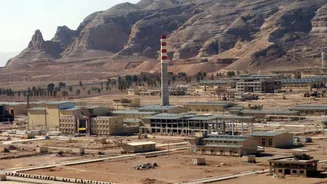
The two sides have recently signed a Memorandum of Understanding to end the war. The MoU lifts sanctions on Iran, defreezes its assets held by the Western powers, and kick starts a 60-day period ‘to negotiate’ what is to be done with Iran’s stockpile of enriched uranium (which could be used to make nuclear weapons).
No one will be fooled; we can’t have a peaceful region so long as American militarism and interventionism persist, and their occupying proxy continues, with absolute impunity, to inflict endless wars across the region and perpetrate genocide, terror violence and every atrocities. pic.twitter.com/JtkzynX8p9
— Esmaeil Baqaei (@IRIMFA_SPOX) June 24, 2026
Spokesperson for the Ministry of Foreign Affairs of Iran, Esmaeil Baqaei had made clear earlier that peace in West Asia is contingent upon the US ending its agression in the region. “No one will be fooled; we can’t have a peaceful region so long as American militarism and interventionism persist, and their occupying proxy continues, with absolute impunity, to inflict endless wars across the region and perpetrate genocide, terror violence and every atrocities,” he had said.