





Targeting civilian infrastructure during war is prohibited by several foundational international laws, which establish that only military objectives are legitimate targets. Which are these laws? What happens
when they are flouted? Amid the ongoing conflict, have the US, Israel and Iran flouted these laws? News18 explains.
THE FOUR INTERNATIONAL THAT PROTECT CIVILIAN INFRA DURING WAR
1. The Geneva Conventions (1949) and Additional Protocols (1977)
The Fourth Geneva Convention and its Additional Protocol I (1977) provide the most direct protections for civilian infrastructure. Article 52 of Additional Protocol I explicitly defines “civilian objects” and prohibits direct attacks against them.
Article 54 of Additional Protocol I prohibits the destruction of “objects indispensable to the survival of the civilian population,” such as food stores, agricultural areas, and drinking water installations. Article 18 of the Fourth Geneva Convention specifically states that civilian hospitals may in no circumstances be the object of attack.
2. The Hague Conventions (1899 and 1907)
These conventions laid the groundwork for modern rules of war, focusing on the conduct of hostilities. Hague Regulations prohibit the bombardment of “towns, villages, dwellings, or buildings which are undefended”. They state that parties to a conflict must distinguish between civilian property and military targets.
3. The Nuremberg Principles (1945/1950)
The Nuremberg Principles, derived from the trials of Nazi war criminals, codified “War Crimes” and “Crimes Against Humanity” into international law. Principle VI defines war crimes to include the wanton destruction of cities, towns, or villages, or devastation not justified by military necessity.
It established that individuals, including military and political leaders, can be held personally accountable for ordering attacks on civilianpopulations and infrastructure.
4. The United Nations Charter (1945)
While the UN Charter primarily governs the legality of going to war (jus ad bellum), it underpins all international humanitarian laws. Article 2(4) requires members to refrain from the threat or use of force against the territorial integrity of any state.
The Charter provides the legal authority for the UN and its bodies to investigate violations of the laws of war, including the targeting of critical civilian infrastructure like power grids or water systems.
HAVE US, ISRAEL, IRAN FLOUTED THESE LAWS?
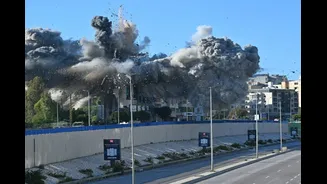
Various international bodies and legal experts have alleged that the United States, Israel, and Iran have all floutedinternational lawsby targeting or damaging civilian infrastructure.
These actions are primarily scrutinised under the Geneva Conventions (prohibition of attacks on civilian objects) and the UN Charter (prohibition of the use of force).
| Target category | Iran’s infra attacked by US and Israel | Gulf/Israel infra attacked by Iran |
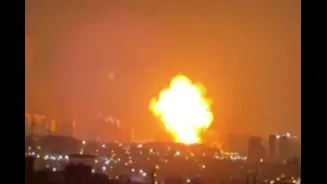
| Energy & Utilities | Oil refineries (Tehran, Karaj), South Pars gas field, power plants, and water desalination plants. | Gas facilities (Abu Dhabi), power generation & desalination plants (Kuwait), Ras Tanura refinery (Saudi Arabia). |
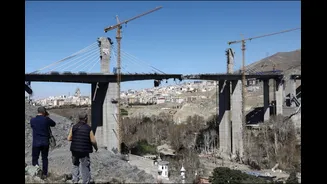
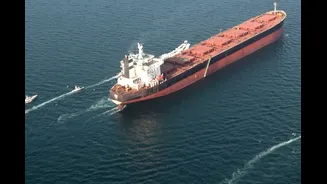
| Transport | B1 Bridge (Karaj), Tehran international airport facilities, and various urban bridges. | International airports (Dubai, Kuwait, Bahrain), Port of Duqm (Oman), and various regional bridges. |
| Healthcare & Education | Gandhi Hospital (Tehran), Evin prison medical facilities, and numerous schools. | Debris-related damage to residential areas and populated districts in Israel and the UAE. |
| Cultural/Media | Iran’s state television channel buildings and various museums. | Media buildings and residential neighbourhoods in Israeli-occupied territories. |
WHAT HAPPENS WHEN THESE LAWS ARE FLOUTED?
When these laws are flouted, the following mechanisms are typically triggered:
International Criminal Court (ICC) Prosecution: Individuals (leaders and commanders) can be prosecuted for war crimes. However, since the US, Israel, and Iran are not members of the ICC, the court lacks direct jurisdiction unless the UN Security Council refers a case—a move currently blocked by geopolitical divisions.
Universal Jurisdiction: National courts in third-party countries can theoretically arrest and prosecute individuals for “grave breaches” of the Geneva Conventions if they enter their territory.
Under international law, a state found liable for “internationally wrongful acts” is obligated to provide reparations or compensation for the damage caused.
States often face “countermeasures,” such as the revocation of residency permits for nationals, asset freezes, or trade embargoes, as seen with recent UAE actions against Iranian interests.
While the UN General Assembly or Human Rights Council can issue condemnatory resolutions (as they have recently done), these are typically non-binding and function as “moral” or diplomatic pressure rather than physical punishment.
KEY FAQs
Which 4 laws prohibit target civilian infrastructure?
Geneva Conventions, Hague Conventions, Nuremberg Principles, United Nations Charter.
Have US, Israel, Iran flouted them?
United States – alleged strikes on civilian infrastructure in Iran
Israel – strikes reported to violate UN Charter & target civilian areas
Iran – retaliatory attacks also accused of breaching international law.
What happens if these laws are violated?
War crimes merit prosecution via International Criminal Court and action by United Nations Security Council. However, in reality, there is limited enforcement due to politics and jurisdiction issues.
With agency inputs