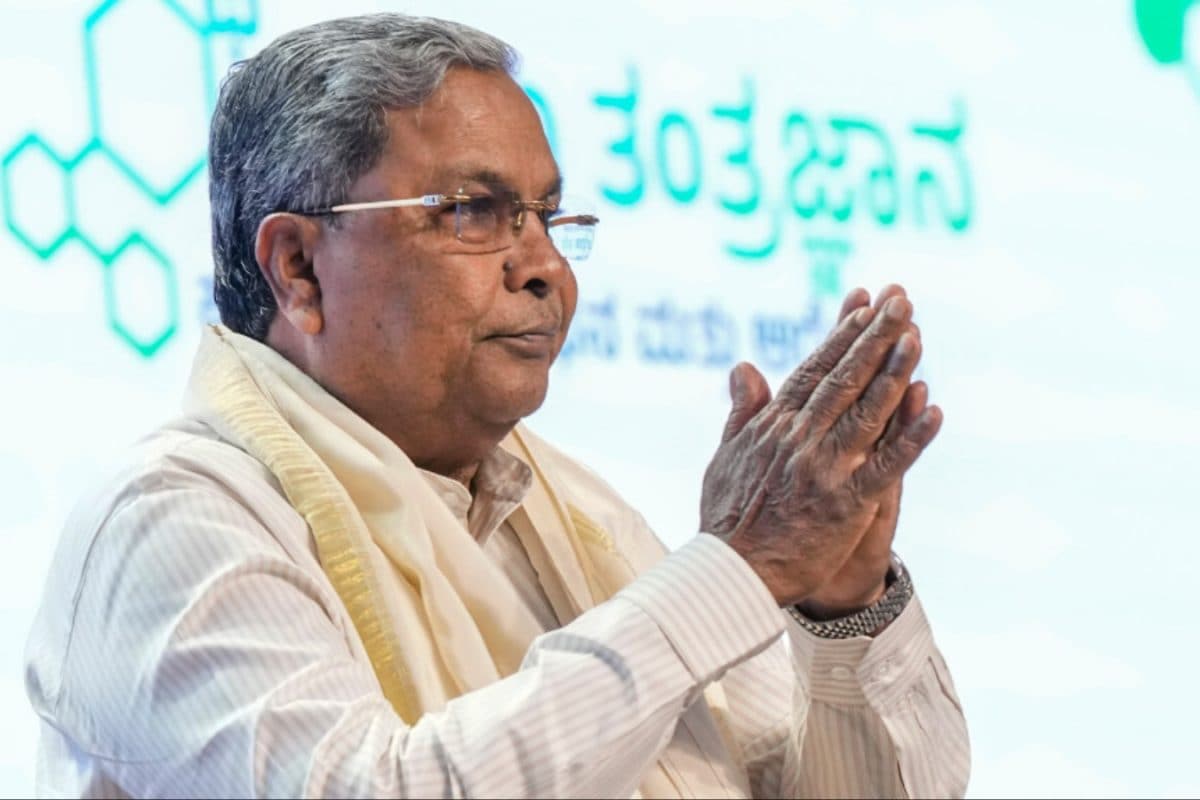









When a heavyweight regional leader steps down from the chief minister’s chair, a transition to national politics via the Rajya Sabha is often viewed as the standard institutional trajectory. Yet, following
his tenure as Karnataka Chief Minister, veteran Congress leader Siddaramaiah deliberately broke this conventional political script. Despite high-level overtures from the Congress central leadership in New Delhi offering him a secure seat in the Upper House of Parliament, the veteran Ahinda strategist firmly declined the position on Thursday. His refusal is not an act of rebellion, but rather a calculated, long-term decision rooted in his absolute refusal to be uprooted from Karnataka’s vibrant grassroots politics.
For Siddaramaiah, the move to New Delhi is structurally unappealing. He recognises that entering the Rajya Sabha would effectively distance him from the state’s direct electoral theatre, neutralising his core strength as a mass leader who thrives on direct public contact. Accepting a parliamentary seat would have allowed his regional rivals within both the opposition and his own party to consolidate their influence over the state unit in his absence. By remaining firmly anchored in Bengaluru, he ensures he stays indispensable to Karnataka’s political discourse, keeping his eyes on a possible future return to regional power.
The Resistance to the New Delhi Migration
The offer of a Rajya Sabha berth from the Congress high command was largely an attempt to defuse regional factionalism and utilise Siddaramaiah’s extensive administrative experience on a national platform. However, the veteran leader has historically maintained a deep aversion to federal politics, openly identifying himself as a politician of the soil. He consistently argued that his understanding of complex socio-economic realities, particularly regarding backward classes, minorities, and Dalits, was most effectively deployed through direct legislative action within Karnataka rather than through parliamentary debates in the national capital.
Furthermore, moving to the Rajya Sabha would have forced a dramatic shift in his political style. Siddaramaiah’s authority is fundamentally derived from his ability to tour rural constituencies, address massive public rallies, and influence state assembly dynamics. The Upper House, by its very nature, lacks the direct electoral mandate that feeds his political legitimacy. Declining the seat is a clear message to both his supporters and adversaries that he has no intention of accepting an elder statesman role or entering a dignified political retirement in New Delhi.
Preserving Strategic Leverage for an Assembly Return
Behind the principled stance of remaining a regional leader lies a highly sophisticated tactical blueprint. Siddaramaiah is acutely aware that the political landscape in Karnataka is notoriously volatile, where government mandates shift quickly and leadership equations are constantly rewritten. Had he migrated to the national capital, maintaining a tight grip on his loyal legislator base and his powerful voter coalition would have become logistically and politically impossible.
By rejecting the parliamentary exit route, he preserves his strategic leverage within the state Congress unit. It allows him to transition smoothly into the role of Leader of the Opposition in the state assembly, keeping him at the absolute centre of Karnataka’s daily governance debates and media spotlight. This constant state-level visibility and active engagement ensure that when the political pendulum possibly swings back, he remains the most viable, popular, and authoritative choice to lead the state once again, vindicating his gamble to reject the comfortable corridors of New Delhi.