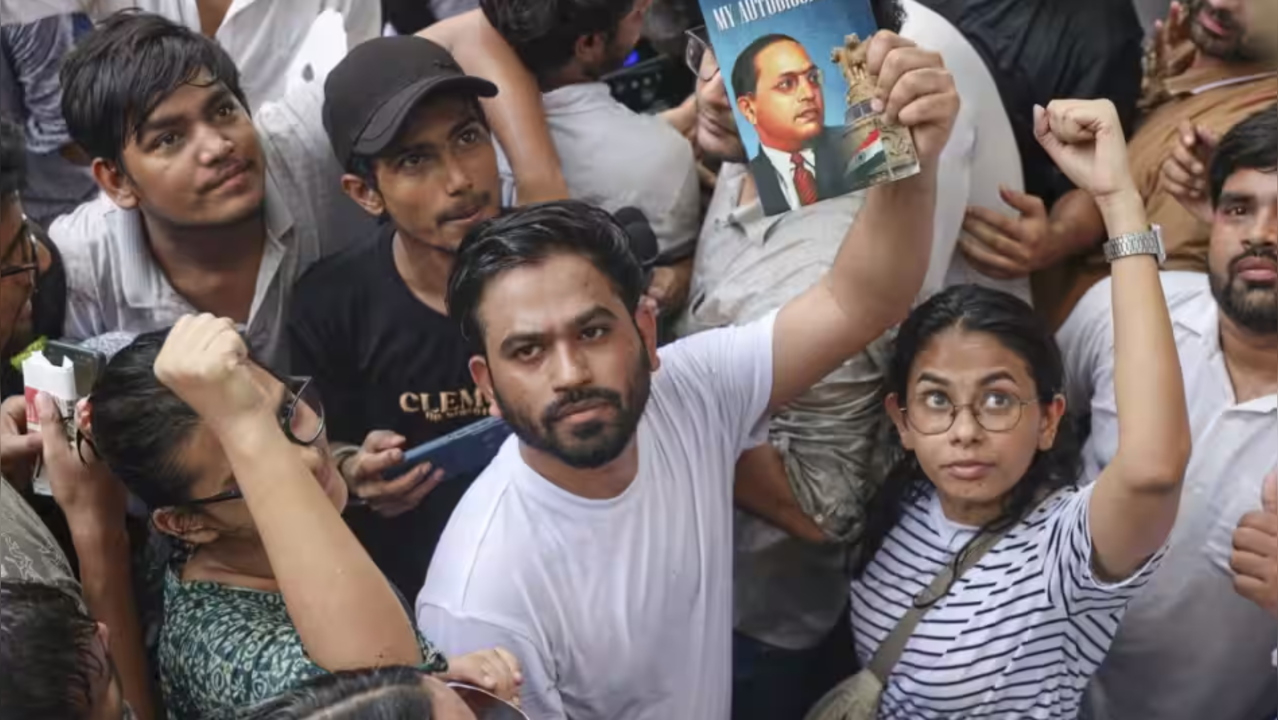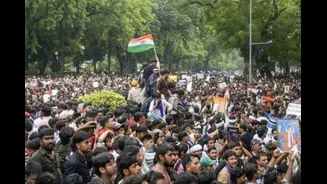








The Cockroach Janata Party (CJP) on Tuesday withdrew its call for a protest march in New Delhi on September 5, with party spokesperson Saurav Das telling the Supreme Court that the decision was taken in view
of measures initiated by the Centre to withdraw cases against protesters.
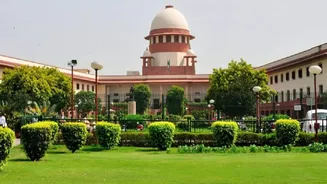
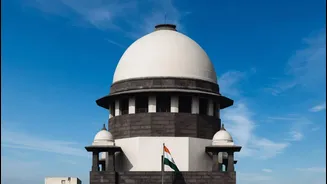
Das appeared before a bench headed by Chief Justice of India Surya Kant and comprising Justices Joymala Bagchi and V Mohana. He read out the CJP’s statement before the court and said the party had decided to withdraw the September 5 march following the steps taken by the Centre on the issue of cases against protesters.
The development came a day after the Supreme Court declined to urgently intervene against the proposed march.
On Monday, the CJI-led bench had said there was no compelling reason at that stage to presume that the demonstration would result in any untoward incident and left the issue of maintaining law and order to the government and police.
Centre Says Measures Taken To Withdraw Cases
During Tuesday’s hearing, Solicitor General Tushar Mehta appeared for the Central government and Delhi Police.
Mehta told the court that he had moved five applications and provided the bench with the background to the discussions between the government and the protesters.
Mehta also took the court through the Delhi Police’s application and referred to a portion concerning 2,873 individuals with criminal antecedents.
He said a fresh FIR against the “miscreants” would actually be filed.
Mehta further told the Supreme Court that four other states, Maharashtra, Bihar, West Bengal and Assam, had also moved applications in connection with the matter.
On compensation, Mehta told the court that the government was committed to providing it, but said the modalities would have to be discussed.
Following the submissions, Das read out the CJP’s statement in court and announced the withdrawal of the September 5 march.
Supreme Court Had Declined To Stop September 5 March
The CJP’s decision comes a day after the Supreme Court refused to urgently hear a plea seeking intervention against its proposed September 5 demonstration.
The plea was filed by retired Delhi Police officer Rajendra Singh.
It sought directions to ensure that large-scale demonstrations or protest marches in sensitive areas of the national capital are held only after obtaining requisite police permissions.
Advocate Rizan Ahmed, appearing for Singh, had urged the court to hear the matter on September 3, citing the proposed march as well as the upcoming BRICS Summit in Delhi on September 12-13.
He submitted that, to his knowledge, the organisers had not sought police permission for the march and raised concerns about the presence of international dignitaries and media in the capital during the summit.
Ahmed had also referred to the violence during the July 20 Sansad March announced by the CJP and cautioned that another incident could occur, even if it was not directly attributable to the organisers.
The Supreme Court, however, said it could not proceed on the assumption that something untoward would happen. The CJI said the police authorities were competent to deal with any law-and-order situation.
“We will at least, as of now, presume everybody will behave in a peaceful manner. Right now there is no compelling circumstance to assume that any untoward thing will happen,” the CJI had observed.
The bench issued notice to the Centre and Delhi Police but declined to list the matter before September 5.
It posted the plea for September 10 along with other matters concerning the student protests.
Why CJP Had Announced September 5 March
The CJP had announced the September 5 march alleging that the Centre had failed to honour its commitment to withdraw cases against students who participated in the July protests over the alleged examination paper leak.
The proposed mobilisation followed the CJP’s earlier protests and the July 20 Sansad March.