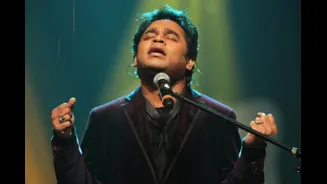


Oscar-winning composer AR Rahman has opened up about a quieter, more introspective phase of his Bollywood journey, admitting that he has lost work in the Hindi film industry over the last eight years.
Despite being one of the most celebrated composers in Indian cinema, Rahman believes shifting power dynamics within the industry may have contributed to fewer opportunities coming his way.
Speaking in a candid interview with BBC Asian Network, Rahman reflected on how his relationship with Hindi cinema has evolved, stressing that he has never chased projects and continues to believe that sincerity should naturally attract work.
“Maybe in the past eight years, because a power shift has happened and people who are not creative have the power now,” Rahman said. “It might be a communal thing also… but it is not in my face. It comes to me as Chinese whispers.”
‘I’m Not In Search For Work’
Rahman made it clear that the slowdown has not affected his sense of self-worth or creative peace. Instead of actively seeking projects, he prefers to let work find him organically.
“They booked you, but the music company went ahead and hired their five composers,” he said, adding calmly, “I say good, I have more time to chill with my family. I am not in search for work. I don’t want to go in search for work. I want work to come to me; my sincerity to earn work. Whatever I deserve, I get.”
The composer’s remarks come at a time when Bollywood has increasingly leaned towards formula-driven soundtracks and multi-composer albums, often prioritising speed and commercial trends over a singular musical vision.
Feeling Like An Outsider In Hindi Cinema
Rahman also revisited the early years of his Bollywood career, revealing that despite massive successes, he continued to feel like an outsider for a long time. Although he made his Hindi debut with Mani Ratnam’s Roja in 1991 and followed it up with Bombay and Dil Se.., he says acceptance did not come immediately.
“Actually, I was still an outsider with these three,” Rahman admitted. “But Taal became a household album. It entered the kitchens of everybody.”
The 1999 Subhash Ghai film marked a turning point. Rahman believes the album’s deep connection with North Indian listeners helped bridge the cultural and linguistic gap he initially struggled with.
Learning Hindi, Urdu And Punjabi To Belong
Language, Rahman said, was one of the biggest barriers in his early Bollywood days. Coming from Tamil cinema, he found it difficult to fully integrate into Hindi film culture.
“I never spoke Hindi. It’s very difficult for a Tamil person to speak Hindi because we have such attachment,” he explained.
It was Subhash Ghai who encouraged him to learn the language if he wanted longevity in Bollywood. Rahman went a step further, choosing to learn Urdu, which he calls “the mother of Hindi music” from the golden era. He later picked up Punjabi as well, largely influenced by his collaborations with Sukhwinder Singh.
That partnership would go on to define some of Indian cinema’s most iconic songs, including Chaiyya Chaiyya, Ramta Jogi, and the Oscar-winning Jai Ho.
‘I Didn’t Feel Discrimination, But Power Has Shifted’
When asked whether prejudice against non-Maharashtrian or South Indian artistes exists in Bollywood, Rahman said he never experienced it directly.
“Maybe it was concealed, but I didn’t feel any of this,” he said, before adding that the current industry ecosystem feels different. “People who are not creative have the power now.”
Despite this, Rahman maintains a sense of detachment from industry politics, choosing instead to focus on family, global work, and projects that align with his artistic values.
Why Rahman Chose Original Hindi Films Over Dubbed Ones
Rahman also recalled a moment that pushed him to focus more on original Hindi films rather than dubbed versions of South Indian projects. After Roja and Dil Se.. succeeded nationally, he noticed poor Hindi translations of Tamil songs circulating widely.
“It was humiliating for me,” he told NDTV in an earlier interview. “People would say, ‘This Hindi lyrics sucks, I would rather listen to the Tamil version.’”
That criticism prompted him to engage more deeply with Hindi lyricists and create music specifically for the language, rather than relying on adaptations.