



The Bharatiya Janata Party (BJP) On Saturday has criticised Congress leader Sonia Gandhi over her remarks on the Emergency imposed by former prime minister Indira Gandhi in 1975 and criticism of BJP.
In
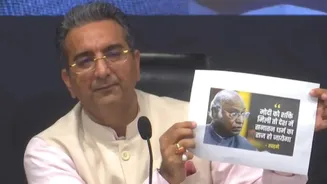
a post on X, Bhandari said Sonia Gandhi’s remarks could not change the fact that Indira Gandhi had imposed the Emergency. He also invoked former prime minister Rajiv Gandhi’s controversial remark following the 1984 anti-Sikh violence.
“Sonia Gandhi is trying to justify emergency! She is trying to project Indira Gandhi as victim, but her PR exercise cannot hide the truth: Indira Gandhi imposed emergency, & Rajiv Gandhi carried forward that legacy by his famous comment – ‘Ek Bada Ped Girta Hai to Dharti Hilti Hai’ justifying 1984 massacre of Sikhs! Nation has not forgiven Gandhi Vadra family, nation will not!” Bhandari wrote.
What Sonia Gandhi said about the Emergency
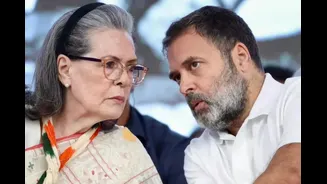
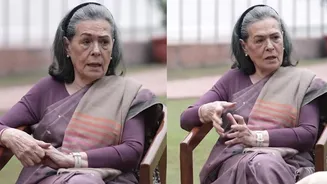
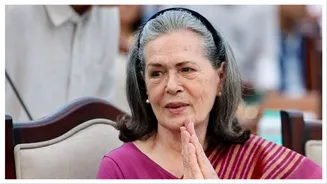
Sonia Gandhi discussed the Emergency in an interview with The Hindu’s N Ram, where she refused to hold Sanjay Gandhi solely responsible for the excesses committed during the period. She said several senior colleagues of Indira Gandhi had also exerted pressure on the then prime minister.
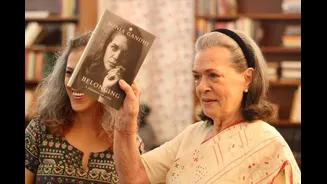
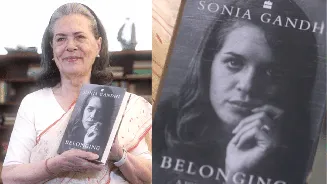
The remarks come ahead of the worldwide release of Sonia Gandhi’s memoir, ‘Belonging: A Journey Of Love’, on November 10.
“It was not only Sanjay, though in the public mind he is often seen as synonymous with the Emergency. There was a lot of pressure from some of her senior colleagues, and I think there were very few people around her like Rajiv who had a different point of view,” she told the newspaper.
Sonia added that Rajiv Gandhi would pass on complaints and feedback he heard to his mother. She said Indira Gandhi eventually understood the situation and took steps to address it. “I think eventually my mother-in-law began to understand the situation through her own wisdom and took actions to remedy it,” she said.
BJP MP Tarun Chugh attacks Sonia Gandhi
BJP MP Tarun Chugh also hit back at Sonia Gandhi over her remarks on the BJP government and its impact on India’s institutions and democracy.
In an extended response, Chugh said India’s culture and Sanatana traditions had survived centuries of invasions and colonial rule and would continue to endure. He also referred to the construction of the Ram temple at Shri Ram Janmabhoomi, alleging that three generations of the Gandhi family had tried to prevent it.
“This resurgence of Sanatana’s faith, where heritage and development walk hand in hand and grow together in the same cradle is something you simply cannot stomach,” Chugh said.
He also took a swipe at Sonia Gandhi’s Italian origins, saying that if she removed her “Italian-made glasses”, she would see an India moving forward under the government’s ‘Sabka Saath, Sabka Vikas, Sabka Prayas’ slogan. He cited a growth rate of 7.8% and described India as a rising global power.
Chugh further questioned Sonia Gandhi’s response to the deaths of Indian soldiers, alleging that she had not expressed sympathy over their martyrdom.
Sonia Gandhi’s criticism of BJP government
In her interview with The Hindu, Sonia Gandhi said the country had suffered considerable damage to its institutions and democratic framework over the past 12 years. She said restoring them would require time and sustained efforts from political parties.
“Over the last twelve years great damage has been done to the fabric of our country, our democracy and our institutions. Even after this government goes it will take time to restore our systems back to health, and great effort from political parties. People are now beginning to be restless and recognising the damage. But I am optimistic and I know that the people of India will welcome a return to proper governance,” she told the newspaper.
Her remarks came in response to a question on whether politics would return to a contest over policies and programmes if the BJP lost the 2029 Lok Sabha elections.
‘Democratic rights had been curtailed’
Asked whether the Emergency should be recognised as an anti-democratic and authoritarian chapter, Sonia Gandhi agreed that democratic rights had been restricted.
“It was only after the Emergency that I came to know the true gravity of what had been happening. Yes, democratic rights had been curtailed and there was a suspension of habeas corpus, but it was done constitutionally,” she told The Hindu.
She also described the circumstances leading up to the Emergency from Indira Gandhi’s perspective, citing violent protests, government offices and public transport being set on fire, widespread organised unrest and calls for the bureaucracy and armed forces to disobey orders.
Sonia said Indira Gandhi later publicly expressed regret over the excesses committed during the period. She also pointed out that it was Indira Gandhi herself who called the March 1977 election, allowing the issue to be resolved through democratic means.
The formal proclamation of Emergency on June 25, 1975, marked a significant moment in India’s constitutional history. The executive acquired overriding powers, while state authority came under central control. The Emergency remained in force until March 21, 1977.