




The war between the United States and Iran has entered its fifth week, with US President Donald Trump repeatedly suggesting that the conflict is nearing its end. However, behind the messaging lies a more
complicated, and potentially contradictory, reality.
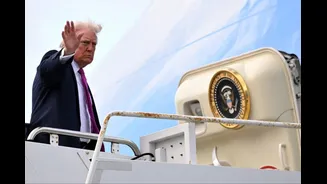
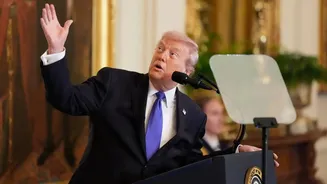
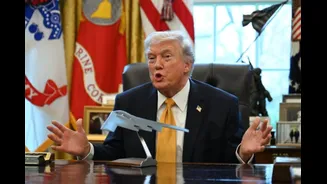
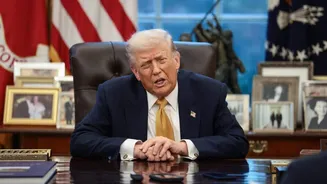
According to Axios, Trump has, at least in 12 instances, indicated that the war was about to end, highlighting a pattern of shifting signals, optimism, and pressure tactics.
The ‘War Is Ending’ Narrative
Across his speeches, interviews, and social media posts, the President has continuously sent the message that the conflict is nearing closure.
ALSO READ | Trump On Hold? 3 Reasons Why Iran Isn’t Picking Up The Phone For Peace Talks
According to Axios, these signals range from claims that the US has already achieved its objectives, assertions that Iran’s military capabilities have been “decimated”, statements suggesting a deal is “very close”, and indications that negotiations are progressing with a “more reasonable” Iranian leadership.
At times, Trump has even suggested that the timeline for ending the war depends largely on his own judgment, projecting control over both the battlefield and the diplomatic track.
The 12-Point Pattern
The repeated messaging broadly falls into a few key themes:
1. “We’ve essentially achieved what we needed to achieve”—Trump suggested early on that US objectives had largely been met.
2. “Iran’s capabilities have been badly hit” — He claimed US strikes had significantly weakened Iran’s military strength.
3. “A deal could happen very soon”— Trump indicated negotiations were close to yielding results.
4. “We’re talking to people on the other side”— He hinted at ongoing indirect or backchannel communications.
5. “They want to make a deal”— Trump projected that Iran was now willing to negotiate under pressure.
6. “There are new people we can deal with” — He suggested a shift within Iran’s leadership or negotiating approach.
7. “We’ll know in a matter of days”— Trump repeatedly set short timelines for a breakthrough.
8. “We don’t want a long war” — He framed the US objective as quick resolution rather than prolonged conflict.
9. “Sanctions are bringing them to the table” — Trump emphasised economic pressure as a key leverage point.
10. “We’re very close to something big” — He described negotiations as nearing a decisive moment.
11. “I can end this when I decide” —- Trump personalised the timeline, suggesting the end depends on his call.
12. “Make a deal or face serious consequences” — Even while talking peace, he paired it with warnings of escalation.
What’s Actually Happening On Ground?
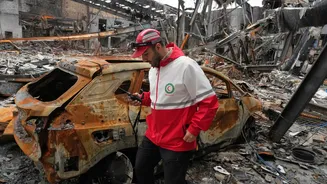
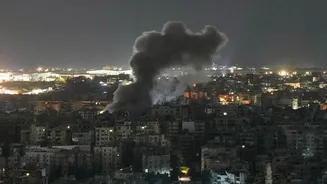
Despite the rhetoric, there are few signs of the conflict abating. Iran has not agreed to key demands by the US, such as the dismantling of parts of its nuclear and missile programmes. Strikes by Israel and the US on Iranian targets persist, accompanied by the expansion of Iranian-affiliated forces’ retaliatory operations. The Strait of Hormuz continues to be disrupted, keeping markets unsteady.
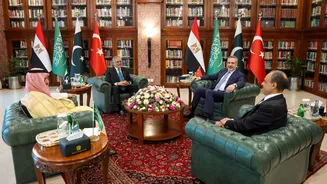
The talks are indirect, and the situation remains fragile, even though both parties are hardening their stance.
ALSO READ | Inside Iran’s Military: Why Trump’s Plan To Put Boots On Ground Could Be A Risky Escalation
Axios analysts suggest that Trump’s messaging may serve multiple purposes. To begin with, he intends to signal strength domestically by projecting imminent victory, especially in the run-up to the mid-term polls. Then, he wants to pressure Iran into concessions by creating an urgency. Apart from this, the US President wants to manage global markets, particularly oil prices, and create a diplomatic space without committing to concessions.
However, the lack of consistency in messaging has also raised questions about whether the administration has a clear endgame.
Even as Trump appears to indicate an end to the war in sight, developments on the ground suggest the opposite.
There are fresh threats of escalation, including the possibility of an extension of US strikes, with Trump promising boots on the ground, Iranian retaliation continuing, and risks of spillovers in the region.
The conflict, according to The Guardian, is looking like an “escalation without end”, with neither side appearing to back down.