








In ancient Indian history, the Gupta period is remembered as a golden age. It was a time when India led the world in art, science, education, and prosperity. But this shining era did not last forever.
Nomadic warriors from the mountains and plains of Central Asia shook the foundations of the empire.
These were the Huns, whose very name struck fear into the hearts of rulers. Their lives revolved around horseback riding, and their greatest strengths were speed and precision with the bow. Whenever the Huns invaded, villages were destroyed and trade routes disrupted, spreading fear far and wide.
Who Were The Huns?
The Huns were nomadic warriors from the steppes of Central Asia, also known in history as the ‘White Huns’ or ‘Hephthalites’. They did not build permanent settlements but lived entirely on horseback, moving from one region to another. Their lightning-fast riding and expert archery made them a formidable force.
The dust clouds and thunder of their horses’ hooves caused even the greatest kings to tremble.
Skandagupta: The Warrior Who Repelled The Huns
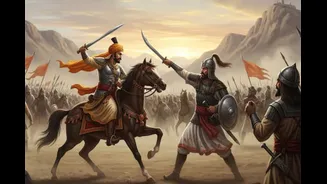
When the Huns first approached the borders of the Gupta Empire, Emperor Skandagupta was ruling India. Around 455 AD, a large Hun army attacked. Skandagupta not only defeated them in battle but successfully drove them out of India.
The Junagadh inscriptions record this glorious victory. Thanks to his courage, India’s golden age was protected for another fifty years.
Toramana And Mihirakula: The Height Of Hun Cruelty
After Skandagupta’s death, the Gupta Empire weakened, allowing the Huns to strike again. This time, they were led by Toramana, who captured regions up to Malwa. The most brutal Hun ruler emerged when Toramana’s son, Mihirakula, took the throne.
Historians refer to him as ‘India’s Attila’ due to his extreme cruelty. Mihirakula despised Buddhism, destroying thousands of stupas and monasteries. His reign was marked by looting, terror, and widespread destruction.
The End Of India’s ‘Golden Age’
Though the Huns did not rule all of India, their invasions shattered the Gupta Empire. Three key factors contributed to this decline:
- Economic Ruin: Decades of war drained the royal treasury. Gold coins, once symbols of purity, were mixed with other metals.
- Trade Disruption: The Huns gained control of the Silk Route and other trade routes connecting India to Rome and Central Asia, ending the country’s economic prosperity.
- Political Fragmentation: As central power weakened, provincial governors became independent, causing the vast Gupta Empire to break into smaller states.
Yashodharman And Narasimhagupta: The Final Defeat
The terror of the Huns was eventually ended around 528 AD when King Yashodharman of Malwa and Gupta ruler Narasimhagupta Baladitya joined forces. Their combined army defeated Mihirakula decisively. Mihirakula was captured and later fled to Kashmir, where he died, ending the Huns’ political influence in India.
While the Huns had caused immense damage, they did not break the nation.
The Huns Integrate Into Indian Society
Although defeated, many Hun soldiers and families remained in India. Over time, they merged into Indian society, culture, and religion. Historians believe that some prominent communities in North India, such as certain Rajput clans and Gujjars, are descendants of or influenced by the Huns.
They became part of India’s warrior society, blending into the social fabric of the land.
Proof Of India’s Indomitable Spirit
The history of the Huns in India is not merely a story of destruction; it also demonstrates how foreign invasions can reshape a great civilisation.
The end of the Gupta Empire was tragic, yet the struggle against the Huns highlights India’s resilience and determination. This story is not only about devastation but also about the nation’s ability to rise again after every crisis. It reflects India’s enduring strength and true identity.