




How has the war with the United States and Israel impacted Iran? Data released by the Statistical Center of Iran shows that Iran’s real Gross Domestic Product (GDP) contracted by 10.1 percent year-on-year
during the first quarter of the Persian calendar (March 21 to June 20, 2026) due to the severe disruptions from the US-Israel war. The economic downturn is primarily driven by a massive collapse in the energy sector, which serves as the country’s main source of foreign currency, according to Al Jazeera and other reports.
IRAN’S ECONOMY: SECTOR-WISE NUMBERS
The war has heavily battered the country’s core economic engines:
- Oil and Gas: Dropped 26.4 per cent year-on-year, representing the most catastrophic hit
- Industry and Mining: Contracted by 14.7 per cent
- Services: Fell by 4.8 per cent
- Manufacturing: Slipped by 2.5 per cent
- Agriculture: Remained a rare exception, growing 2.3 per cent
STRAIT OF HORMUZ: IMPACT OF THE NAVAL BLOCKADE
The contraction in oil and gasis tied directly to a military and economic chokehold, according to reports:
Iranian crude loadings collapsed from roughly 2 million barrels per day (bpd) in March to just 220,000–255,000 bpd by August.
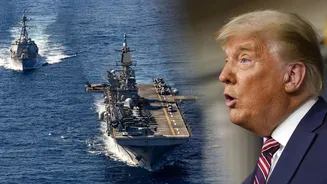
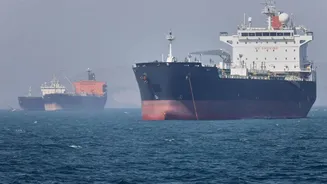
A tightening US naval blockade of the Strait of Hormuz trapped nearly 29 tankers carrying over 36 million barrels of crude, rendering them unable to reach global markets.
Alongside a broader global economic isolation strategy led by the US Treasury, the United Arab Emirates enacted an indefinite trade embargo against Iran, closing off a vital legal and illegal trade conduit.
BROADER ECONOMIC STRAIN
The plunge in energy revenue has triggered a severe domino effect across the domestic economy:
Hyperinflation: The 12-month average inflation rate soared to 69.9 percent, with daily necessities like food and tobacco rising at nearly double that pace.
Currency Crash: The Iranian rial plummeted from roughly 1 million per US dollar last year to more than 2.2 million per dollar in early September.
Unemployment: Official figures indicate unemployment ticked up to 9.1 percent during the spring quarter, say reports.
US-IRAN WAR: THE CURRENT STATUS
The US-Iran war is currently locked in a dangerous military stalemate, as both nations trade limited strikes, maintain dual blockades, and engage in a high-stakes diplomatic game of brinkmanship. The conflict began on February 28, 2026, when joint US-Israeli airstrikes killed former Supreme Leader Ali Khamenei. While a Qatar-mediated June memorandum temporarily halted full-scale fighting, the deal collapsed in July after maritime clashes. This has led to the current, volatile situation as of September 2026.
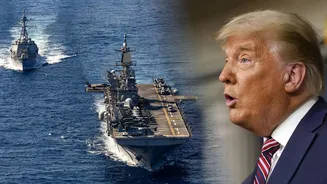
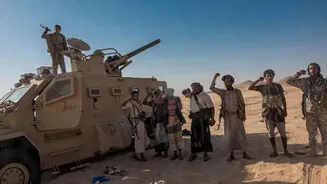
The war has fundamentally upended global energy markets, sending oil prices past $100 a barrel. A tightening US naval blockade has throttled Iranian oil ports. Simultaneously, Iran and its regional proxies have functionally cut off Gulf energy shipments. Iran’s forces maintain deep surveillance and a blockade over the Strait of Hormuz, while Iran-backed Houthi rebels in Yemen have taken the Bab el-Mandeb Strait along the Red Sea.
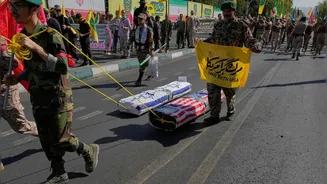
Over the past few weeks, the Islamic Revolutionary Guard Corps (IRGC) and US forces have routinely traded missile and drone strikes. Most recently, on September 21, the UK Maritime Trade Operations (UKMTO) reported that another tanker was struck in the Strait of Hormuz, and the US Virtual Embassy in Iran issued an urgent “leave immediately” warning to remaining American citizens, say reports.
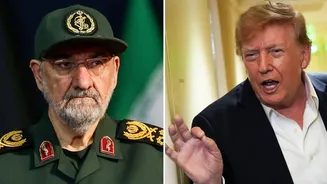
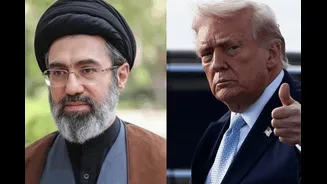
US President Donald Trump stated on September 20 that he is evaluating next steps, balancing options ranging from a military escalation to “letting Iran rot economically” or attempting to negotiate a new settlement.
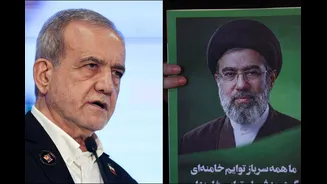
Iran’s new hardline leadership, consolidated under Mojtaba Khamenei, is leveraging its asymmetric capability to disrupt global trade, operating on the belief that it has the upper hand to make demands rather than concessions. Iranian Parliament Speaker Mohammad Baqer Qalibaf summarized their stance by stating Iran “must push the enemy back and deal devastating blows… before any negotiations.”
Through Qatari mediators, Tehran delivered seven conditions to the White House to end the war. While Iran is leaving the door open for diplomacy—and President Trump indicated a potential willingness to meet his Iranian counterpart on the sidelines of the UN General Assembly this week—the IRGC issued a fierce warning on September 21. They stated that any new US assault would be met with a massive counteroffensive involving “unspecified new weapons” and an expansion of the “geography of the war” far beyond the Middle East, say reports.
With agency inputs