








Despite President Donald Trump’s claim that Iran has “very few rockets left”, US intelligence assessments suggest Tehran may still retain a significant portion of its missile and drone arsenal nearly a month
into the war.
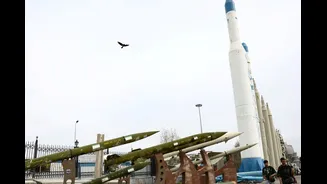
According to people familiar with the intelligence, speaking to Reuters, the United States can only say with certainty that it has destroyed about one-third of Iran’s vast missile stockpile. Another third is believed to have been damaged, buried, or rendered inaccessible in underground tunnels and bunkers, but the exact extent remains unclear. That means Iran could still have a substantial inventory of weapons that may become usable once the fighting slows or stops.
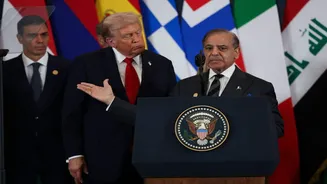
The same assessment reportedly applies to Iran’s drone capability, with only around a third of it confirmed destroyed so far. The findings offer a more cautious picture than Trump’s public comments at a televised Cabinet meeting on Thursday, where he suggested Iran’s military capabilities had been nearly exhausted.
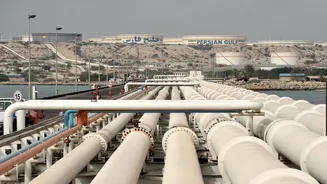
Trump, however, also appeared to acknowledge the danger posed by even a small number of remaining missiles, especially in the context of the Strait of Hormuz.
“The problem with the straits is this: let’s say we do a great job. We say we got 99%… 1% is unacceptable, because 1% is a missile going into the hull of a ship that costs a billion dollars,” he said.
Iran Still Has Firepower
The intelligence assessment underscores that although much of Iran’s arsenal may have been degraded or buried, Tehran has not run out of offensive capability.
On Thursday alone, Iran reportedly fired 15 ballistic missiles and 11 drones at the United Arab Emirates, demonstrating that it still retains the capacity to launch coordinated attacks despite weeks of sustained US and Israeli bombing.
Iran has also displayed new reach during the conflict. Last week, it reportedly launched long-range missiles toward the US-UK military base at Diego Garcia in the Indian Ocean, signalling that its strategic strike capability remains far from eliminated.
Why the Numbers Are Unclear
One of the biggest challenges facing US intelligence is simply determining how many missiles Iran had before the war began.
Pre-war estimates vary widely, ranging from 2,500 missiles according to Israel’s military to around 6,000 as estimated by some analysts. A large share of these were believed to be stored in deep underground bunkers and hardened facilities, many of which may still be partially intact.
Analysts say Iran may still have more than a dozen major underground missile complexes, and the key question is whether these facilities have collapsed or merely been damaged. If they remain structurally intact, some of the buried missiles and launch systems could eventually be recovered and reused.
US Says Operation Is on Track
The Trump administration has maintained that its military campaign, officially named Operation Epic Fury, is progressing on schedule and has already significantly weakened Iran’s military.
US Central Command has said its strikes have hit more than 10,000 Iranian military targets, including weapons factories, missile launch sites, and drone production infrastructure. It has also been claimed that 92 per cent of Iran’s large naval vessels have been sunk.
Still, the military has not publicly disclosed how much of Iran’s missile and drone arsenal has actually been destroyed, a gap that has now become central to assessing how much threat Tehran still poses.
War Far From Over
The intelligence findings suggest that while Iran has undoubtedly suffered heavy losses, it may still be far from disarmed.
That matters not only for the battlefield, but also for any future US operations around the Strait of Hormuz, where even a handful of surviving missiles or drones could threaten warships, tankers, and global energy supply routes.
For now, the picture emerging from US intelligence is more sobering than the White House messaging: Iran may be battered, but it is not yet out of weapons.