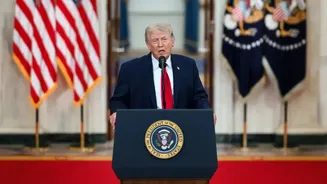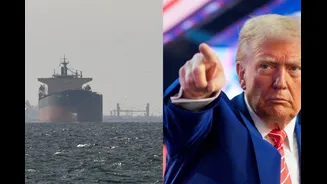




US President Donald Trump’s attempt to reopen the Strait of Hormuz through an agreement with Iran has collapsed within weeks, reviving attacks on commercial ships, triggering hundreds of American strikes
and once again threatening one of the world’s most important energy routes.
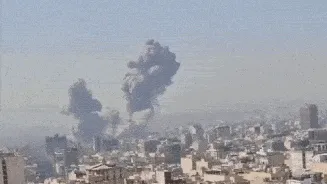
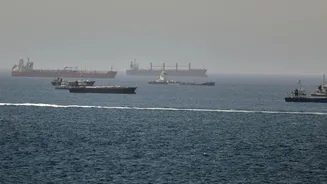
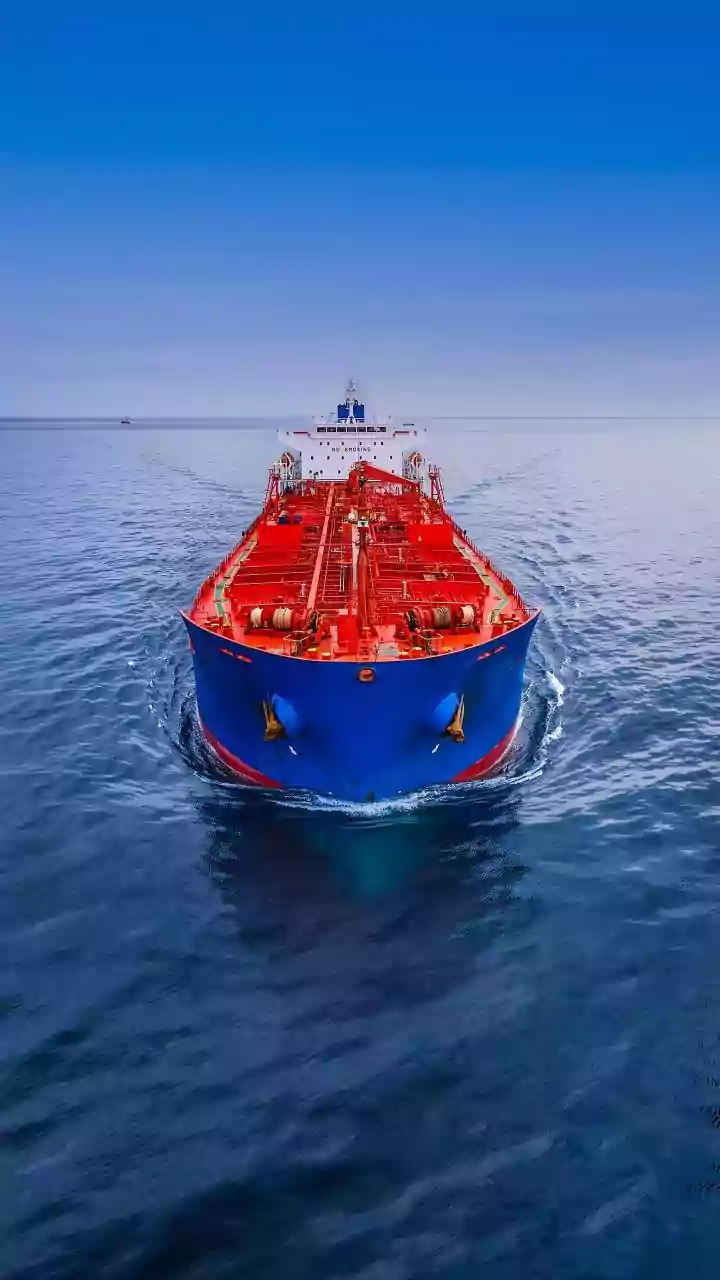
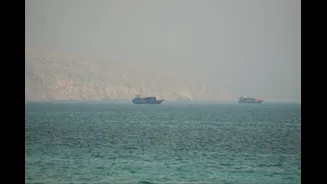
Iranian forces last week attacked three ships travelling through a southern corridor close to Oman, according to the US military. Trump responded by ordering airstrikes inside Iran. Tehran’s Navy later said it had targeted another vessel and was closing the strait “until the end of US interference in the region.”
US Central Command said it struck around 140 Iranian military targets in response, taking the number of American strikes over the previous week to 310.
Trump has since warned that the June agreement may be “over”. The escalation has sent energy prices higher and exposed the central weakness in the memorandum of understanding he signed with Iran on June 14: it did not establish an unconditional right for commercial vessels to use the strait without Iranian interference.
Instead, it formalised Iran’s role in deciding how the waterway would operate.
What Trump Claimed The Agreement Had Secured
Under the June deal, the US agreed to end a military blockade of Iranian ports and allow it to resume oil sales for 60 days. Iran, in return, was expected to facilitate the safe movement of commercial vessels while negotiations continued towards a wider peace agreement.
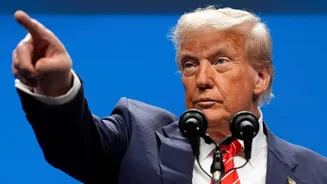
Trump presented it as a breakthrough. “Ships of the World, start your engines,” he wrote on social media. “Let the oil flow!”
But the agreement did not secure the unrestricted passage his announcement appeared to promise.
What The June Agreement Actually Said
The 14-point memorandum said Iran would “make arrangements using its best efforts for the safe passage of commercial vessels” through the Strait of Hormuz.
The phrase “best efforts” immediately raised concerns because it was not a binding guarantee. The agreement did not clearly state which routes ships could use, who would enforce safe passage or what consequences Iran would face if it attacked vessels sailing outside a Tehran-approved corridor.
The MOU also prohibited tolls and fees for only 60 days while negotiations towards another agreement continued. It did not permanently dismantle Iran’s system of charging vessels or provide an ironclad assurance that ships could cross any part of the strait safely.
Its final provision was even more contentious.
“The Islamic Republic of Iran will conduct dialogue with the Sultanate of Oman to define the future administration and maritime services in the Strait of Hormuz, in discussion with other Persian Gulf littoral states, in line with the applicable international law and the sovereign rights of coastal states of the Strait of Hormuz,” it said.
Analysts have argued that this language gave Tehran grounds to claim that Washington had formally recognised an Iranian role in managing the waterway.
“No one should be surprised that Iran views that as explicitly giving them an enduring role controlling passage through Hormuz,” Michael Ratney, a retired career diplomat and the most recent US ambassador to Saudi Arabia, told the New York Times.
“Iran’s control obviously gives them powerful leverage,” he said, “and they appear to be willing to risk a resumption of conflict, perhaps even a collapse of the cease-fire, to maintain that leverage.”
How Iran Turned Shipping Into Leverage
For nearly six decades, commercial ships used a route through the Strait of Hormuz established under a United Nations-backed arrangement.
Iran supported the route when it was created in 1968, even though it passed through Iranian territorial waters. After the 1979 Islamic Revolution, Iran’s new rulers said they were not bound by the arrangement, but largely allowed commercial shipping to continue uninterrupted.
That changed after US and Israeli forces attacked Iran on February 28.
Iran began striking commercial vessels and laying mines, bringing traffic through the strait close to a halt. Ships willing to sail closer to Iran and pay large sums were granted passage along the northern side of the waterway.
According to NYT, Iran required vessels to obtain permission from the Persian Gulf Strait Authority, a body Tehran created in May, while some shipping operators were asked to pay as much as $2 million per vessel. Iran described these payments as charges for safety and environmental services.
But experts said they functioned as de facto tolls, which the United Nations Convention on the Law of the Sea prohibits.
Iran signed but did not ratify the convention and maintains that its provisions do not bind it. The United States has also never ratified the treaty.
The June agreement temporarily stopped Iran from collecting the fees, but it did not permanently reject its claim that ships should use the northern route under Iranian supervision.
Dennis Ross, a former Middle East negotiator who served presidents from both US parties, said the implications were clear. “You were opening the strait — but only on the condition that Iran was completely in control and that any other routes are not acceptable,” Ross told NYT.
The Quiet US Operation Along Oman
Before the agreement was signed, the US military had already found another way to move commercial vessels through the strait without accepting Iran’s northern corridor.
According to NYT, tankers using a southern passage close to Oman turned off their transponders to reduce the risk of being detected by Iran. US naval officers directed the ships over the radio and told them to remain close to Oman’s coastline.
The American military also provided limited air cover in case Iran attacked.
This arrangement helped commercial traffic increase between May and June during an informal ceasefire. It followed the failure of a more ambitious military escort mission called Project Freedom.
The operation began on May 4 and was intended to escort stranded commercial ships through the strait. Trump abandoned it in less than 48 hours after Saudi Arabia’s crown prince, concerned about possible Iranian retaliation, refused to allow the US to use Saudi airspace, the NYT reported.
The Pentagon then shifted to radio guidance rather than direct escorts.
Captain Tim Hawkins, a spokesman for US Central Command, said American forces had guided more than 800 commercial vessels carrying about 400 million barrels of crude oil since early May.
The ships used a route designated by the International Maritime Organization in consultation with Oman to help evacuate roughly 600 vessels stranded during the war.
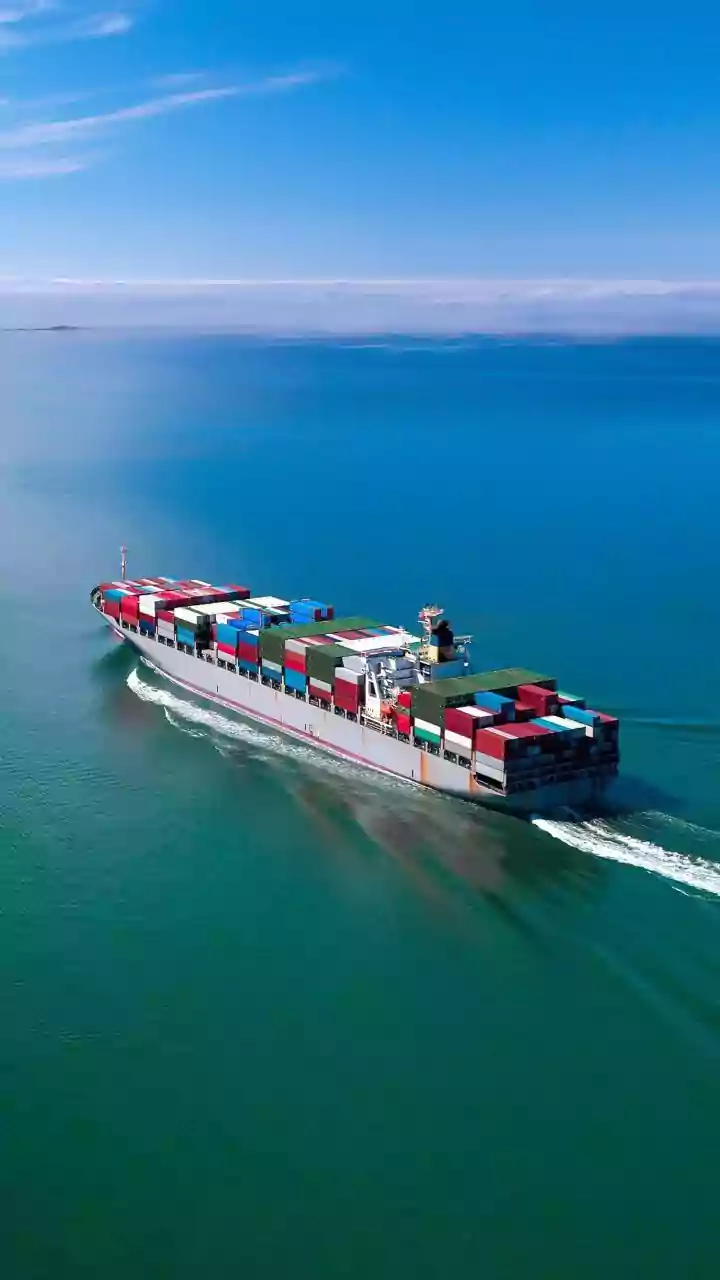
Traffic rose sharply after the June agreement formalised the ceasefire. Nearly 400 vessels crossed the strait during the seven days beginning June 20, according to maritime data firm Kpler — the highest weekly figure since the war began.
After Iran’s latest attacks, only 22 ships crossed on Thursday.
The Dangerous Choice Facing Shipping Companies
Commercial operators now face two risky options.
Ships using the southern corridor close to Oman can avoid Iranian-controlled waters but remain vulnerable to Iranian drones, missiles or naval attacks.
Those using the northern route may receive Iran’s assurance of safe passage, but could be forced to seek Iranian permission, pay high charges and strengthen Iran’s claim that it controls navigation through the strait.
The United States still has more than a dozen warships in the wider Arabian Sea region, including two aircraft carriers, as well as attack and surveillance aircraft. It is also using autonomous vessels for mine-detection missions.
“U.S. forces have held Iran accountable for its unwarranted aggression toward commercial shipping while still facilitating passage through the strait,” Captain Tim Hawkins told NYT. But he acknowledged that there was “no guarantee” American guidance would protect vessels crossing the waterway.
That warning sits uneasily with Trump’s declaration after the deal that the route was “totally safe, secure, and pristine.”
Where Trump’s Strategy Went Wrong
The Trump administration appears to have assumed that Iran’s promise to use its “best efforts” to ensure safe passage covered the southern route close to Oman.
During a White House-arranged phone briefing for reporters, an unnamed US official involved in the negotiations said Tehran knew ships were using the corridor and had previously fired drones at some of them. Washington therefore believed Iran’s “best efforts” commitment meant it would not attack vessels using that route.
Iran interpreted the agreement differently. It treated the MOU as recognition that it would retain a central role in deciding where commercial vessels could sail.
The two sides therefore entered the deal with conflicting understandings. Trump believed it had restored freedom of navigation. Iran saw it as preserving its control while temporarily suspending fees and attacks.
At a June 18 news conference, Vice President JD Vance insisted that Trump’s demands over the strait would be secured in a future agreement. “We have all the cards,” he said.
The latest escalation suggests that Iran still holds its most powerful one: the ability to disrupt the Strait of Hormuz and force Washington to choose between military escalation, economic disruption and accepting a larger Iranian role in the waterway.
Trump has reinstated the US ban on Iranian oil sales that he had temporarily waived, but has not yet restored the naval blockade of Iran’s ports.
The contest may now depend on whether economic pressure forces Tehran to retreat before renewed disruption in the strait inflicts wider damage.