







The government is considering a move to ensure that every pilot undergoes a dope test at least once a year at a random time, Civil Aviation Minister Ram Mohan Naidu Kinjarapu said on Tuesday, as the Directorate
General of Civil Aviation (DGCA) reviews the existing framework for testing pilots for psychoactive substances.
At present, the rules require random testing of 10 per cent of the overall pilot population annually. However, the government is now considering a system under which every pilot would be tested during the year, with the timing of the test kept unpredictable.
“Right now, the rule says 10 per cent across the overall pilot network. But, just like I said, DGCA is engaging, and one of the opinions from our side is that everyone has to go through it in the year, at random times,” Naidu said in Delhi.
The minister’s remarks come amid renewed scrutiny of drug-testing protocols for pilots following an Air India incident earlier this month in which the pilot-in-command subsequently tested positive for marijuana.
Naidu said the DGCA is currently holding consultations with stakeholders on the existing regulations concerning substance use among aviation personnel and how they can be strengthened.
“More importantly, in terms of substance use and everything, DGCA is also having stakeholder consultations right now on what the regulations say today and how we ensure there is a strict policy around this in the future as well. So, this consultation is going on right now,” he said.
The minister also said the Aircraft Accident Investigation Bureau (AAIB) is conducting the investigation into the Air India incident.
According to him, the aircraft and its data recorder are intact and remain with investigators.
“AAIB is presently taking up the investigation, and because everything is intact, the data recorder and everything is intact, the plane is also in their possession. So, I believe that we can expect some preliminary report at a very early stage from now,” Naidu said.
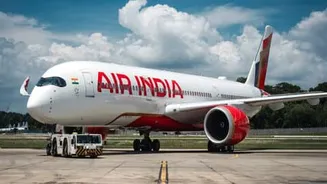
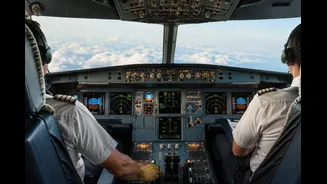
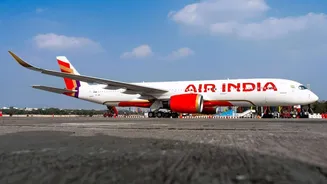
The issue came under focus after the Air India Phuket-Delhi flight incident on August 4. The aircraft, an Airbus A320neo, suddenly lost around 300 feet in altitude during cruise amid turbulence.
The pilot-in-command later tested positive for marijuana in a confirmatory drug test.
Following the incident, Air India and Air India Express began mandatory psychoactive-substance testing of their pilots, going beyond the minimum regulatory requirement.
Around 5,000 pilots across the two airlines were covered by the one-time screening exercise.
Two Air India Group pilots also returned “non-negative” results in initial screening, with their samples sent for confirmatory testing.
Pilots’ Body Seeks Higher Random Testing
The Federation of Indian Pilots (FIP) has separately urged the DGCA to strengthen the existing testing framework.
In a submission to the regulator, the pilots’ body sought an increase in annual random testing from the existing 10 per cent to 20-25 per cent, with repeat selection allowed and testing distributed unpredictably throughout the year.
FIP has also proposed introducing oral-fluid testing as a complementary method alongside the existing urine-based testing system.
It argued that oral-fluid testing could enable faster screening at airports and other operational locations while reducing disruptions to flight operations.