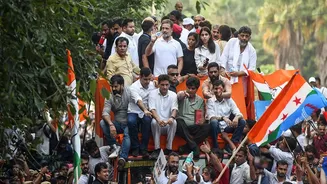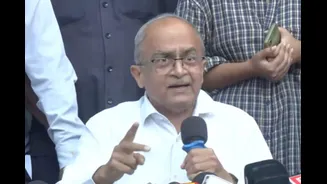






Advocate Prashant Bhushan on Thursday, October 15, said that asking for a change in government is not an offence in a democracy. Speaking to reporters in Delhi, he said citizens have the right to seek
a change in government through democratic means.
“There will definitely be a regime change. We all want a regime change. Is there anything wrong with that?” Bhushan said.
Bhushan also questioned the criticism directed at those calling for a change in government. Referring to the Bharatiya Janata Party (BJP), he said the party had itself organised protests in the past seeking a change in government.
“BJP protested multiple times for regime change and then they say they are teaching conspiracy for regime change,” he said.
He further argued that seeking a change in government falls within citizens’ constitutional rights. Referring to the Supreme Court’s observations on sedition, Bhushan said criticism of the government cannot by itself be treated as an offence unless it involves violence or an attempt to create public disorder.
Delhi: Advocate Prashant Bhushan says, “There will definitely be a regime change. We all want a regime change. Is there anything wrong with that?…” https://t.co/vUDowEBAI8
— IANS (@ians_india) October 15, 2026
“Getting the regime change is every citizen’s constitutional right,” he said, adding that merely creating disaffection against the government should not amount to an offence when there is no encouragement of violence or public disorder.
Bhushan said the ongoing agitation was, in his view, also a movement seeking a change in government.
CJP Questions Security Arrangements
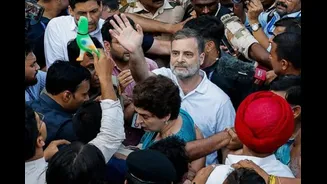
His comments came as protests continued over Chief Election Commissioner Gyanesh Kumar and the Election Commission’s Special Intensive Revision (SIR) of electoral rolls.
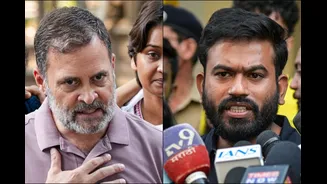
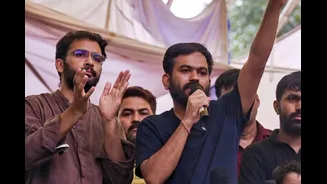
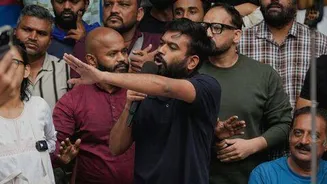
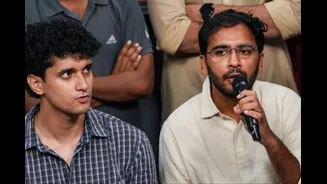
Cockroach Janta Party (CJP) founder Abhijeet Dipke questioned the security arrangements in Delhi during the protests. He alleged that restrictions had affected protesters, students and Opposition leaders.
“You have brought Delhi to a standstill, shut down the Railways, shut down the Metro and turned Delhi into a border, like the India-Pakistan border. You have called in all the forces to Delhi,” Dipke said at a press conference.
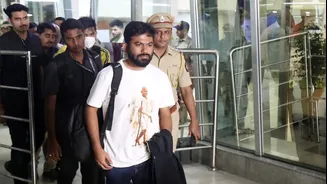
Dipke alleged that students and young people had been protesting for around 10-15 days and claimed that some were dragged away by authorities. He also alleged that Opposition leaders who joined the protests were detained.
He named Leader of the Opposition Rahul Gandhi and former chief ministers Mamata Banerjee, Arvind Kejriwal and Pinarayi Vijayan among those he claimed had been detained.
Dipke also questioned the security provided to Gyanesh Kumar and alleged that the Election Commission chief could be helping Prime Minister Narendra Modi win elections.
“If he is not helping him win elections, why is Narendra Modi providing him with so much protection?” he asked.
The CJP and other organisations have called on people to wave the national flag at Central Park in Connaught Place on Saturday. The Aam Aadmi Party (AAP) has also backed the call, according to ANI.
Supreme Court Hears Pleas Over Protest-Related Issues
The Supreme Court on Thursday heard several petitions linked to the Delhi protests, including allegations of police excesses, restrictions on public transport, the treatment of journalists and lawyers, and issues related to the SIR exercise.
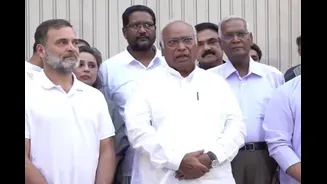
A bench comprising Chief Justice of India Surya Kant and Justice Joymalya Bagchi issued notices on petitions challenging alleged irregularities in electoral rolls. One of the petitions was filed by Rahul Gandhi and 12 other Opposition leaders. The court sought responses from the Election Commission and Gyanesh Kumar.
The bench also took note of the conduct of one petitioner, although the person was not identified. During the hearing, the CJI referred to the October 12 march by Opposition leaders towards the Supreme Court and said, “Nobody can browbeat us (judiciary).”
The court also sought a response on a petition challenging the removal of Jantar Mantar from the list of designated protest venues. It asked authorities whether the decision was based on an independent assessment.
Delhi Police Commissioner Anurag Kumar had designated Ramlila Maidan, Burari Ground and CBD Ground as protest venues on October 11.
The bench directed law enforcement agencies to preserve CCTV footage and other digital material connected to the protests. It also asked authorities to place prohibitory orders issued under Section 163 of the Bharatiya Nagarik Suraksha Sanhita (BNSS) before the court.
On the allegations of sexual harassment involving a woman journalist, the court directed authorities to complete the inquiry promptly. It also ordered that no coercive action be taken against her in the case registered under the SC/ST Act.
The bench said a committee comprising women judges and social workers could also be considered to examine the allegations.
The court separately issued notice on a petition challenging the constitutional validity of Section 172 of the BNSS. The provision gives police powers to detain or remove people who fail to follow lawful directions. The court also sought responses to allegations involving assaults and illegal detention of lawyers.
Another plea before the court sought to hold protest organisers responsible for consequences arising from calls for demonstrations. The bench issued notice on the matter.
Meanwhile, Solicitor General Tushar Mehta clarified that the apology referred to in the authorities’ affidavits in the contempt proceedings did not amount to an admission of wrongdoing by the government.
The proceedings relate to alleged non-compliance with the Supreme Court’s directions on maintaining Metro and railway services during the October 10 protest.