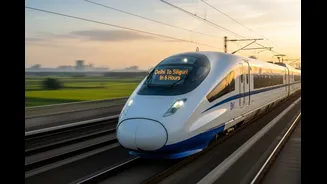









The Centre has proposed a high-speed rail corridor connecting Delhi with Siliguri as part of a broader push to expand railway infrastructure in West Bengal. According to a report in Swarajya, Union Railways
Minister Ashwini Vaishnaw announced the project during his visit to Kolkata, saying the planned bullet train would significantly reduce travel time between the two destinations.
The proposed corridor is expected to link Delhi and Siliguri through key cities, including Lucknow, Varanasi and Patna. Once operational, the journey could take around six hours, compared with the nearly 20-hour travel time by conventional rail services.
If implemented, the Delhi-Siliguri route would become India’s second bullet train project after the 508-km Mumbai-Ahmedabad high-speed rail corridor, which is expected to commence operations next year. “A bullet train project will come to West Bengal. It will connect Delhi and Siliguri via Lucknow, Varanasi and Patna,” Ashwini Vaishnaw said.
Rail Projects Worth Over Rs 1 Lakh Crore Underway
During the visit, the Railway Minister outlined the Centre’s broader infrastructure plans for the state, stating that railway projects valued at more than Rs 1 lakh crore are currently under various stages of implementation in West Bengal.
The announcements formed part of a larger vision to strengthen rail connectivity and modernise transport infrastructure across the state, with a particular focus on improving passenger services and accelerating long-pending projects.
Metro Expansion And Station Redevelopment
Ashwini Vaishnaw also announced that the Kolkata Metro network would receive 60 next-generation trains over the next five years as part of efforts to expand and modernise the city’s urban transit system.
In addition, he said that 102 railway stations across West Bengal are being redeveloped under the Amrit Bharat station scheme, a nationwide initiative aimed at upgrading passenger amenities and improving station infrastructure.
The minister also took a ride on the Kolkata Metro during his visit.
Political Barbs Over Delayed Projects
The announcement was accompanied by sharp political exchanges over the pace of infrastructure development in the state.
According to the Swarajya report, Ashwini Vaishnaw criticised the Trinamool Congress government, alleging that several key railway and Metro projects had faced prolonged delays. Referring to the Chingrighata Metro stretch, he said projects worth around Rs 1.02 lakh crore had remained pending for an extended period.
The Railway Minister also accused the state government of obstructing major infrastructure initiatives and linked the delays to strained Centre-state cooperation.
Adhikari Promises Support For Rail Expansion
West Bengal CM Suvendu Adhikari, who accompanied Ashwini Vaishnaw during the visit, expressed support for the proposed railway expansion and said his government would work closely with the Centre to expedite pending projects if given the opportunity.
According to the report, Adhikari blamed the Mamata Banerjee-led administration for deteriorating relations between the Centre and the state, which he claimed had affected the progress of development works. He also said that land acquisition for railway projects would receive priority, drawing a parallel with the state’s support for border infrastructure. He said his administration would facilitate land acquisition for railway projects across West Bengal, drawing parallels with the state’s support for infrastructure aimed at strengthening border security.
Focus On Connectivity And Future Growth
The proposed Delhi-Siliguri bullet train, expansion of the Kolkata Metro network and redevelopment of railway stations form part of the Centre’s wider strategy to improve connectivity and transport infrastructure in eastern India. While the high-speed rail corridor remains at the proposal stage, it could significantly reduce travel time between Delhi and Siliguri while enhancing connectivity with the Northeast.
Alongside ongoing railway investments and Metro expansion plans, the announcements signal a renewed focus on strengthening West Bengal’s transport network, though several of the projects are likely to require extensive planning, coordination and land acquisition before implementation.