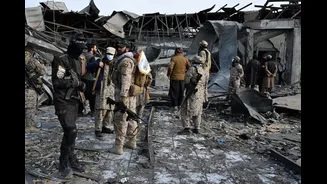



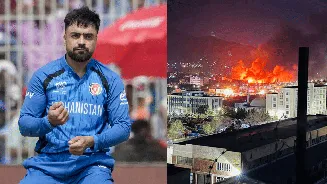
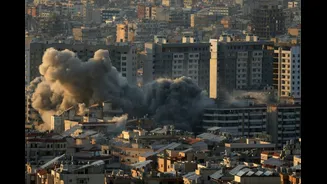

Russia has once again offered to mediate, urging both sides to step back and resolve the crisis through dialogue, as tensions between Pakistan and Afghanistan have peaked following Islamabad’s military
offensive against Kabul last month.
Zamir Kabulov, Russia’s Special Representative for Afghanistan, said Moscow is closely monitoring the situation with concern and supports immediate de-escalation.
He stressed that the priority is to halt hostilities and create conditions for renewed diplomatic engagement. “We are trying to find a compromise solution that would make it possible to stop the clashes and move to diplomacy,” he said.
Kabulov made it clear that Russia is willing to act as a mediator, but only if both Islamabad and Kabul formally request it at the same time. “Russia will be ready to consider such an option if both sides simultaneously turn to it with a request for mediation. So far, this has not happened.”
He also noted that Moscow will not intervene unilaterally or without the consent of both sides.
ALSO READ: Asim Munir Blasts Pakistan Intel Heads Over Failure To Eliminate ‘Enemy No.1’ TTP Chief | Exclusive
Despite the sharp escalation, Kabulov assessed the chances of a broader war as low under current conditions.
Russia’s renewed offer comes as international concern grows over the conflict, with civilian casualties rising and displacement increasing. Notably, Russia became the first country to officially recognise the Taliban government last year.
The development follows similar calls from China, which has urged both nations to exercise restraint and engage in dialogue. Over the past week, Chinese Foreign Minister Wang Yi held phone conversations with his Afghan and Pakistani counterparts to encourage dialogue.
China’s special envoy on Afghan affairs has also been shuttling between Kabul and Islamabad, while its embassies remain in close contact with officials.
Beijing has said it will continue efforts to ease tensions and support reconciliation between the two neighbours, even as the situation along their shared border remains volatile.