






Eid al-Fitr celebrations is about celebrating with family and loved ones. It is a time of rejoicing and coming together with the community. Like many festivals in India, food and especially desserts, plays
an integral part in the celebrations.
The festival of Eid al-Fitr is bursting with sweetness and joy, and desserts are one of the biggest parts of the feasting that happens on this day. They symbolise gratitude, abundance, and communal joy after the 30 days of Ramadan fasting.
These five iconic treats blend Mughal opulence, Middle Eastern roots, and regional twists, perfect for Eid al-Fitr’s festive iftars.
Shahi Tukda (Mughlai India)
This “royal slice” hails from Mughal kitchens, possibly inspired by Babur’s 16th-century Central Asian breads or Egypt’s Um Ali pudding, evolving under Shah Jahan. Fry thick bread slices in ghee till golden, soak in cardamom-saffron sugar syrup, then layer with thickened rabri or condensed milk. Garnish with slivered almonds, pistachios, and silver varq. Creamy, crunchy decadence served chilled.
Sheer Khurma (Persian-Indian)
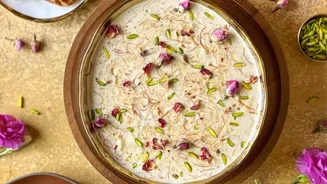
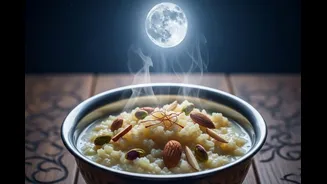
“Sheer” (milk) “Khurma” (dates) traces to Persian migrants in 16th-century India, a Hyderabad staple for Eid. Thin seviyan (vermicelli) are roasted in ghee with dates, pistachios, almonds, and cardamom, then simmered in full-fat milk till creamy. Sweetened with sugar, infused with rose water or saffron, and chilled overnight. Silky strands in nutty milk delight all ages.
Basbousa (Middle East)
From Ottoman Egypt (namoura), this semolina cake spread across Arab world and Indian Muslim homes via trade routes. Mix coarse semolina, yogurt, butter, and baking powder into batter; bake in syrup-soaked tray. Pour hot sugar-lemon syrup over cooled cake, top with coconut or almonds. Cut into diamonds—syrupy, nutty chewiness combats summer heat.
Rabri and Malpua (North India)
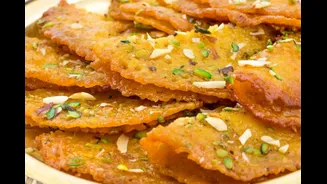
Rabri, thickened milk scraped from slow-boiling pots, pairs with Malpua—ancient pancakes from Bengal’s 13th-century poets, Mughal-refined. For Malpua: Whisk maida, rava, fennel seeds, and milk into batter; fry coin-shaped dollops in ghee till lacy edges form, soak in sugar syrup. Drizzle rabri over, add pistachios. Crispy-soft, syrup-drenched indulgence.
Khubani ka Meetha (Hyderabad)
This luscious apricot dessert originates from Hyderabad’s Nizam-era kitchens in the 18th century, blending Central Asian apricot traditions brought by Mughals with Deccani sweetness. Soak dried apricots overnight, deseed and simmer with sugar, saffron, cardamom, and lemon till jam-like. Fold in chopped kernels and almonds; layer or mix with whipped cream. Chill and garnish with pistachios—warm compote meets cold cream for Eid’s tangy indulgence.