



Homes are often designed to be functional, aesthetic, and comfortable. Yet, many people experience a lingering sense of unease—restlessness, lack of focus, disturbed sleep, or simply the feeling that something
isn’t quite right.
According to Vastu experts, these subtle disruptions may not be random. They could be rooted in the way energy flows or fails to flow within a space.
Vastu, at its core, is not just about directions or placements. It is about balance. And as Vastu consultant and land recce expert Dr Monica Chopra explains, even the smallest imbalances can quietly influence daily life.
“In my years of practising Vastu, I have often been called to spaces that appear perfectly functional on the surface yet feel unsettled in ways that are difficult to explain immediately,” she says.
“These are not always dramatic disturbances; sometimes they show up as repeated inconveniences, emotional unease, or a subtle sense that something is ‘off’,” she adds.
When Walls Carry More Than Just Structure
In one such home, Dr Chopra encountered an unusual yet telling issue. A particular wall seemed to carry a certain vibration.
“When I touched it, I could sense vibrations coming from the other side,” she recalls.
The problem wasn’t within the room itself, but beyond it. The wall was shared with another space, allowing external energy to seep through. The resident unknowingly absorbed this disturbance, leading to discomfort and a lack of grounding.
Instead of structural changes, Dr Chopra suggested a simple shift: repositioning the bed and study table slightly away from the wall. The impact was immediate.
“That small change created a noticeable difference; it allowed the individual to feel more settled in their own space.”
The Silent Impact of Dark, Sun-Deprived Spaces
Children, in particular, are more sensitive to their surroundings. In another home, everything seemed normal until Dr Chopra spoke to the child.
Despite doing well academically, he complained of poor concentration and frequent irritation.
The reason became evident upon entering his room. It lacked natural light. The study table and bed were tightly placed against a wall, further restricting openness.
“Sunlight is essential,” Dr Chopra explains. “It supports clarity, emotional balance, and focus. Without it, a child may begin to feel low, distracted, or even negative over time.”
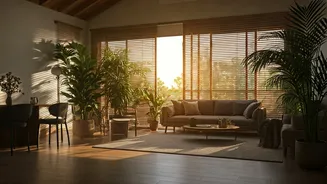
Her remedy was simple yet effective—allowing more sunlight into the room, even if only for a short time each day, and adjusting the furniture placement to create a sense of openness.
When Energy Flows Too Fast
In another case, the imbalance was not about darkness, but about excessive flow.
At first glance, the house felt energetically balanced. But one room stood out—the owner’s son’s bedroom, where he experienced disturbed sleep and vivid dreams.
On closer observation, Dr Chopra identified the issue: three doors aligned in a straight line leading directly to his room.
“When more than two doors fall in a straight line, the final room tends to accumulate the flow of energy,” she explains. “This often results in restlessness or discomfort.”
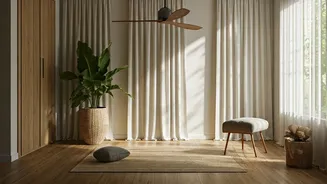
Since structural changes were not possible, she recommended placing a curtain or decorative partition between the doors to break the direct flow.
“Energy behaves much like light or water; when its path is interrupted, it disperses more gently.”
The result was a noticeable sense of calm and improved sleep.
Across these varied homes, a clear pattern emerges—Vastu imbalances are rarely dramatic, but their effects can be deeply felt.
From shared walls and lack of sunlight to door alignments and mirror placements, it is often the smallest, most overlooked elements that disrupt a home’s energy.
“What I have consistently observed is that energy in a space responds to even the smallest details like light, placement, direction, and flow,” Dr Chopra explains.
She adds that Vastu should not be seen as a rigid set of rules, but as a practice of awareness.
“Often, it is not major renovations that bring change, but simple, mindful adjustments.”
The Small Details That People Overlook
While direction plays a key role in Vastu, intention and maintenance are equally important, especially in sacred areas like the puja room.
Dr Chopra emphasises that while the northeast direction is considered ideal, it is equally crucial to keep the space covered and protected.
This helps preserve its sanctity and prevents external disturbances from diluting its energy.
Another often-overlooked element is the placement of mirrors. In several homes, Dr Chopra noticed recurring disturbances linked to mirrors placed in the south direction.
While many homeowners try to fix this by covering mirrors, she notes that this may not always work. “Even when covered, its presence can continue to influence the space,” she says. “In many cases, removing the mirror entirely proves to be the more effective solution.”
Once removed, residents often reported reduced negativity and a greater sense of stability.
And when these subtle shifts are made thoughtfully, they do more than just fix a space; they transform how it feels to live in it, bringing balance, ease, and a quiet sense of harmony into everyday life.