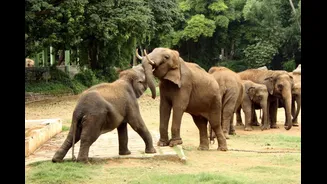









A woman tourist was trampled to death after coming under an elephant involved in a fight with another elephant at a wildlife camp in Karnataka’s Kodagu district, highlighting the dangers of getting too
close to even trained animals in captive settings.
The victim, 33-year-old Chennai resident Jyunesh, was visiting the popular Dubare Elephant Camp and watching elephants being bathed when tragedy struck.
During the bathing session, an elephant named Kanchan reportedly attacked another elephant, Marthanda. Despite frantic efforts by mahouts to regain control, the animals continued fighting. In the chaos, one of the elephants lost its balance and fell on the tourist. As it tried to get back up, Marthanda trampled her repeatedly, causing fatal injuries.
The incident is a sobering reminder of one crucial truth: even captive or trained Asian elephants are still wild animals, capable of unpredictable and dangerous behaviour.
If you’re planning to visit a wildlife camp, safari, or elephant reserve, here are survival tips and safety precautions every tourist should know.
1. Maintain a safe distance at all times
The biggest mistake tourists often make is assuming a calm elephant is a safe elephant. Wildlife experts advise maintaining at least 50 metres distance, unless you are in a controlled, supervised zone. Never move closer for a better photo.
2. Never stand between two elephants
The Karnataka tragedy underscores this danger. Elephants can become territorial, competitive, or aggressive in seconds—especially around food, water, or during bathing sessions. Never position yourself:
- between two elephants,
- between a mother and calf,
- between an elephant and its handler
3. Learn to read warning signs
Elephants often show visible stress signals before charging or attacking. Watch out for:
- ears flared out,
- trunk curling inward,
- repeated head shaking,
- foot stamping,
- loud trumpeting,
- mock charging
If you notice any of these signs, move away immediately and calmly.
4. Do not attempt selfies or physical contact
Touching, feeding, or posing too close to elephants may seem harmless, but sudden movements can trigger defensive reactions. Many wildlife injuries happen because tourists cross invisible comfort boundaries.
5. Follow the mahout or guide’s instructions instantly
At camps like Dubare Elephant Camp, mahouts and forest guides understand animal behaviour far better than visitors. If they ask you to step back, move, or evacuate—do it immediately.
6. Avoid loud noises and flash photography
Elephants are highly intelligent and sensitive animals. Flash photography, shouting, sudden laughter, or drones can startle them and provoke stress responses.
7. Be extra cautious around male elephants in musth
Male elephants undergo a periodic hormonal state called musth, during which testosterone levels surge, and aggression can increase dramatically. Camps often isolate such elephants—but tourists should stay alert.
What to do if an elephant charges
Stay calm—but move fast. Panicking can waste precious seconds. Move diagonally or sideways. Elephants can run fast in straight lines. Changing direction can sometimes help create distance or confusion.
Put a barrier between you and the elephant. Use a large tree, a boulder, a vehicle or a building wall. Even a few seconds of obstruction can save your life.
Drop food or loose items: If you are carrying food, bags, or anything scented, drop it. It may distract the animal briefly.
If in a safari vehicle—stay inside. Never jump out for photos or videos. Vehicles often serve as the safest protective barrier.
Elephant camps and safaris offer rare, memorable experiences. But familiarity should never create complacency. Whether in a forest, temple, or tourist camp, the rule remains the same: admire from a distance, respect their space, and remember—wild instincts never disappear.