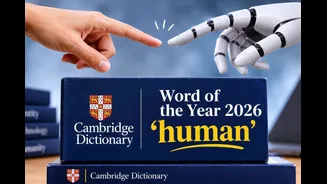




If there was one word that could sum up the conversations, anxieties and cultural shifts of 2026, Cambridge Dictionary thinks it is human. Not artificial intelligence, not algorithm, not robot — but a word that has
been around for centuries and suddenly feels more relevant than ever.
Cambridge Dictionary has named ‘human’ its Word of the Year 2026, reflecting a growing conversation around what makes us human at a time when artificial intelligence is increasingly capable of mimicking our voices, faces, creativity and even the way we communicate.
The choice comes at a time when AI is no longer just a technological conversation. It is influencing how we work, create, consume content and understand authenticity, with the lines between what is real and what is artificially generated becoming increasingly difficult to distinguish.
Why ‘Human’?
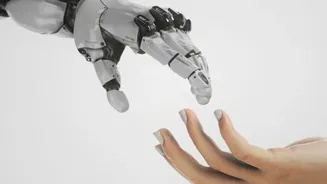
Cambridge Dictionary says 2026 has been defined by global debates around what it means to be human as artificial intelligence continues to blur the boundaries between people and machines. The word, in many ways, reflects a growing desire to understand what technology can replicate — and what it perhaps cannot.
The dictionary cited AI pioneer and Nobel laureate Geoffrey Hinton, who has spoken about the risks of creating increasingly intelligent systems. His remark, “We’re creating alien beings. I’m willing to be selfish and choose humans,” captures the unease surrounding a future where machines may become more than just tools.
The concerns are not limited to experts. AI-generated deepfakes, which can recreate a person’s appearance, voice and mannerisms, have become part of a wider conversation about identity, consent and the ownership of one’s likeness. Cambridge Dictionary lexicographer Colin McIntosh believes the technology is also changing how we understand and use the word. “AI is changing how we talk about being human,” he said.
Traditionally, the word ‘human’ has been used to distinguish people from gods, animals and, more recently, machines. But as AI begins to produce writing, art, music, images and conversations that increasingly resemble those created by people, the distinction is becoming more complicated.
McIntosh also pointed to the growing use of words such as ‘human-made’, which emphasise the difference between something created by people and something generated by artificial intelligence. That distinction may seem subtle, but it says a lot about the moment we are living in — one where the origin of something, and the person behind it, is becoming just as important as the final product.
“It’s this renewed interest in the idea of being human that captured the zeitgeist,” McIntosh added.
Perhaps that is what makes the choice particularly interesting. In a year when AI has become more sophisticated, the word of the year is not about technology’s capabilities, but about our own identity. It is a reminder that the conversation is no longer simply about what machines can do, but what we want to preserve about ourselves.
Cambridge Dictionary’s New Words For 2026
Alongside its Word of the Year, Cambridge Dictionary has also added several new words and phrases, reflecting internet culture, changing behaviours and the language of social media.
Air jail is defined as a method of training an animal, particularly a dog, by holding it off the ground for a period of time when it displays aggressive or unwanted behaviour.
Aura farming refers to doing things with the intention of projecting a personality that others find admirable, attractive or interesting. It is essentially about cultivating an image or a certain kind of coolness — something that has become increasingly familiar in the age of social media.
Looksmaxxing, meanwhile, refers to the pursuit of making oneself as physically attractive as possible, a trend encouraged by some online communities, particularly those dominated by young men.