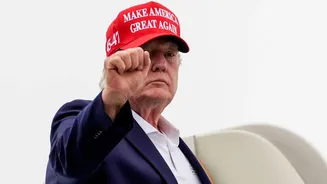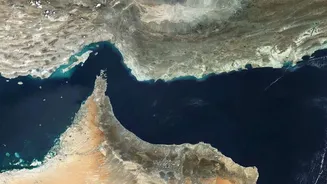




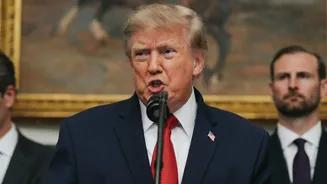


US President Donald Trump has threatened what he calls “economic warfare and isolation on an unprecedented scale” against Iran, warning that countries continuing to provide Tehran with an economic lifeline
could themselves face consequences.
“ANY country that allows its financial institutions, businesses, airports, or government entities to provide any type of lifeline to Iran will itself face TREMENDOUS Economic Consequences,” Trump wrote on Truth Social.
He also said oil smuggling, swap lines, cash transfers, exchange houses, ship registries and the use of “front companies” to keep Iran’s economy running “need to stop NOW”.
Can The US Legally Ban Other Countries From Trading With Iran?
Washington has long used unilateral sanctions to restrict economic dealings with Iran. But those sanctions do not automatically make trade between Iran and another sovereign country illegal under that country’s laws.
Shantanu Singh, a lawyer specialising in public international and trade law, told Al Jazeera that no country has the power to impose a total embargo on trade with Iran — or any other country — without authorisation from the UN Security Council.
“What the US President is authorised to do under US law and has done in the past is to impose unilateral sanctions that disable the use of US financial institutions for international trade with Iran,” he said.
So while Trump cannot simply order China, India, Turkiye or Iraq to stop trading with Iran, Washington can make continued commerce with Tehran economically risky.
How Can Trump Put Pressure On Countries Trading With Iran?
One of Washington’s most important tools is secondary sanctions. These allow the US to target foreign banks, companies or individuals over certain transactions with Iran even when no American entity is directly involved.
The effect is to force businesses to make a choice: continue dealing with Iran and risk US penalties, or protect their access to American markets and financial institutions.
Washington has already used that approach. Reuters reported that the US Treasury in April sanctioned a Chinese independent refinery for buying billions of dollars’ worth of Iranian oil and warned Chinese banks that they could face secondary sanctions if they facilitated Iranian oil trade.
Tariffs are another tool Trump has threatened to use.
In January, Trump announced that countries doing business with Iran would face a 25% tariff on their trade with the United States. At the time, he provided no official documentation explaining how the policy would operate or what legal authority would be used to impose it.
His latest warning again threatens “economic consequences” but does not spell out exactly what form they would take.
That leaves open whether Washington intends to rely mainly on sanctions against particular companies and banks, broader tariffs against countries trading with Iran, or a combination of measures.
China Shows The Limits Of US Pressure
China is Iran’s biggest oil customer and perhaps the clearest example of why completely cutting Tehran off is difficult.
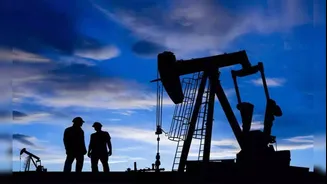
More than 80% of Iran’s shipped oil has gone to China, according to Reuters. Kpler estimated that China bought an average of 1.38 million barrels per day of Iranian oil in 2025.
Over the past decade, China has also developed a largely ring-fenced system of independent refiners that process Iranian crude while maintaining relatively limited exposure to the United States.
Reuters reported that Iranian oil delivered to China has often been labelled as originating from Malaysia and, more recently, Indonesia. Transactions can also be settled in Chinese currency and routed through difficult-to-track intermediaries.
Frederic Schneider, a nonresident senior fellow at the Middle East Council on Global Affairs, told Al Jazeera that sanctions increase the cost of trading with Iran but do not necessarily end it.
“Iran’s crude exports hit record highs, around 1.7 million barrels a day, with China taking the overwhelming majority. Sanctions do raise the cost of trading with Iran, but they cannot end it,” he said.
China has also rejected Washington’s approach. “Sanctions and pressure will not solve the problem. China calls on all parties concerned to take responsible measures to resolve the issue through political and diplomatic means,” Chinese Foreign Ministry spokesperson Lin Jian said.
Why Some Countries Can’t Easily Cut Trade With Iran
Iran’s trading relationships are not all the same.
Turkiye and Iran have bilateral trade of around $5-6 billion annually, according to Reuters, while Iran supplies about 13% of Turkiye’s natural gas imports.
Iraq’s trade with Iran crossed $10 billion in 2025. Energy is particularly important: Baghdad pays Tehran around $4 billion to $5 billion a year for natural gas used to generate electricity. Two Iraqi energy officials told Reuters that additional US sanctions could create significant difficulties for Baghdad in continuing payments for Iranian energy while avoiding exposure to American restrictions.
Pakistan also has significant informal trade with Iran, estimated at around $4 billion according to unofficial figures cited by Reuters, while both countries have discussed expanding bilateral trade to $10 billion.
That makes US pressure more complicated in countries where Iranian energy or cross-border commerce is tied closely to domestic economic needs.
What Does Trump’s Threat Mean For India?
For India, the immediate economic fallout from Trump’s latest warning is likely to be limited because trade with Iran has shrunk dramatically over the years.
India-Iran bilateral merchandise trade stood at $17.03 billion in 2018-19. By 2024-25, it had fallen to around $1.68 billion, according to Indian government trade data — a decline of more than 90% from the pre-sanctions level. The latest available figures show trade falling further to around $1.63 billion in 2025-26.
In 2024-25, India exported goods worth about $1.24 billion to Iran while importing around $440 million. Indian exports largely include rice, tea, sugar, fruits and pharmaceuticals, while imports include dry fruits, fresh fruits, chemicals and glassware.
More importantly, Iran is no longer a major source of crude oil for Indian refineries. India stopped importing Iranian oil in 2019 after the US tightened sanctions, significantly reducing one of its biggest areas of exposure to Tehran.
For ordinary Indian consumers, Trump’s latest warning is therefore unlikely by itself to immediately translate into higher fuel or grocery prices.
UAE Cuts Iran Trade
The United Arab Emirates has historically been one of Iran’s most important economic lifelines.
According to World Trade Organization figures cited by Reuters, the UAE accounted for 30% of Iran’s imports and 13% of its exports in 2024. Non-oil trade between the two countries totalled $6.6 billion that year, with much of it involving re-exports.
The UAE has also long served as an important financial and commercial hub for Iranian businesses.
This week, however, the UAE suspended all financial and economic transactions with Iran until further notice, citing what it described as a military escalation and missile threat from Tehran. Iran denied the allegations.
The move matters because it shuts one of Iran’s most important regional commercial gateways at a time when its trade is already under pressure.
But for Trump to achieve much broader isolation, other major Iranian partners would also have to reduce their economic ties.
So, Can Trump Stop Countries From Trading With Iran?
Trump cannot legally force every country to stop trading with Iran, but he can make such trade significantly more expensive through sanctions and other economic penalties. How effective that pressure is will depend on how willing Iran’s major partners are to absorb the cost.