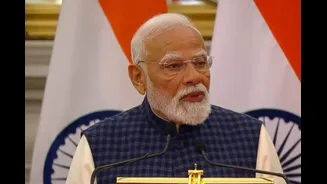







Amid ongoing conflict in West Asia, Prime Minister Narendra Modi on Thursday engaged in discussions with leaders from Qatar, France, Jordan, Oman, and Malaysia and expressed his concern over the escalating
situation.
In a bid to seek de-escalation in the conflict, Modi strongly condemned the attacks on the region’s energy infrastructure. During separate telephonic conversations with these leaders, the prime minister emphasised the importance of dialogue and diplomacy for the swift restoration of peace, security, and stability in the region.
He also highlighted the need for safe and free navigation through the Strait of Hormuz.
“Spoke with my brother, H H Sheikh Tamim bin Hamad Al Thani, the Amir of Qatar, and conveyed warm Eid greetings to him and the people of Qatar,” Modi said in a post on X.
He reiterated India’s solidarity with Qatar while condemning the attacks on the region’s energy infrastructure.
“Expressed gratitude for the care and support provided to the Indian community and hoped for peace and stability to prevail in the region. We stand for safe and free navigation through the Strait of Hormuz,” he said.
Describing King Abdullah II of Jordan as “my brother”, Modi conveyed advanced Eid wishes to him.
“We expressed concern at the evolving situation in West Asia and highlighted the need for dialogue and diplomacy for the early restoration of peace, security and stability in the region. Attacks on energy infrastructure in West Asia are condemnable and can lead to avoidable escalation,” he said.
The prime minister said India and Jordan stand in support of unhindered transit of goods and energy.
“Deeply appreciated Jordan’s efforts in facilitating the safe return of Indians stranded in the region,” he added.
In another post on X, Modi said he spoke to French President Emmanuel Macron.
“Spoke with my dear friend, President Emmanuel Macron, on the situation in West Asia and the urgent need for de-escalation, as well as a return to dialogue and diplomacy. We look forward to continuing our close coordination to advance peace and stability in the region and beyond,” he said.
PM also had a productive conversation with Sultan Haitham bin Tariq of Oman, conveying advanced Eid greetings and agreeing on the need to prioritise dialogue and diplomacy for de-escalation and subsequent restoration of peace and stability.
“We agreed on the need to prioritise dialogue and diplomacy for de-escalation and subsequent restoration of peace and stability,” he said.
The prime minister reiterated New Delhi’s condemnation of the violation of Oman’s sovereignty and territorial integrity, and appreciated its efforts to facilitate the safe return of thousands of people, including Indian nationals.
“India and Oman stand for safe and free navigation through the Strait of Hormuz,” he said.
With Malaysian Prime Minister Anwar Ibrahim, Modi exchanged greetings for the upcoming festival of Hari Raya Aidilfitri and discussed the concerning situation in West Asia. They reaffirmed their shared commitment to de-escalation and the early restoration of peace and stability through dialogue and diplomacy.
Since the United States and Israel attacked Iran on February 28, leading to retaliatory attacks by the Islamic republic on several Gulf neighbours, Modi has spoken multiple times to the leaders of Qatar, Jordan, Oman, Saudi Arabia, Bahrain, the United Arab Emirates (UAE), Israel, and Iran. The recent conversations marked his first calls to Macron and Ibrahim since the conflict began.