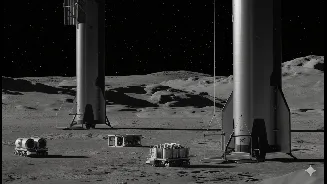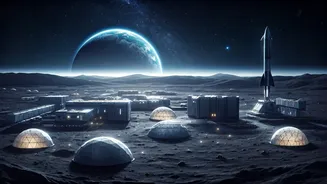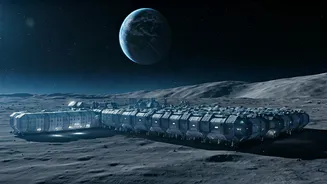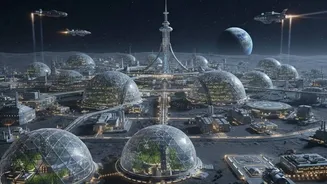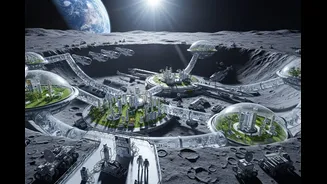





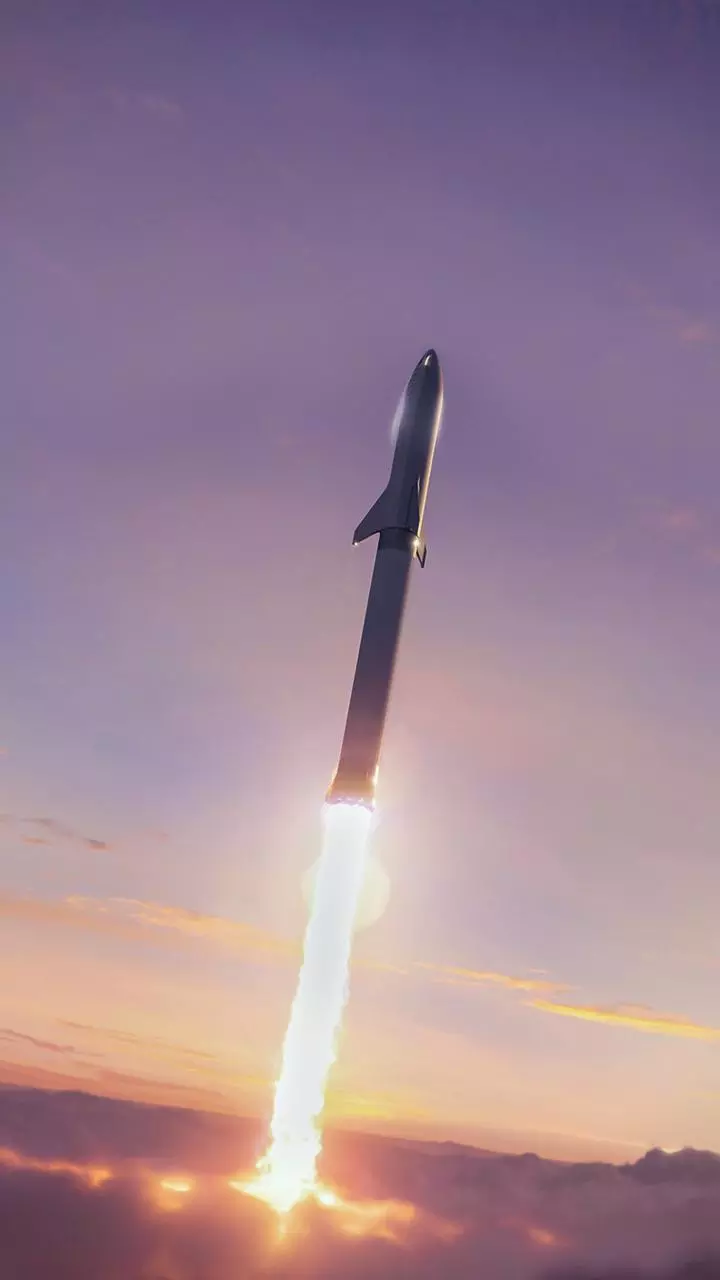

Elon Musk has said that SpaceX is now prioritising the Moon over Mars, arguing that establishing a sustainable presence there can be achieved much faster. In a post on X, Musk claimed SpaceX is focused
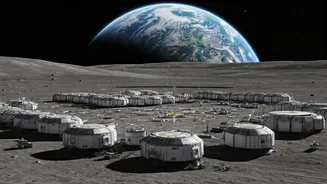
on building a “self-growing city” on the Moon within the next decade , compared to a timeline of more than 20 years for a similar effort on Mars. He reiterated that SpaceX’s core mission remains the same — to extend human life and consciousness beyond Earth.
Musk added that while the Moon is the immediate priority, SpaceX has not abandoned its long-term ambition of building a city on Mars. According to him, efforts to begin constructing a Martian settlement could start within the next five to seven years. However, he emphasised that securing the future of civilisation requires moving faster, making the Moon the more practical first step.
A report by The Wall Street Journal also noted that SpaceX has informed investors that lunar missions will take precedence, with Mars plans to follow later.
How Practical Is A Moon City In 10 Years?
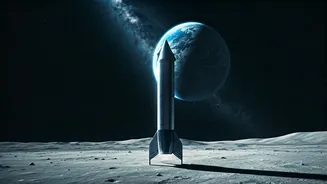
The return of humans to the Moon’s surface is being planned by multiple space agencies (NASA’s Artemis missions and commercial partners), and an uncrewed SpaceX lunar landing as early as 2027 is being targeted.
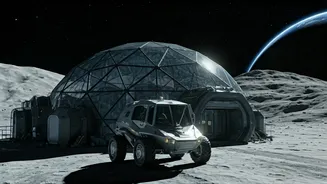
Basic infrastructure — like habitats, supply landers, and short-term bases near the lunar poles — could be established this decade with enough funding and successful Starship flights.
However, for a real city — meaning sustained human presence, infrastructure, and self-supporting life systems — SpaceX has a challenging task as the hurdles extend well beyond this decade. These aren’t just “rocket launches,” they’re fundamental engineering and survival problems.
What Are The Challenges In Building A Moon City?
Radiation exposure And Lack Of Natural Shielding
The Moon has neither a magnetic field nor a thick atmosphere, leaving its surface directly exposed to cosmic radiation and solar particle events. Long-term exposure significantly raises risks of cancer, DNA damage, and neurological effects, making permanent habitation dangerous. The most realistic mitigation strategy is to bury habitats under 2–3 metres of lunar regolith, which can provide radiation shielding comparable to Earth’s atmosphere. However, this is not a task humans can perform manually; it requires industrial-scale robotic excavation, autonomous construction systems, and heavy machinery operating reliably in a hostile environment. None of this infrastructure currently exists on the Moon.
Lunar dust contamination
Lunar dust is one of the most persistent and underestimated challenges. It is razor-sharp due to the lack of weathering, electrostatically charged, and easily adheres to suits, equipment, and habitat seals. Apollo astronauts reported it damaged joints, clogged filters, irritated lungs, and caused mechanical failures even during short missions. In a city-scale settlement, constant movement would generate continuous dust contamination, requiring dedicated dust mitigation systems, sealed transport corridors, advanced filtration, and frequent maintenance. Without robust dust control infrastructure, long-term habitation could become unviable.
Low gravity and human biology
The Moon’s gravity is only one-sixth that of Earth, and the long-term biological effects of living in such conditions are still poorly understood. Known risks include bone density loss, muscle atrophy, and cardiovascular deconditioning, all of which worsen with duration. More critically, there is no data on whether children could develop normally in lunar gravity, raising profound questions about reproduction, growth, and long-term population sustainability. Until these effects are studied over years rather than months, calling any settlement a “city” remains a biological gamble.
Life-support systems and food production
A lunar city would depend on flawless life-support systems: closed-loop oxygen generation, near-total water recycling, waste processing, and reliable food production under artificial light. While the International Space Station operates similar systems, it does so with constant Earth resupply and emergency backup. Scaling these technologies to support dozens or hundreds of people — with zero margin for failure — is orders of magnitude more complex. Any prolonged system breakdown on the Moon could quickly become fatal due to the absence of immediate rescue options.
Energy generation and storage
Power is a fundamental constraint because the Moon experiences nights lasting roughly 14 Earth days, during which solar energy is unavailable. This makes large-scale energy storage or nuclear power essential. Both options involve heavy payloads, safety risks, and political sensitivities. Energy systems must be ultra-redundant, as failures would compromise heating, life support, communications, and medical facilities. Without stable, long-duration power solutions, sustained habitation is not realistic.
Transportation, logistics, and construction
Even with fully reusable rockets like Starship, transporting the materials needed for habitats, shielding, power systems, vehicles, and life-support infrastructure would require thousands of launches over many years. Each launch still costs tens of millions of dollars optimistically, and delays or failures would cascade through the construction timeline. Robotic construction is essential, but autonomous systems capable of building complex structures in lunar conditions are still in early development.
Economic cost and absence of a lunar economy
The financial burden of a Moon city is enormous. Even under optimistic assumptions, the total cost would run into hundreds of billions of dollars. Governments can justify such spending for scientific, strategic, or military reasons, but cities require functioning economies. At present, there is no clear commercial activity on the Moon that could sustain a large population. Without economic self-justification, long-term political and financial commitment becomes uncertain.
Governance, law, and political complexity
The Moon is governed by international treaties that prohibit national sovereignty and leave resource ownership legally ambiguous. Fundamental questions remain unresolved: who owns infrastructure, who enforces law, how disputes are settled, and who bears liability when accidents occur. A permanent settlement would require legal frameworks for property, labour, safety, and criminal jurisdiction. Without clarity, a Moon city becomes not just a technical challenge but a geopolitical and legal minefield.
Self-sufficiency versus dependence on Earth
The defining difference between a base and a city is resilience. A true city must survive disruptions — supply delays, technical failures, medical emergencies — without immediate Earth support. Achieving this level of autonomy requires advanced in-situ resource utilisation, local manufacturing, spare-parts production, and highly reliable systems. These capabilities are still experimental, making near-term self-sufficiency unlikely.
What Is Achievable In 10 Years?
Within a decade, the achievable milestones are far more modest but still significant: a permanent lunar base rather than a city, rotating crews instead of families, robotic construction, limited resource use (ice to water and fuel), and growing scientific and strategic presence. These steps lay the groundwork — but they fall well short of a self-sustaining lunar city in the next decade.