




More than 50 years after the last human mission to the Moon, NASA is finally sending astronauts back into lunar space. Artemis II is set to become humanity’s first crewed mission to the Moon’s neighbourhood
since Apollo 17 in 1972.
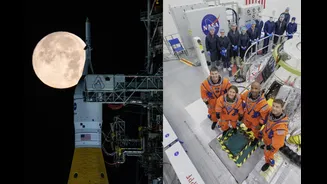
The four astronauts on the mission are NASA commander Reid Wiseman, pilot Victor Glover, mission specialist Christina Koch, and Canadian Space Agency mission specialist Jeremy Hansen. Their flight is historic in more ways than one: Glover will be the first Black astronaut ever to fly a Moon mission, Koch the first woman, and Hansen the first non-American to do so.
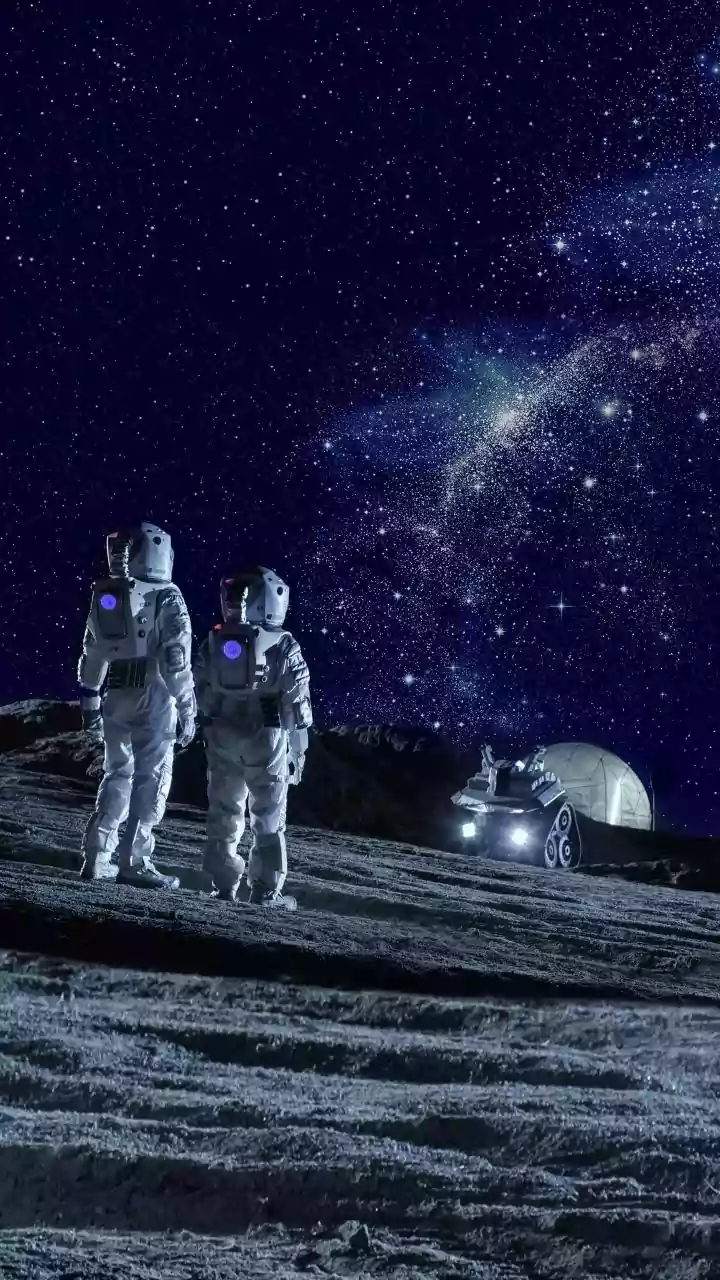
But for all the excitement around the mission, there is one thing it will not do: put boots on the lunar surface. Instead, the astronauts will perform a carefully planned fly-around mission before returning to Earth.
Artemis II Launch Date
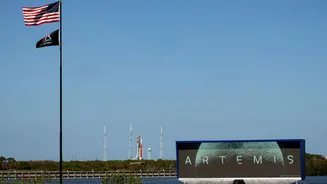
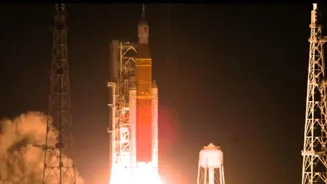
NASA is currently targeting April 1 with a planned liftoff at 6:24 pm EDT (3:54 am IST on April 2) from Launch Pad 39B at the Kennedy Space Center in Florida. The agency has a two-hour launch window on that day, meaning the rocket could lift off anytime between 6:24 pm and 8:24 pm EDT (3:54 am to 5:54 am IST on April 2).
Additional launch opportunities are available daily from April 1 to April 6, and again on April 30, though the exact timing shifts slightly each day.
What Exactly Will Artemis II Do?
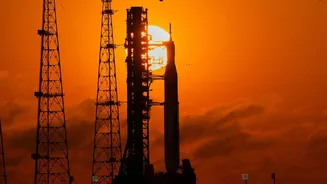
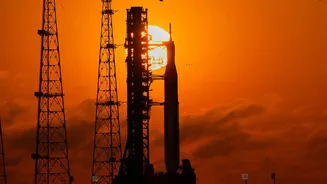
Artemis II is structured as a crewed deep space test mission, not a landing attempt. The astronauts will ride aboard Orion spacecraft, mounted on top of NASA’s 322-foot Space Launch System rocket.
After liftoff, the mission begins cautiously. The crew will spend about 25 hours orbiting Earth, testing systems and ensuring everything functions as expected before committing to deep space. Only after this verification will Orion perform the engine burn required to head toward the Moon, roughly 244,000 miles away. According to NASA, the journey from Earth orbit to the Moon itself takes about three days.
Once near the Moon, Orion will not enter orbit or descend. Instead, it will follow a free-return trajectory, flying around the Moon and slingshotting back toward Earth. On the closest approach, astronauts are expected to witness rarely seen regions of the lunar far side, with the Moon appearing roughly the size of a basketball held at arm’s length.
On flight day six, the spacecraft will travel thousands of miles beyond the Moon before turning back, making the crew the humans who have ventured the farthest from Earth.
The entire mission is expected to last about nine days, one hour and 46 minutes, ending with a splashdown in the Pacific Ocean.
Why Won’t Artemis II Land On The Moon? The Core Reason
The most immediate and fundamental reason is technical: the Orion spacecraft is not built to land.
It is designed as a deep-space transport vehicle, not a lunar lander. It lacks the systems required for descent, landing and ascent from the Moon’s surface. As a result, even if astronauts reach lunar proximity, they have no way to physically touch down.
NASA’s architecture separates these roles. Orion will carry astronauts to lunar orbit in future missions, but the actual landing will be carried out using specialised spacecraft being developed separately by private partners such as SpaceX and Blue Origin.
Until those landers are ready, a Moon landing cannot take place.
A Test Mission First, A Landing Later: NASA’s Phased Strategy
Artemis II is part of a broader, step-by-step plan.
The programme began with an uncrewed test, Artemis I, which successfully sent Orion around the Moon in 2022. Artemis II builds on that by adding astronauts, allowing NASA to test life-support systems, crew operations and spacecraft handling in deep space.
As NASA noted, the mission “will confirm all the spacecraft’s systems operate as designed with crew aboard in the actual environment of deep space” and “will pave the way for lunar surface missions.”
Moon Landing Delayed To 2028?
Originally, NASA aimed to land humans on the Moon as early as 2024. That timeline has since shifted significantly. The first crewed landing is now expected no earlier than 2028 under Artemis IV. Several technical and programmatic challenges have contributed to this delay.
One major factor is the development of the Human Landing System. SpaceX’s Starship, selected for early landing missions, has faced testing setbacks and requires multiple successful demonstrations, including orbital refuelling and uncrewed lunar landings, before it can safely carry astronauts.
Blue Origin, selected as a second provider, is also working on its Blue Moon lander, adding another layer of development complexity.
There have also been concerns with Orion itself. After Artemis I, NASA found that the spacecraft’s heat shield lost more material than expected during re-entry, with more than 100 areas behaving differently than anticipated. This triggered further investigation and forced NASA to adjust mission timelines and re-entry strategies.
Spacesuit development has also been a bottleneck. Earlier plans for NASA’s next-generation lunar suits proved unfeasible within the original timeline, leading the agency to shift toward commercial solutions that are still under development.
What Happens Before Astronauts Finally Land On The Moon?
Before a landing mission can take place, NASA must complete several key steps.
A future mission, Artemis III, is now expected to focus on practising docking and rendezvous operations in Earth orbit between Orion and lunar landers. This step is critical because astronauts will eventually need to transfer from Orion to a lander in space before descending to the Moon.
Only after these systems—including docking, refuelling, landing and ascent—are fully tested will a crew attempt to land on the lunar surface.
The Bigger Goal: Not Just Reaching The Moon, But Staying There
The Artemis programme is not simply about repeating Apollo-era achievements. Its long-term goal is to establish a sustained human presence on the Moon, enabling scientific research and preparing for future missions to Mars.
NASA Administrator Jared Isaacman has stated that the goal is not just “flags and footprints” but to ensure that “America will never again give up the Moon”, aiming to reach the lunar south pole before Chinese missions planned for 2030, according to BBC.