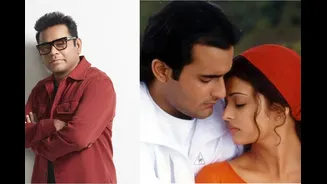








For decades, A R Rahman has shaped the sound of Indian cinema, cutting across languages, regions, and generations. But even for an Oscar-winning composer, the journey in Hindi cinema was not without its
challenges. In a recent interview, Rahman spoke candidly about feeling like an outsider in Bollywood for years and how changes in the industry’s power structure have altered the kind of work that comes his way. Speaking to the BBC Asian Network, Rahman reflected on his early days in Hindi films and admitted that recognition did not come instantly, despite landmark albums. ‘I was still an outsider’ Rahman explained that even after delivering celebrated music for films like Roja, Bombay, and Dil Se.., he did not feel fully accepted in the Hindi film space. It was only with Subhash Ghai’s Taal that things began to shift. “Actually, I was still an outsider with these three (Roja, Bombay, Dil Se..), but Taal became a household (album). It entered the kitchens of everybody, so to say. Even now, most North Indians still have it in their blood because it’s a little bit of Punjabi and a little bit of Hindi and a little bit of mountain music. It’s very difficult for a Tamil person to speak Hindi because we have such attachment.”
Learning languages to understand music
Rahman recalled how working with Subhash Ghai pushed him to go deeper into language and culture. He shared that Ghai asked him to learn Hindi, which led him down a different path altogether.
He decided to learn Urdu instead, because it was the foundation of Hindi film music in the 1960s and 1970s. From there, his journey expanded. He went on to learn Arabic due to its similarities with Urdu in pronunciation, and later picked up Punjabi, influenced by singer Sukhwinder Singh.
For Rahman, these languages were not academic exercises but tools to connect more honestly with music and storytelling.
On prejudice and changing power centres
When asked directly if he faced prejudice in Bollywood during the 1990s, or discrimination against the Tamil community, Rahman said his experience was complex. “Maybe I never got to know of this, maybe it was concealed by God, but I didn’t feel any of this. The past eight years, maybe, because a power shift has happened and people who are not creative have the power now. It might be a communal thing also… but it is not in my face.”
He explained that exclusion often showed up quietly rather than openly. “It comes to me as Chinese whispers that they booked you but the music company went ahead and hired their five composers. I say good, I have more time to chill with my family. I am not in search of work. I don’t want to go in search of work. I want work to come to me; my sincerity to earn work. Whatever I deserve, I get.”